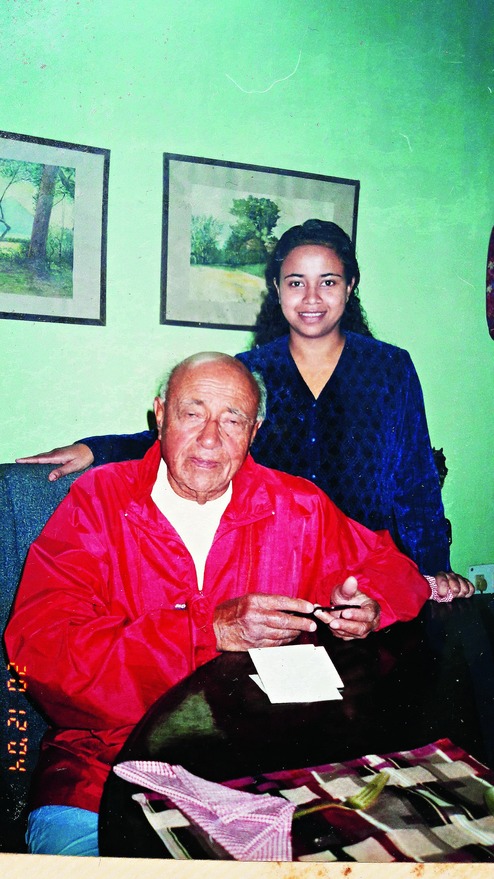

Hazaribagh: In British India, he was a living legend - the man who'd slay man-eaters. But, Tutu Imam was more than just a hunter. He was a hunter with a heart who didn't kill for sport.
The veteran of formidable forests and the author of many a book on animal encounters breathed his last at a private hospital in his hometown on Thursday morning. He was 98 and his survived by his wife Shahbat Imam, sons Bulu Imam (noted environmentalist and author) and Hasan Imam and daughter Nattie Yadav.
Tutu's family tree is reputable. His ancestors were known to have tutored Mughal emperor Aurangzeb. Father Syed Hasan Imam was a leading barrister and a Calcutta High Court judge who went on to become the chairman of Indian National Congress. Tutu was born adventurous and was bound to it till death.
In 1956, then in his prime, Tutu had hogged spotlight after winning the Indian Grand Prix in Calcutta. Two years later, his shooting skills turned around his life.
"He (Tutu) was called to Koraput in Odisha to kill a man-eater. He succeeded. Fame was instant. Thereafter, he travelled all over India, slaying tigers, leopards and even elephants if they strayed into human habitats. He didn't kill for trophy ever. Delivering unarmed people from monster animals became his calling," said son-in-law Atul Yadav.
Son Hasan echoed his brother-in-law. "When we were kids, he told us he never liked killing an animal. But, he had to do so when they became a threat to human beings. My father became famous because he achieved what many reputable hunters of his times could not. He had refused to kill a tigress when she was not hunting humans," said Hasan.
Tutu was a founder member of the Indigenous Horses Society of India in Jaipur and is credited with designing the hoda that allows hunters to sit comfortably on the back of an elephant while on a job.
Nattie said her father, over the years, authored more than a dozen books on wildlife, hunting, horses and philosophy, many of which are part of prestigious libraries across the world.
The legend who lived in his farmhouse at Silwar, some 6km from town, was fond of vintage cars and horses. His vanity van was the talk of the town in the 1980s for having a rest room designed by him. His stable once boasted seven thoroughbreds.
Nattie said Tutu led a life of discipline till death. He woke up early and rode his horses or went swimming before he started his day. He was often spotted in town driving one of his vintage cars. "My father followed the routine until his health failed him over the past few weeks. He died of a cardiac arrest at 3am today," she said.
Condolences, family members said, were pouring over from country and abroad. The social media is also flooded with messages for him.
Haydn Vignes, a community support worker from Adelaide, Australia, recalled his trip to Hazaribagh and wrote on Facebook: "Very sorry to hear. I have some great memories of staying at his home and the caravan with a houseful of people and children... Condolences to Tutu's family."