|
| Kalpana Devi, one of the four married daughters of the late Ratu Maharaja, shows the British sundial bought over a century ago that tells the exact time for sandhipuja. Picture by Prashant Mitra |
The dynasty may have come to an end, but the tradition continues.
Allaying apprehensions that Durga Puja at Ratu Palace near Ranchi would cease to be held after the death of Chintamani Sharan Nath Lal Shah Deo, the last scion of the Nagvanshi dynasty of Chhotanagpur this July, preparations for the festivities are on in full swing.
The octogenarian Maharaja of Ratu has no direct male descendent as his only son, who had been the MLA of Hatia, Gopal Sharan Nath Shah Deo, predeceased him in 2010 without an heir.
“But Durga Puja is a part of palace tradition. It must be continued,” Kalpana Kumari Devi, one of the four married daughters of the Maharaja, who came from Lucknow to Ranchi for the festivities only, said.
The Maharaja’s four daughters and his only daughter-in-law have decided to manage the estate by forming a trust.
“We will continue the rituals as tradition demands,” the gracious lady said. Daughter-in-law Priyadarshini Devi will be an integral part of the Puja.
Royal lore has it that one of the earlier queens of the dynasty, who hailed from Bengal, impressed her new family so much with the Puja rituals, that Bengali rituals to worship the goddess were strictly adhered to from that time, said Aditendra, one of the cousins of the Maharaja.
Kalpana Devi agreed. “Our family has an ekchala Durga idol in a glass cabinet and the clay idol of the deity is made every year is its replica. The Puja here is performed by following Shakta rituals where animal offering is an essential part. We are strict about timings, including of the sandhipuja (performed at confluence of Ashtami and Navami tithis),” she said.
She threw in an interesting nugget as well.
“The royal family has a sundial bought from a British company over a century ago. That is still used to decide the exact time of sandhipuja,” Kalpana Devi said.
The Nagvanshis never collected revenues from their predominantly tribal subjects. That, in no small measure, contributed to their popularity among tribal chieftains of the region, who would offer grain and animal offerings to the family’s Durga Puja.
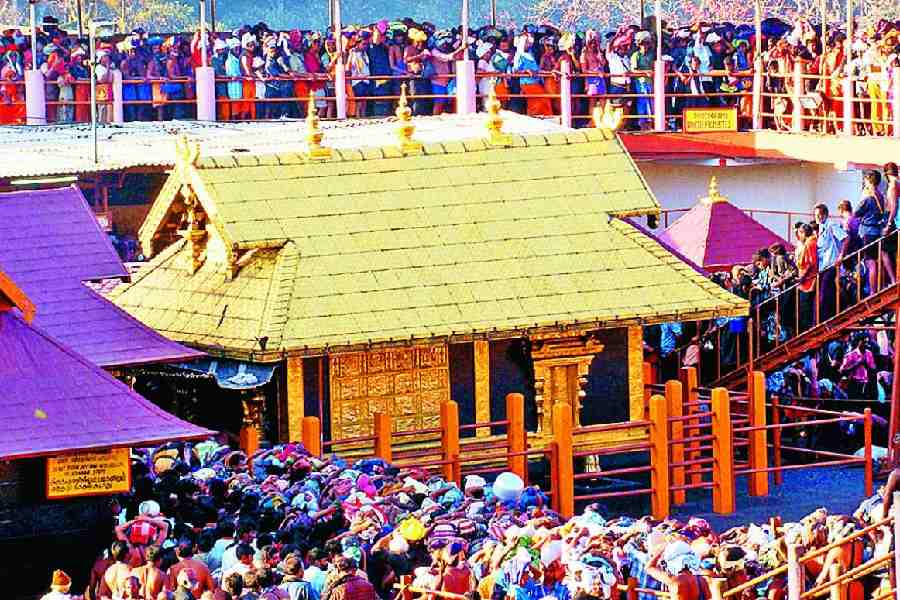
Tribals still throng the mandir during the puja in large numbers. A mela is held just outside the palace, too.
“Everyone is allowed. The number of visitors swell to nearly 10,000,” Kalpana Devi said. “Only the sandhipuja is restricted to family members and the extended royal family only,” she added.
This year, she is hoping for a full house.
“Last year, visitors were few due to the massive cyclone that caused havoc in Odisha. I could rationalise the reason behind the low turnout, but still feel bad about it. After all, it was the last time our father, the late Maharaja, organised Durga Puja,” said the daughter determined to carry on the legacy.