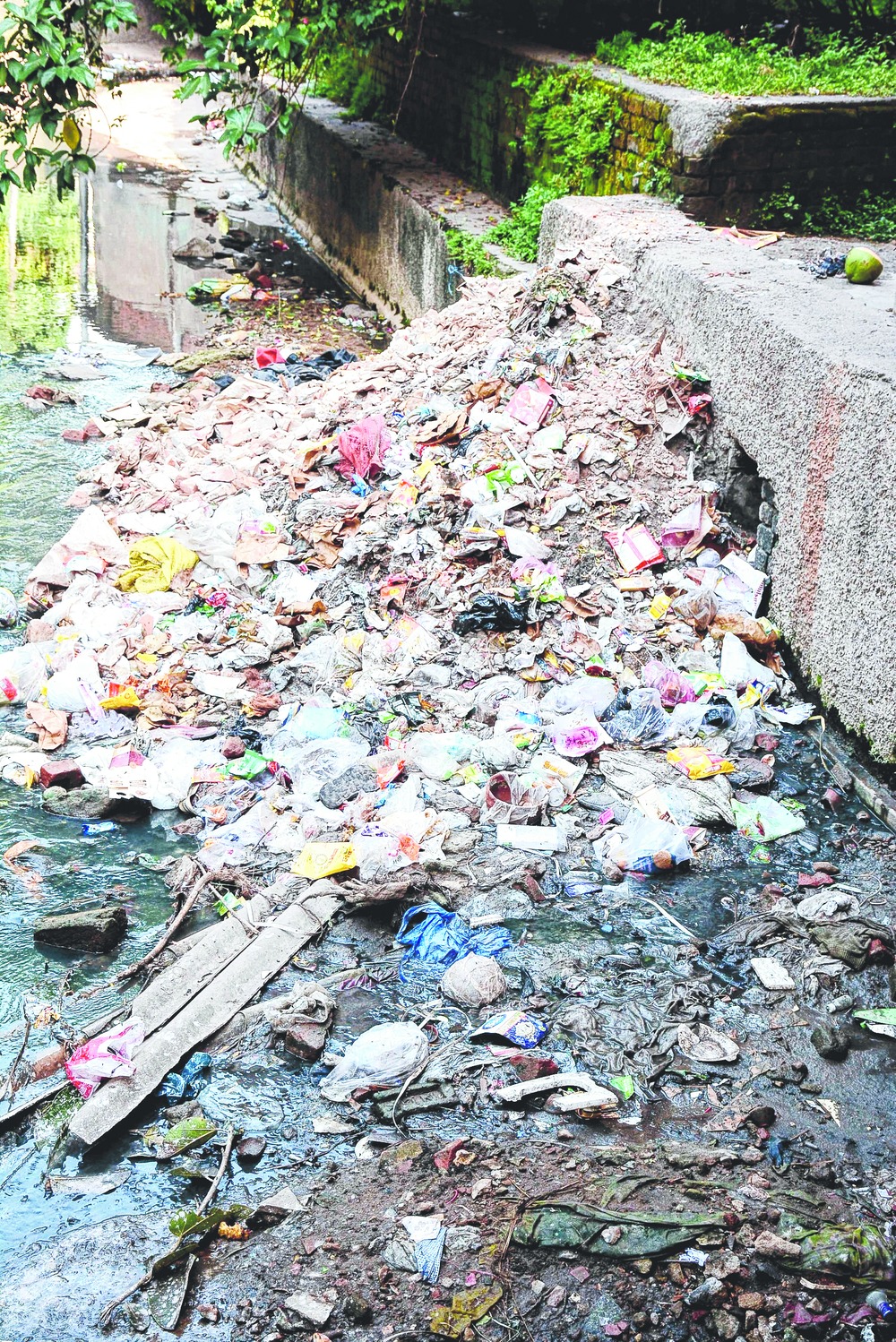

Unclean air coolers at homes, clogged drains in several densely populated neighbourhoods and fodder buckets in mushrooming cattle sheds across Jamshedpur have been named culprits this dengue season.
The East Singhbhum district office of the Integrated Disease Surveillance Programme (IDSP) has listed residential areas such as Refugee Colony in Kashidih, near Sakchi, and Devun Bagan in Golmuri as vulnerable pockets, courtesy drains and culverts that haven't been cleaned for years.
Similarly, Shastrinagar and Ramnagar in Kadma are said to be breeding grounds for the Aedes aegypti mosquito because of cattle sheds where water accumulates for days in fodder buckets.
So far, the steel city has reported three positive cases of the vector-borne viral disease, but the IDSP office is unwilling to take chances, given Jamshedpur's past dengue records.
In 2010, there was a major outbreak and four official fatalities. The disease was somewhat contained in 2011, with only nine positive cases and one death. However, 2012 once again saw a spurt in Aedes stings, with 46 cases. Fortunately, there were no fatalities. In 2013, the count dropped to 27 while last year, no Jamshedpurean was detected with dengue fever.
"The three dengue patients (admitted to various hospitals in the city) are showing signs of improvement. Their blood platelet count has crossed one lakh. However, the Aedes mosquito continues to stalk urban and semi-urban areas, with water remaining stagnant in tyres at garages, various home appliances like air coolers and cattle sheds," IDSP officer Sahir Pall shared his concerns with The Telegraph.
While Refugee Colony, Devun Bagan, Shastrinagar and Ramnagar are under the jurisdiction of Jamshedpur Notified Area Committee (JNAC), clogged drains in Hadi Godam and Gaur Basti areas under Mango Notified Area Committee (MNAC) are letting out similar threats of a dengue outbreak.
Special officer of JNAC Dipak Sahay said following instructions from the district health authorities, they had asked their health inspectors to ensure cleaning of clogged drains and spraying of larvicides in all vulnerable areas.
Sahay's counterpart in MNAC Jagadish Yadav said spraying of larvicides had already begun in low-lying areas. "Health inspectors have been asked to monitor cleaning of clogged drains and ensure that abandoned containers are destroyed to prevent accumulation of water," he added.