The Centre has proposed to finalise normative allocations for states under the new rural job scheme based on "objective parameters" recommended by the 16th Finance Commission, a move that some states are likely to oppose.
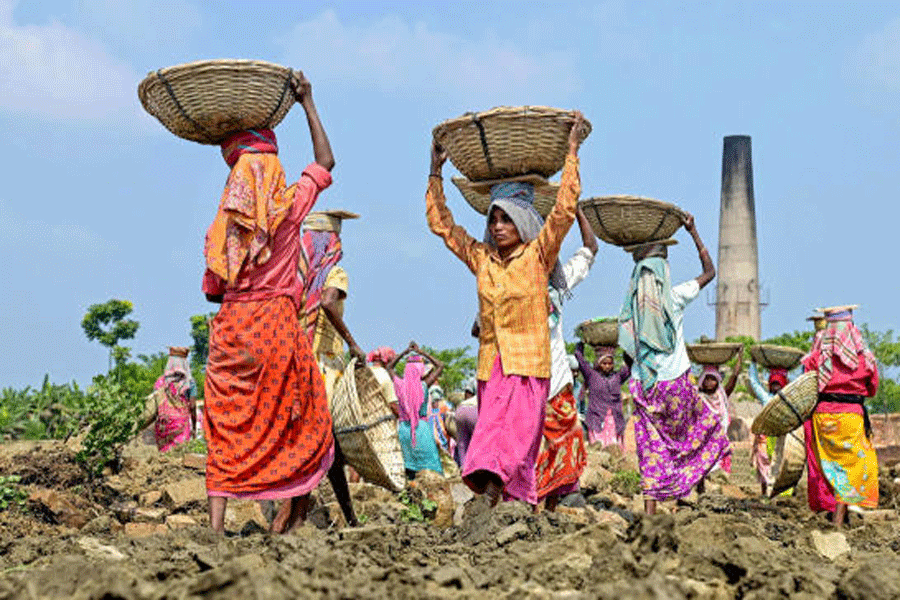
Under the Viksit Bharat — Guarantee for Rozgar and Ajeevika Mission (Gramin), which aims to provide up to 125 days of unskilled work to every rural household per year, the Centre has increased the share of states in the expenditure to 40 per cent from 10 per cent under the MGNREGA, the 100-day scheme that has been replaced.
The ministry of rural development (MoRD) has published draft rules on the criteria for normative allocations of funds. "... The central government shall adopt the objective parameters used for horizontal devolution among states as recommended by the 16th Finance Commission and accepted by the government," it said.
The MoRD has sought public feedback within 30 days before finalising the draft rules.
CPM Rajya Sabha member John Brittas said the 16th Finance Commission did not use the term “objective parameters”. “It means the MoRD will follow certain parameters as it finds suitable,” Brittas said.
CPI Rajya Sabha member Sandosh Kumar P. expressed concern over states such as Kerala losing out under the 16th Finance Commission. “Kerala was getting 3.92 per cent of central devolution of funds under the 10th Finance Commission. It was reduced to 1.96 per cent under the 15th Finance Commission. After protests, it has now been raised to 2.38 per cent. The southern states, particularly Kerala, will lose if the 16th Finance Commission formula is followed for allocation of funds under VB-G RAM G,” he said.