Teachers of primary and upper primary schools have expressed disappointment at the Supreme Court's decision to set aside review petitions against its ruling mandating that teachers clear the Teacher Eligibility Test (TET) to continue in their jobs.
More than 65 review petitions were filed in the court seeking review of the September 2025 judgment in the Anjuman Ishaate-Taleem Trust vs State of Maharashtra case. On May 29 this year, a division bench of Justices Dipankar Datta and Manmohan upheld its original judgment, but allowed the teachers to clear the TET by August 31, 2028, instead of August 31, 2027.
The teachers’ organisations have demanded legislative measures such as an amendment to the Right To Education (RTE) Act to get around the mandatory TET qualification.
In pursuance of the provisions of the RTE Act, the regulatory body National Council for Teacher Education had in August 2010 made clearing the TET mandatory for appointment of teachers for Class I to Class VIII. The state governments hold the TET every year, while the CBSE also conducts a Central TET.
However, this requirement was always enforced prospectively. In September 2025, the top court ruled that teachers recruited prior to the enactment of the RTE Act are required to clear the TET if they have more than five years of service left. It also made the TET mandatory for promotions.
The Akhil Bharatiya Rashtriya Shaikshik Mahasangh (ABRSM), which has over 12 lakh teachers as members, has decided to hold protests in every state, including Delhi, during the monsoon session of Parliament in July to demand an amendment to the RTE Act to exempt teachers appointed before 2010 from the TET criterion.
Shashank Pandey, the secretary of the ABRSM's Uttar Pradesh unit, said over 20 lakh teachers across the country would be adversely affected by the judgment.
“Over 20 lakh teachers do not fulfil the TET criterion. This is because they were appointed when the TET had not been introduced. The service conditions they were appointed under did not obviously include the TET. Now they are being asked to clear the TET. We are against this retrospective implementation of the provision. This can be done through an amendment bill,” Pandey said.
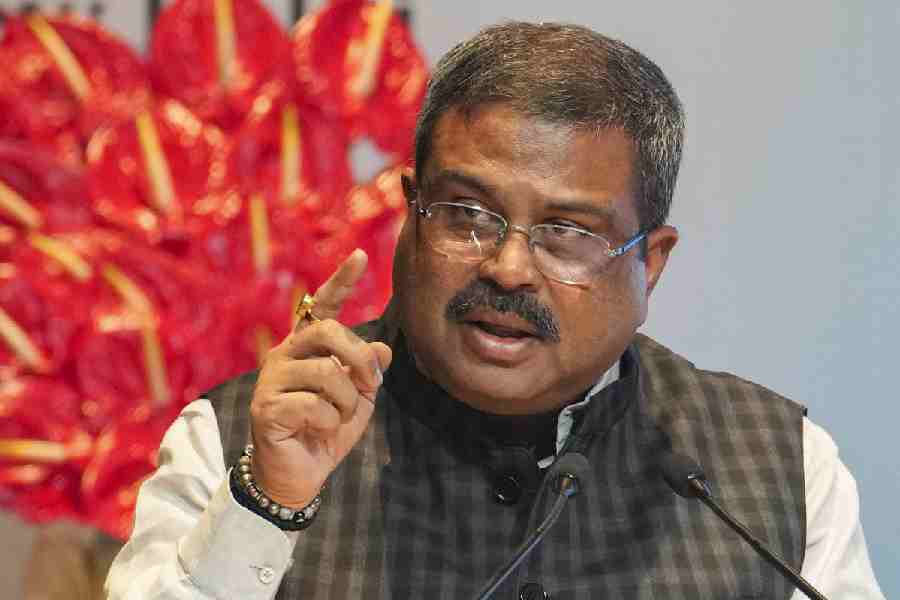
During the Assembly elections in Bengal, Union education minister Dharmendra Pradhan had pledged to “do something on the TET issue” if the BJP came to power.
Tribhuvan Singh, the vice-president of the Uttar Pradesh Shiksha Mitra Sangha, an association of contract teachers, said nearly 80,000 such staff in Uttar Pradesh and over 6 lakh across the country would lose their jobs because of the TET requirement.
He said the TET pass rate was just 20 per cent. Fresh graduates often fail to clear the test while in-service teachers, who have to also involve themselves in government work such as census surveys, elections and relief measures, would find it difficult to pass the exam. Singh said Pradhan must keep his word.
Naveen Sharma, a teacher leader from Rajasthan, said teachers in the state had decided to submit memorandums to the government to demand the promulgation of an ordinance to overcome the court ruling immediately.