India is among six countries that together account for 61 per cent of the world's greenhouse gas emissions from croplands, a new study has estimated.
The study, published in the journal Nature Climate Change, breaks down agricultural emissions by crop and source, and creates the most precise map yet of hotspots, with pathways towards reducing hotspots, researchers said.
"This is an absolute global synthesis of all the information you need, by country, by production system, for calculating greenhouse gas emissions -- it's been a significant undertaking," senior author Mario Herrero, professor of global development at Cornell University's college of agriculture and life sciences, said.
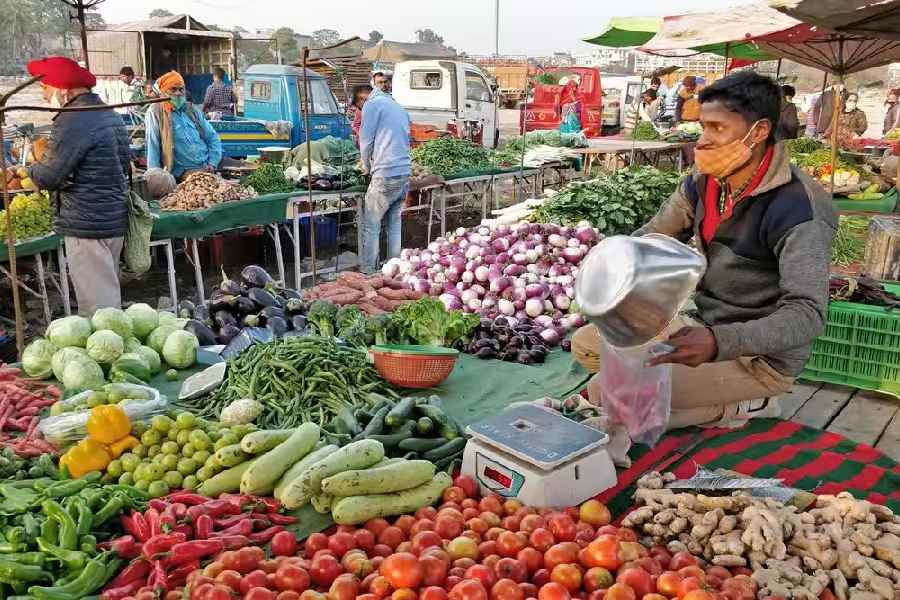
Regions producing a lot of food are often high emitters, with cultivation of rice alone contributing 43 per cent of cropland emissions, the study found.
Four crops -- rice, maize, oil palm and wheat -- accounted for nearly three-quarters of cropland emissions, it said.
"It's all about rice. That's where the biggest sources and the biggest opportunities are," Herrero said.
"Some of the more nutritious foods, fruits and vegetables, have way lower footprints. I was surprised by the importance of peatland (vegetable matter) areas, too, which was much larger than expected," the senior author said.
Source of the emissions was found to differ depending on the crop -- drained peatlands for palm oil production (35 per cent), flooded rice paddies (35 per cent) and synthetic fertilisers used in high-production areas (23 per cent).
Ground sources and models were used to map global cropland emissions at high resolution -- down to about 10 kilometres -- while breaking down emissions by crop and source and identifying regions for more precise mitigation.
"The six highest-emitting countries, China, Indonesia, India, USA, Thailand and Brazil, collectively accounted for 61 per cent of global cropland emissions," the authors wrote.
"Countries with high crop production levels, such as China, India, USA and Brazil, also emitted substantial (greenhouse gases) from synthetic fertiliser use," they said.
Farmlands make up 12 per cent of land use globally and account for 25 per cent of greenhouse gas emissions within the agricultural sector, the researchers said.
However, the last effort to map global cropland emissions dates to 2000 -- since then, the sector has grown, management practices have changed, and scientists have many more tools to model complex systems, they said.
The team also estimated that croplands emitted the greenhouse gas equivalent of 2.5 gigatonnes of carbon dioxide in 2020, with East Asia and Pacific contributing about half of the total, followed by South Asia, Europe and Central Asia, which collectively contributed 30 per cent.
Emission mitigating strategies need to be tailored depending on the crop and emissions source, the researchers said.
They added that a controlled rewetting of peatlands, shifts in the management of flooded rice paddies and an optimised fertiliser use could significantly reduce emissions in respective regions and contexts.
Herrero said the maps will ultimately allow countries and communities to address emissions at a hyper-local level.
Except for the headline, this story has not been edited by The Telegraph Online staff and has been published from a syndicated feed.