National Opposition leaders, including Rahul Gandhi, Mamata Banerjee, Siddaramaiah, Akhilesh Yadav and M.K. Stalin, have repeatedly accused the Election Commission under chief election commissioner (CEC) Gyanesh Kumar of acting in favour of the ruling BJP, but allegations of partisanship against the poll panel are not new.
The latest flashpoint came on April 8, when a Trinamool delegation met the Election Commission. The meeting lasted seven minutes, after which Bengal’s ruling party alleged that Kumar told them to “get lost”. The CEC did not directly address the remark but responded with a post on X, giving an “ultimatum”.
Last month, more than 190 MPs signed notices in both Houses of Parliament seeking Kumar’s removal. Both notices were rejected.
During the tenure of former CEC Navin Chawla, the BJP had in 2006 petitioned the President seeking his removal. The party had alleged that Chawla acted in a partisan manner and maintained close links with the Congress. His conduct during the Emergency in India, when he was seen as close to Sanjay Gandhi, and corruption allegations, were also cited.
Chawla was made an election commissioner in 2005, but the issue escalated in early 2006 when the NDA leaders petitioned then President APJ Abdul Kalam seeking Chawla’s removal. Over 200 MPs backed the plea, even as the government declined to refer it to the CEC under Article 324(5), prompting BJP leader Jaswant Singh to move the Supreme Court, which issued notices before the petition was later withdrawn in favour of approaching the CEC.
Then CEC N. Gopalaswami made a formal recommendation in 2009 to remove Chawla. The Centre found no merit in the charges and rejected it, paving the way for Chawla’s elevation as CEC later that year.
Against this backdrop, the current controversy over SIR and voter lists has revived a broader question: whether the issue lies with individuals or with the institutional framework itself.
Former Union minister of external affairs Salman Khurshid said the credibility of the Election Commission depends not only on its decisions but also on how those decisions are perceived.
“The EC is unable to understand that their decisions need to carry everyone with them,” the Congress ex-MP told The Telegraph Online. “It is like being a good judge. A good judge has to hear everybody. And should not appear partisan. That impression is lacking.”
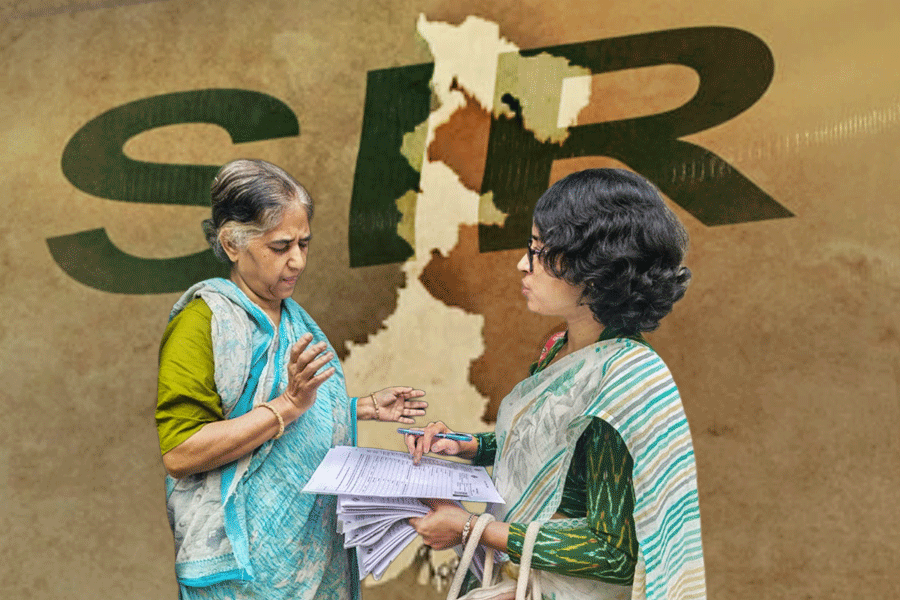
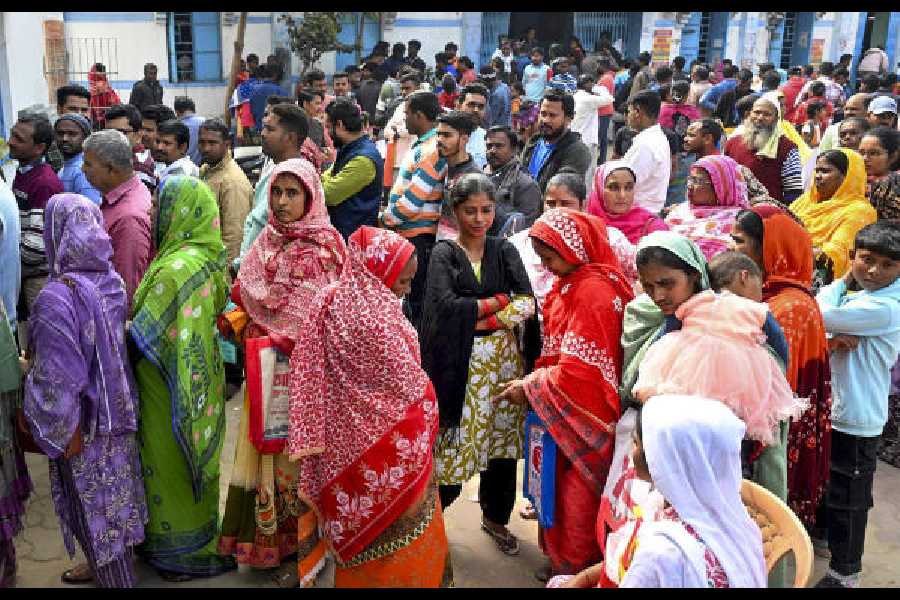
Khurshid raised concerns about the ongoing special intensive revision (SIR) of electoral rolls, particularly the deletion of names and the absence of an integrated voter database to account for migration.
“I work in Delhi. I am in the Supreme Court the whole day. My name is in Farookhabad constituency. Can you exclude my name? Many people from villages go and work in district headquarters. If he is not found at home will his name get deleted? EC is not responding to these concerns. They are being accused of dishonesty. They have to listen. They are using language that political groups use,” he said.
He also questioned changes to the appointment process of Election Commissioners, particularly the removal of the Chief Justice of India from the selection panel under a 2023 law.
“Why was he removed? Nobody gave a reason. The CBI chief, police chief, the CJI and auditor general have a say. Somebody should explain. Is the CJI overworked?” Khurshid said.
On the BJP’s allegations against Chawla, Khurshid said, “My memory is not so good. Anyone can make allegations. Everything depends on the nature of the allegations. If Congress did something unacceptable, things have changed. What was the role of the first CEC, and then T.N. Seshan? CEC’s were given incremental powers..you can’t say 30 years back this used to happen, so it will happen.”
The change in CEC’s appointment process followed the Supreme Court’s 2023 ruling in the Anoop Baranwal vs Union of India case, which had directed that a committee comprising the prime minister, leader of Opposition and the Chief Justice of India should oversee appointments to the Election Commission.
A law passed later that year replaced the Chief Justice of India with a Union Cabinet minister.
The bill was passed in Lok Sabha amidst the en masse suspension of Opposition MPs.
Former CEC Gopalaswami disagreed with the demand for judicial involvement, warning that it could affect the judiciary’s standing.
“Judiciary is the final arbiter. It should not get involved. Their credibility will go down. Can [Trinamool leader] Derek O’Brien shout at the Supreme Court? Can anyone say, ‘Your lordship, you made a mistake?’,” Gopalaswami, a Padma Bhushan recipient, told The Telegraph Online.
Former CEC Gopalaswami, who has worked with Chawla in the EC, instead pointed to systemic shortcomings, particularly in the maintenance of electoral rolls.
“All these SIR controversies are political creation,” Gopalaswami said. “SIR should be done every 10 years. Every September a verification of the voter list is done. But political parties concentrate on additions. Every death is reported in the municipal corporations, where certificates are issued, which are mapped by documents. Why isn’t this integrated with the voter rolls?”.
He also highlighted the challenges posed by migration and the lack of regular verification.
“Someone can be from Malda and work in Calcutta. A family maybe staying in Jorasanko [in north Kolkata] and once the family expands, a few of them may relocate to New Town [on the outskirts]. This churning is normal. But why isn’t it captured systematically?” he said, addressing the controversy in Bengal.
“Unless someone is a conscious citizen and reports the changes, we cannot capture that. There was a practice of the EC where every three years a door-to-door check was done. It has not taken place for some time. Roughly, about 3 to 4 per cent voters get out of sync from the list,” he added.
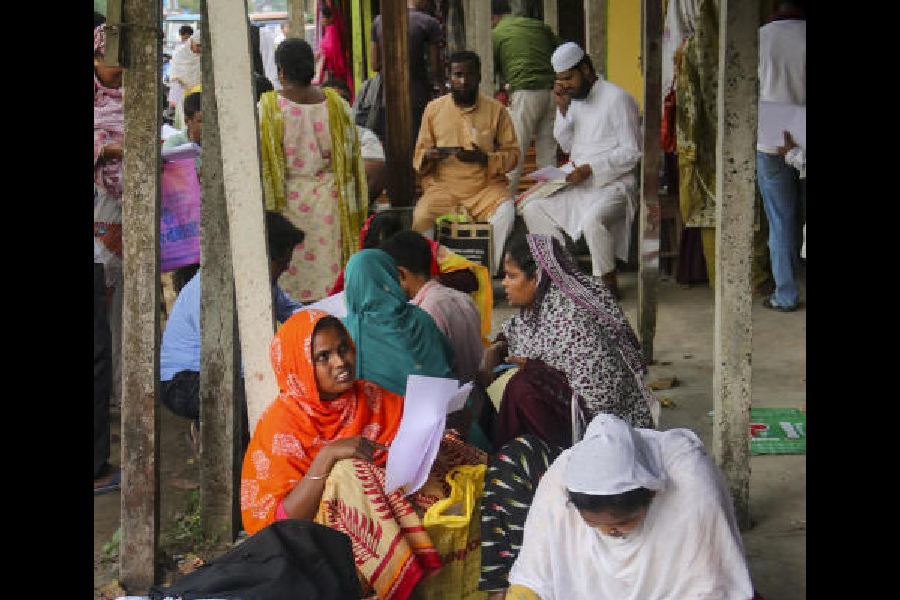
Gopalaswami, a former Union home secretary, said “everyone is culpable" for the controversies.
“The contention has become entangling citizenship with SIR. The citizenship Act was amended in 2003. The MHA [Union Ministry of Home Affairs] planned for a citizenship identity card. Many citizens would have been excluded. In 2007-08 a pilot project was planned. The UPA idea was a pilot project in border areas. But the idea was dropped. I don’t know why, but a golden opportunity was missed,” he said.
In 2010, the Aadhaar card was introduced in India.
In 2015, the EC wanted to connect the voter identity card aka EPIC [electoral photo identity card] with Aadhaar. “It received a rap from the judiciary because of privacy issues,” Gopalaswami said.
He added: “In Tamil Nadu, 15 per cent names are deleted [in the SIR]. Of these, 27 lakh are dead. If you see the annual death rate of a state and assume everyone was a voter then the process seems normal.”
The Telegraph Online reached out to a number of national-level BJP leaders for their comments on the SIR controversy and the change in the CEC appointment process. None of them responded.