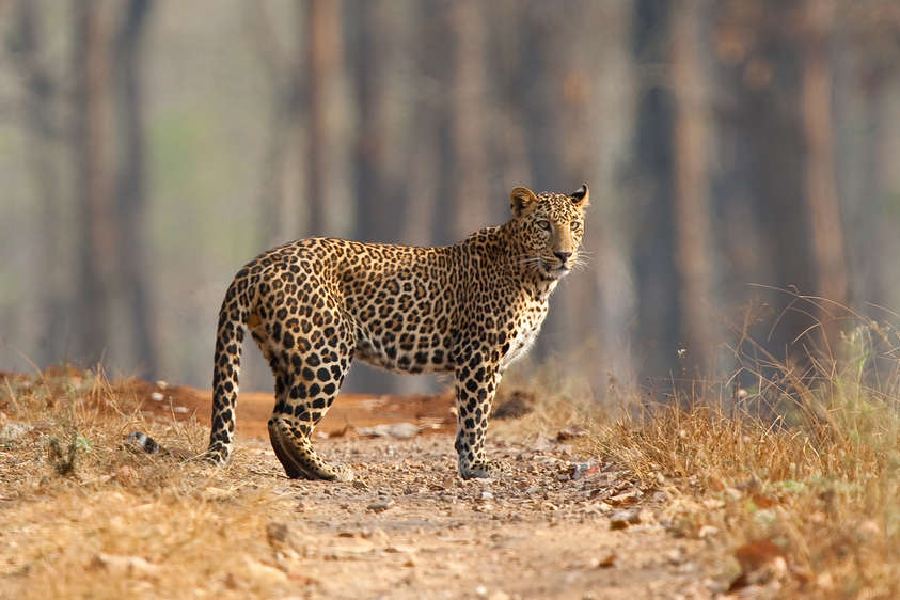
The Rajasthan High Court has prohibited night safaris and the use of drones in Pali district’s Jawai Leopard Reserve, expressing concern over disturbance to wildlife due to unregulated tourism activities.
A bench comprising Justices Sandeep Shah and Pushpendra Singh Bhati directed the state government to ensure that no safari or wildlife-spotting activity is conducted beyond the prescribed hours of 6 am to 7 pm. The direction came while hearing a public interest litigation filed by a resident, Apoorva Agrawat.
The court noted that such time restrictions are in line with the norms followed at Ranthambore National Park and are necessary to minimise stress and disturbance to animals, particularly during dusk hours.
It further directed authorities to strictly prohibit the use of torchlights, searchlights, spotlights, drones or any similar devices for locating or observing wildlife, stating such practices interfere with animals' natural behaviour and habitats.
The court also ordered that any instance of misconduct by safari operators, hospitality personnel or other individuals, causing harassment or interference with wildlife, must be promptly reported and dealt with expeditiously under the law through appropriate penal and regulatory action.
Referring to Article 48A of the Constitution and the provisions of the Wildlife (Protection) Act, 1972, the court emphasised that environmental protection and safeguarding of forests and wildlife form a key part of governance.
The bench took note of submissions highlighting rampant violation of ecological norms in the reserve, including the use of artificial lights and drones to track animals near their caves and dens, which was said to be causing stress to wildlife.
Stressing the need for effective enforcement, the court directed the state government and concerned authorities to implement adequate preventive and regulatory measures to ensure compliance with its order.
Except for the headline, this story has not been edited by The Telegraph Online staff and has been published from a syndicated feed.