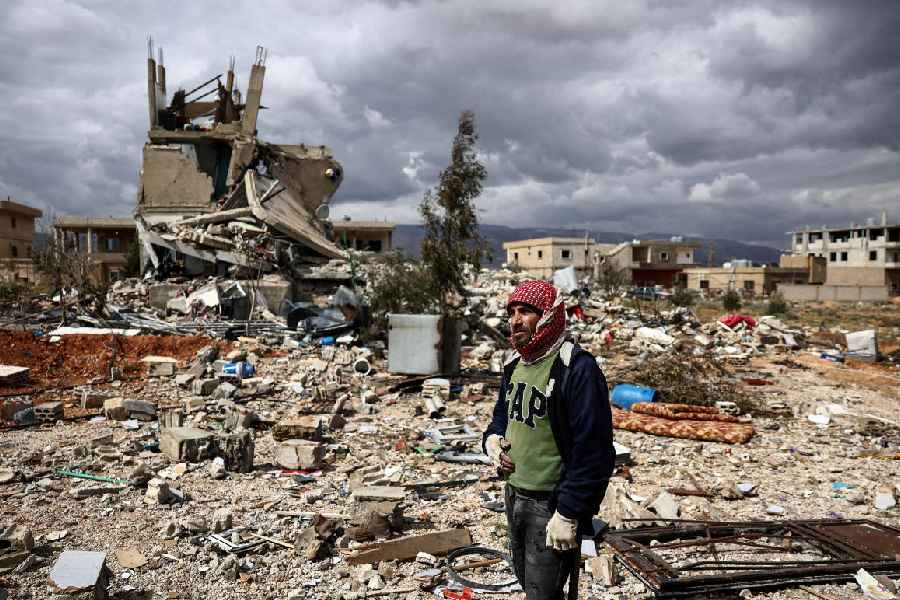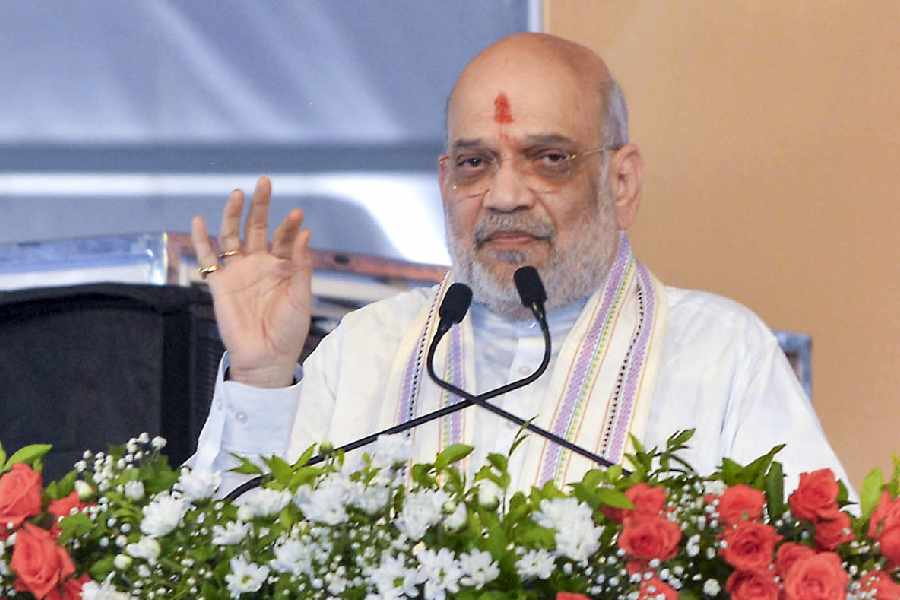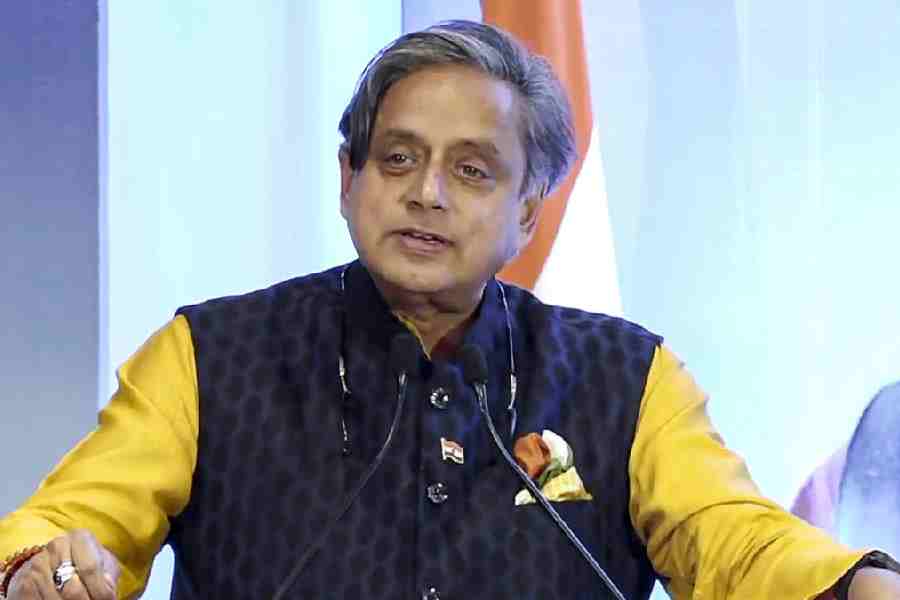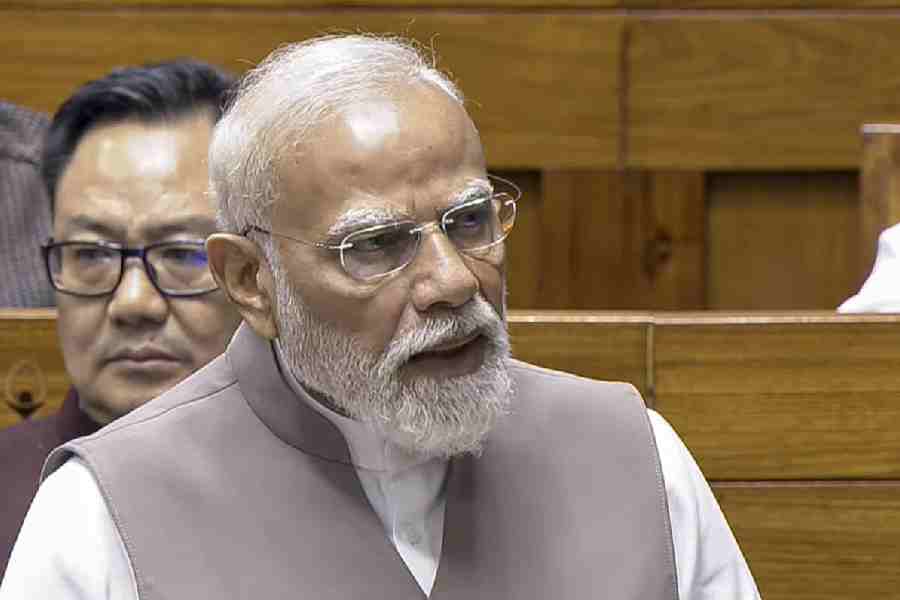
Prime Minister Narendra Modi on Monday told the Lok Sabha that the war in West Asia had created “unprecedented economic, national security and humanitarian” challenges for India, and urged citizens to brace for its long-term impact, drawing a parallel with the Covid-19 pandemic.
“The situation in West Asia at present is worrisome... It has had a negative impact on the world economy and people... The war has set unprecedented challenges for India, too. These challenges are economic, national security-related, and humanitarian,” Modi said in a statement to the House on the ongoing conflict and its implications for the country.
Modi’s cautionary words came on a day the stock market took a beating. The BSE Sensex dived 1,836.57 points, or 2.46 per cent, to settle at 72,696.39. The NSE Nifty tanked 601.85 points, or 2.6 per cent, to end at 22,512.65.
(See Business)
An unusual calm prevailed during Modi’s nearly 30-minute statement, with no questions or protests from the Opposition, which has been demanding a detailed discussion in Parliament on the West Asia crisis. The Opposition appeared to have been caught off guard, as the Prime Minister’s statement was not listed in advance. Several key Opposition leaders, including Rahul Gandhi, were absent from the House.
While the economic strain is linked to India’s heavy dependence on oil and gas imports from West Asia, the humanitarian concern centres on the safety of a large number of Indians working in the Gulf. Modi flagged internal security risks arising from attempts by “some elements” to exploit the situation.
“When such crises arise, some elements try to exploit them. Therefore, all law and order agencies have been put on alert. Security is being further strengthened, including coastal security, border security, cybersecurity and strategic installations,” Modi said.
Warning that the fallout of the conflict could be prolonged, Modi called for national unity and preparedness. “The difficult circumstances created by this war in the world are likely to have long-lasting effects, so we must be prepared and united. We have faced such challenges with unity during the Covid-19 pandemic. Now we need to be prepared again,” he said.
Underlining that energy is the “backbone of the modern economy”, Modi told the House that the government was working with a comprehensive short-, medium- and long-term strategy. “I am fully confident that through the joint efforts of the government and industry, we will be able to face these circumstances effectively,” he said.
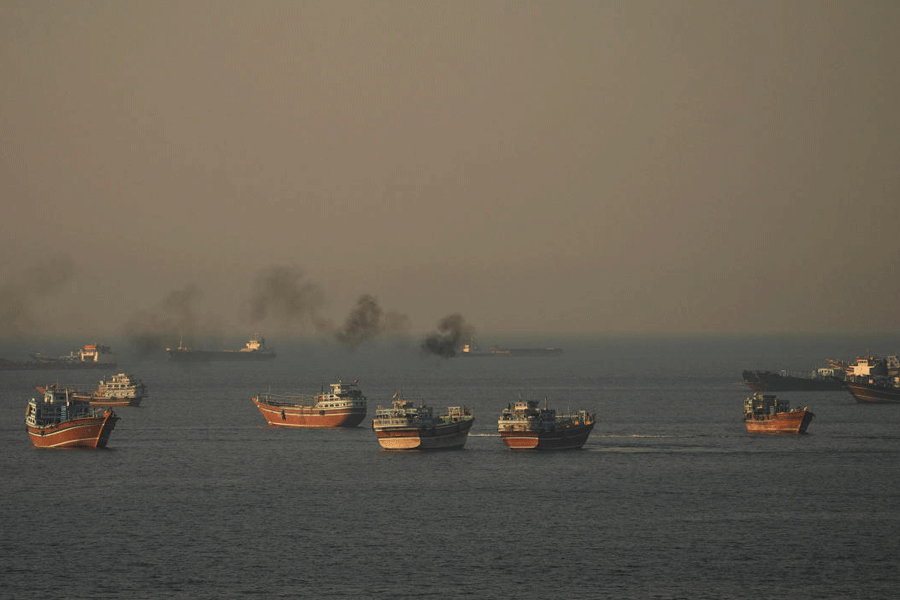
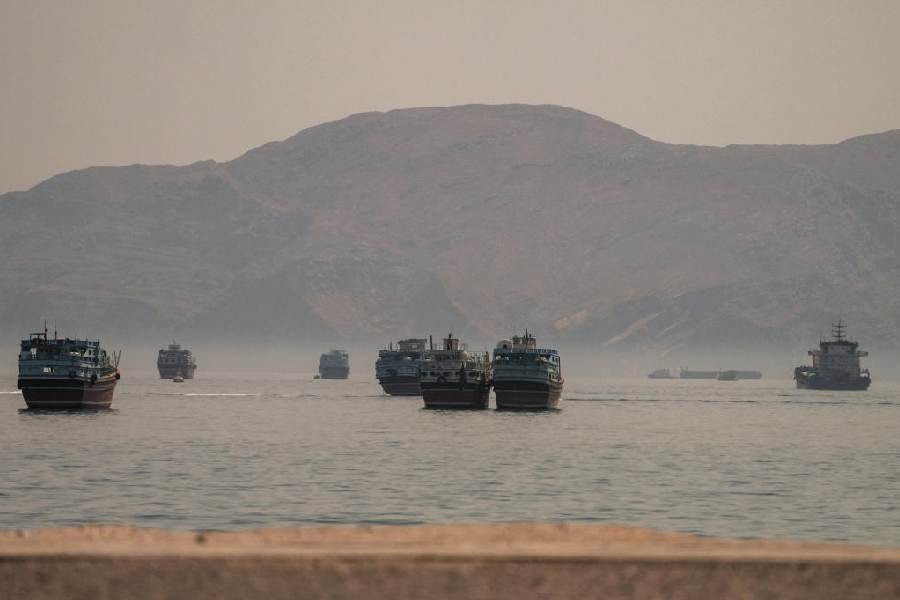
Modi also used the occasion to pat his own back, saying efforts had been made to ensure that supplies of petrol, diesel and cooking gas were not significantly disrupted despite the war making shipping through the Strait of Hormuz difficult.
“We all know that India imports 60 per cent of its LPG needs. Due to uncertain supply, the government is prioritising domestic supply. LPG production in the country is also being increased,” he said.
Seeking to reassure citizens, he said India had adequate petroleum stocks, with strategic reserves exceeding 5.3 million metric tonnes. He also said that over the past 11 years, his government had diversified the country’s energy sourcing. “Today, we import energy from 41 countries as compared to 27 countries in the last decade,” he said.
Modi said the government was in constant touch with suppliers across countries and was closely tracking developments in the Gulf and surrounding shipping routes to ensure uninterrupted movement of essential cargo. “Our effort is to ensure that ships carrying essential goods, whether oil, gas, or fertiliser, reach India safely,” he said. He highlighted the expansion of ethanol blending under his government, claiming it had helped reduce oil imports by about 4.5 crore barrels.
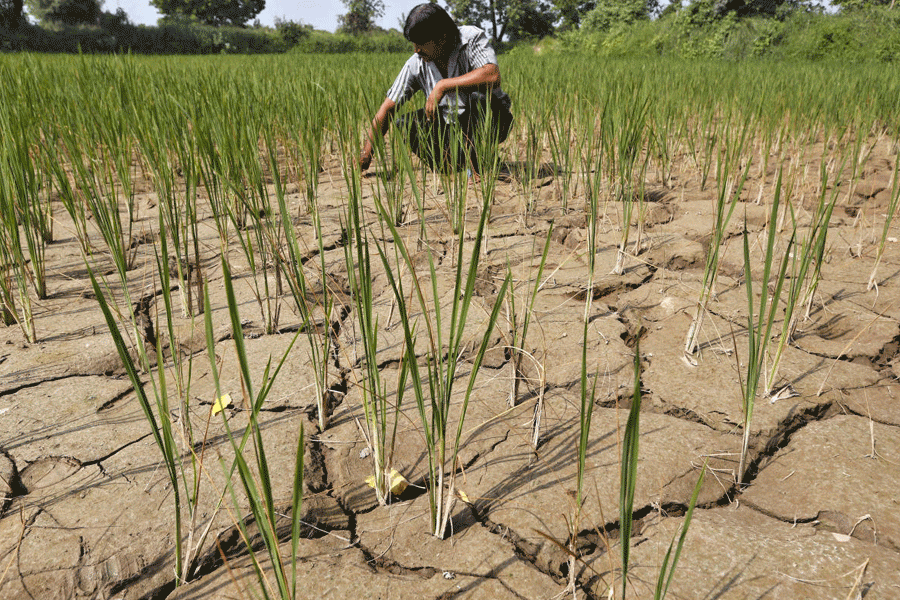
Reaching out to the electorally significant farming community, Modi sought to allay concerns over fertiliser supplies for the summer crop season, even as Gulf countries account for a large share of India’s urea imports.
“A major question is what impact will the war have on agriculture?... We are also striving to ensure proper sowing for the kharif season,” he said, adding that even during the pandemic, the government had not allowed the burden of global disruptions to fall on farmers. He said domestic urea production had been stepped up, with six manufacturing units now functional.
On the challenge of rising summer power demand, Modi said coal stocks were sufficient at power plants across the country and noted that India had produced 100 crore tonnes of coal for the second consecutive year. He also claimed that the government’s preparedness had been strengthened by rapid growth in renewable energy, with nearly half of India’s installed power generation capacity now coming from renewable sources.