Union home minister Amit Shah on Saturday announced that the Narcotics Control Bureau has seized the first-ever consignment of Captagon, the so-called "Jihadi Drug", worth Rs 182 crore.
In a post on X, he said the Modi government has resolved to make a "Drug-Free India".
"Glad to share that through 'Operation RAGEPILL', our agencies have achieved the first-ever seizure of Captagon, the so-called "Jihadi Drug", worth Rs 182 crore," Shah said.
"The busting of the drug consignment destined for the Middle East and the arrest of a foreign national stand out as shining examples of our commitment to zero tolerance against drugs," he said.
"I repeat we will clamp down on every gram of drugs entering India or leaving the country using our territory as the transit route. Kudos to the brave and vigilant warriors of the NCB. @narcoticsbureau," the minister said.
What is Captagon, and why 'jihadi drug'?
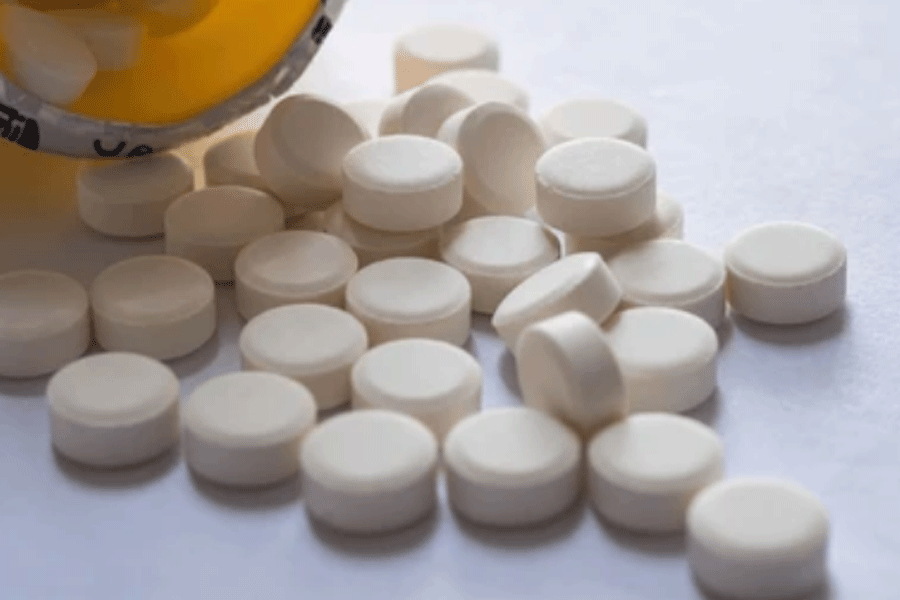
Captagon, a highly addictive stimulant drug linked to the amphetamine family, has, in recent times, been largely manufactured illegally.
Developed in the 1960s by German pharmaceutical firm Degussa Pharma Gruppe, Captagon was marketed as a psychoactive drug commonly used to treat conditions such as narcolepsy and attention deficit disorder, while also serving as a stimulant for the central nervous system.
However, these tablets contained fenetylline, a synthetic drug of the phenethylamine family, which was later, in 1971, added to Schedule II of the United Nations Convention on Psychotropic Substances. Being declared a controlled substance, most countries discontinued the use of Captagon.
In recent years, illegal manufacturing has continued, often marked with two crescent moons. Termed 'jihadi drug', Captagon has gained notoriety for its widespread use among armed militant and extremist groups across the Middle East.
Militant groups use this drug to stay awake for days, boost alertness, reduce fatigue and hunger, and dull fear and pain. It's often regarded as a major source behind terror funding.