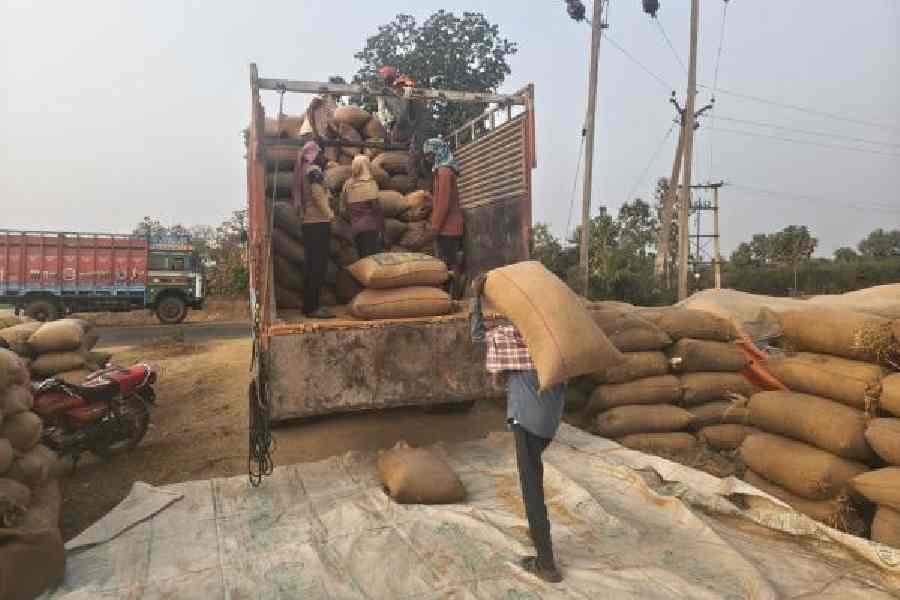
Paddy procurement in Odisha is set to face a major disruption during the ongoing Kharif marketing season (KMS), with the All Odisha Rice Millers’ Association (AORMA) launching an indefinite strike from Monday.
The decision comes after failed negotiations with the state government over longstanding demands, including revision of milling and transportation charges and the release of pending dues.
The association has demanded an increase in custom milling charges, revision of transportation rates for paddy and rice and enhanced custody and maintenance charges for the grains stored in their godowns. It claims that despite repeated reminders, the government has failed to respond adequately.
“The rice milling industry plays a crucial role in the state’s food supply chain, but we cannot continue to operate under such unsustainable conditions,” AORMA president Mahesh Kumar Bansal told The Telegraph. “We have been patient, but the lack of response from the authorities has forced us into this situation. We urge the government to address our demands immediately to avoid disruptions in paddy procurement and rice supply. The strike will continue until the demands of the millers are met.”
There are currently 1,420 active rice mills in the state, which handle a significant volume of Odisha’s paddy and rice processing. According to AORMA, issues relating to procurement policies, custom milling charges, transportation and other operational concerns remain unaddressed despite multiple communications.
“The millers serve more than what they are meagrely paid for,” Bansal added. “We safeguard the paddy in our secured godowns for more than twelve months, far beyond the agreed two-month period in our contracts. But till date, we have not received any payment for expenses incurred in ensuring safe custody and maintenance. It looks like a mirage now. Around ₹400 crore is pending from the government. How can we run our operations?”
The general secretary of the association, Laxminrayan Deepak Ranjan Das, highlighted the plight of raw millers, who he said are struggling to stay afloat amid increasing costs and operational challenges.
“The raw millers of this state are struggling hard for their survival,” Das said. “They face various problems throughout the KMS while milling and delivering custom milled rice (CMR). The decrease in draiga (loss of weight or moisture in grains) has made it extremely difficult for raw millers to survive in this competitive market.”
Das also flagged the government’s delay in settling payments.
“We have noticed that the authorities always show a disinclined attitude towards our rice millers while releasing pending dues. We constantly face hurdles in recovering custody and maintenance charges, as well as transportation reimbursements from the Corporation, even though all losses due to storage damage and expenses incurred are borne by the millers. Yet, we are subjected to immense harassment while trying to secure those payments.”
He further alleged that millers are being billed for items not actually required.
“All stocks are stored in covered go-downs, yet we are asked to provide bills for tarpaulins and wooden crates, which are unnecessary in such facilities. Every KMS cycle, we face hassles regarding transportation charges as well,” he said.
Das claimed that transport rate revisions have been unrealistic and are driving contractors away.
“We have never seen a reduction in transportation rates anywhere else in India,” he said. “But this office has drastically cut rates in the third slab, which has discouraged contractors and millers alike. No transport contractor has come forward in the tender process so far because of the unattractive rates.”
Despite the looming impact on procurement, the state government has yet to issue a formal response to the strike.
The millers have expressed willingness to resume operations if their grievances are addressed.
The state government is yet to react to the issue.