HOW THE CANONISATION UNFOLDED
Mother Teresa’s canonisation marked a highlight of the Jubilee year. In Christianity, the Jubilee is a special year of remission of sins and universal pardon. On March 13, 2015, Pope Francis announced a special Jubilee on the theme of mercy to be held from December 8, 2015, until November 20, 2016.
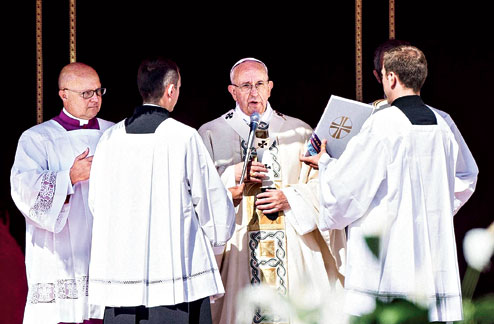
The Pope’s homily on Sunday was primarily addressed to volunteer workers celebrating the Jubilee. Pope Francis called St Teresa of Calcutta a “tireless worker of mercy”.
He also praised her “defence of human life, those unborn and those abandoned and discarded,” emphasising her relentless petitioning against abortion


Pope Francis is following in the footsteps of Mother Teresa by offering some 1,500 homeless people a pizza lunch at the Vatican after her Canonisation Mass.
The homeless, most of whom live in shelters run by the Missionaries of Charity, came to Rome overnight on buses from across Italy to take part in Sunday’s Mass. They got seats of honour for the celebration.
A Neapolitan pizza maker brought 20 people and three pizza ovens to cook the lunch, which was scheduled to be served to the guests by some 250 sisters and priests.
• With canonisation, the Church declares a person worthy of imitation by the faithful
• Canonisation officially authorises veneration and intercession of a particular saint throughout the universal Church
• Mother Teresa’s name will now be added to the catalogue of saints and can be invoked in public prayers
• Churches can be dedicated to her memory, Mass can be offered in her honour and she will have a feast day in her name
• Her images can bear a halo
• A saint who has some universal appeal may be added to the general calendar of the Church as a Memorial or Optional Memorial.