Foreign secretary Vikram Misri on Monday said disengagement with Myanmar had historically not produced results and the vacuum it created allowed others to step in to India’s detriment.
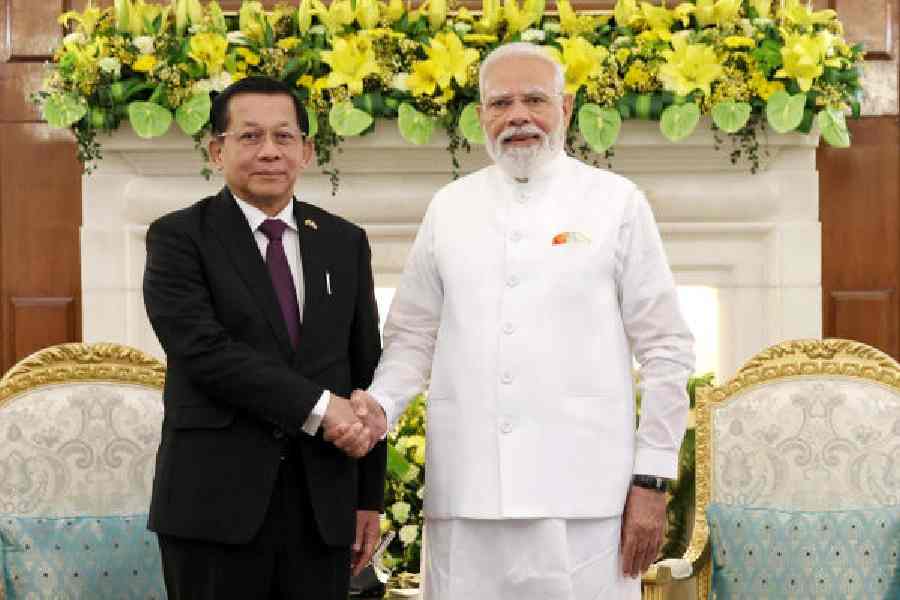
Misri’s remark came amid questions about New Delhi’s invitation to Myanmar coup leader-turned-President Min Aung Hlaing for an official visit.
This is Hlaing’s first overseas visit after his country’s parliament chose him for the office of President in April. At the briefing on Hlaing’s visit, Misri was specifically asked if India discussed with the President the issue of jailed democracy leader Aung San Suu Kyi — under arrest since the February 2021 coup — and the state of democracy in Myanmar. Since the coup, India has resisted pressure from the democratic world to isolate Myanmar, preferring to remain engaged with Naypyidaw owing to security and strategic considerations.
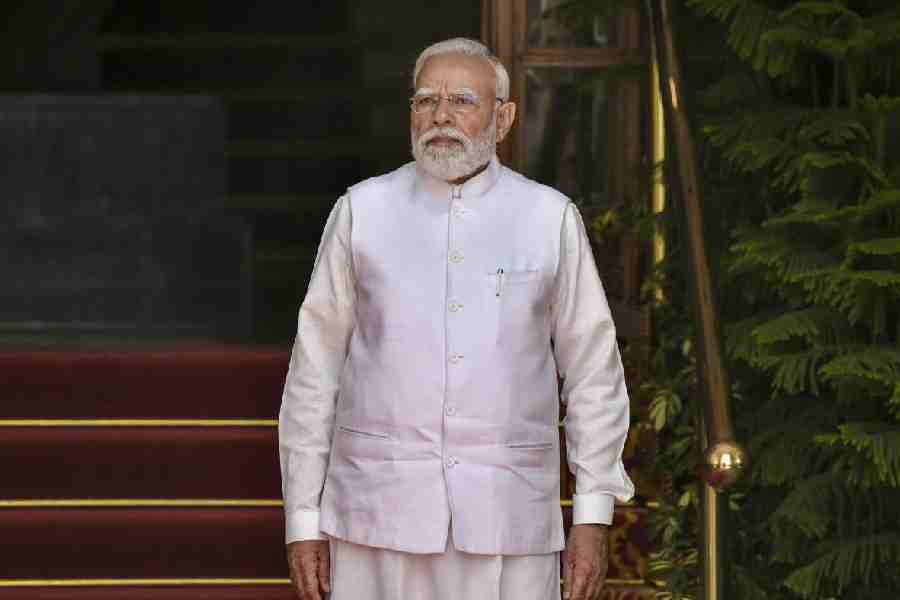
Stating that Prime Minister Narendra Modi did raise the issue with Hlaing, Misri said the discussion was largely in the context of the peace process that has been underway in Myanmar for sometime — “the effort to bring in all the ethnic groups onto the same platform and find a way forward within a united Myanmar”.
According to Misri, Modi stressed the need for inclusion as Myanmar “finds its way back to democracy and enduring peace”. Describing the discussion on this particular subject as “freewheeling”, Misri added: “I should underline that our engagement with Myanmar is not intended to be a commentary on the internal political arrangements in that country. We have always proceeded on the principle that sustained dialogue is what is important and what is an imperative for India as a neighbour.”
“The answer is clearly not disengagement. History has shown us that disengagement doesn’t give any results that are better than engagement. And it certainly doesn’t produce democratic change if that is what we are interested in. On the other hand, disengagement only produces a vacuum that others go on to fill to our detriment.
“And, those others have no interest in democracy, I can assure you. So we have consistently engaged and, while engaging, we have always put forward our thoughts on all of these issues relating to democracy, the peace process and inclusion. And, the absolute importance of having all stakeholders as part of the dialogue at the table,” he said.
According to the joint statement adopted at the bilateral engagement, the Prime Minister reaffirmed India’s support for the sovereignty and territorial integrity of the Republic of the Union of Myanmar.
“Both sides underscored the importance of preventing the misuse of sovereign territory for activities inimical to their security interests. The President reiterated Myanmar’s assurance that its territory would not be permitted to be used against India’s security interests. The Prime Minister affirmed that India, as a steadfast and trusted partner of Myanmar, remained committed to deepening security cooperation between the two countries,” the joint statement read.
The Prime Minister flagged the activities of Indian insurgent groups in Myanmar close to the border. "The President reiterated his assurance that Myanmar was sensitive to these concerns and would do everything necessary to ensure that there is action against these and they do not become a threat to the security of India," Misri said.
The foreign secretary said peace and stability in Myanmar were important for India not just for the security of the Northeast and safety and security of the people living along the border, but also for connectivity to South East Asia, and that coherence of ASEAN as a whole as Myanmar was a big and important country within the grouping.
The Prime Minister conveyed support for Myanmar-led efforts towards achieving peace, stability, national reconciliation and socio-economic development. He also offered continued assistance and cooperation, based on mutual respect and friendly relations between the two countries, the joint statement said.
The civil war in Myanmar has affected progress on two connectivity projects that India is deeply invested in — the Kaladan Multi-Modal Transit Transport Project and the India-Myanmar-Thailand trilateral highway.
"Both projects have been underway for several years, and they have been delayed in most cases, and certainly right now the obstacle that faces both of these projects is the security situation in Myanmar," Misri said, adding that work is continuing during periods of lull in the civil war.