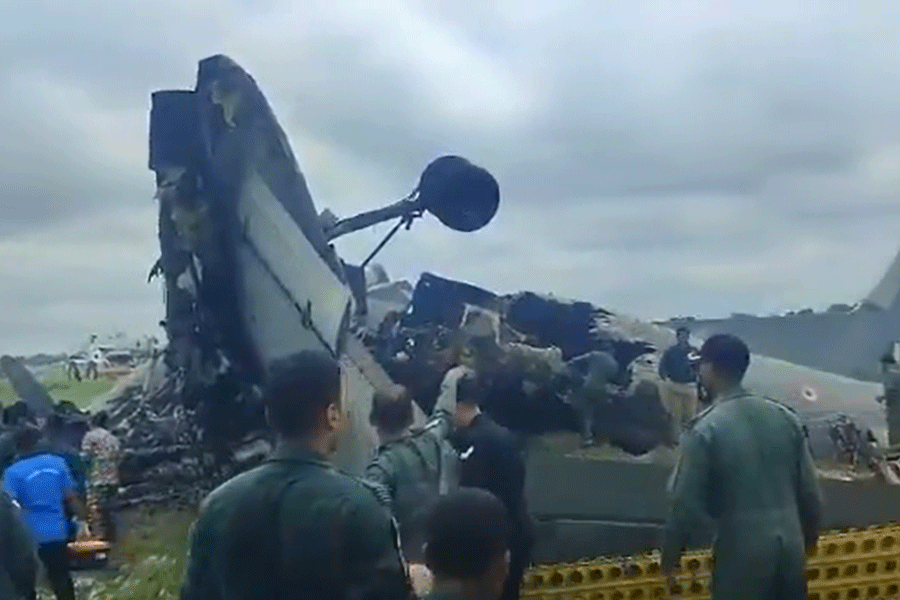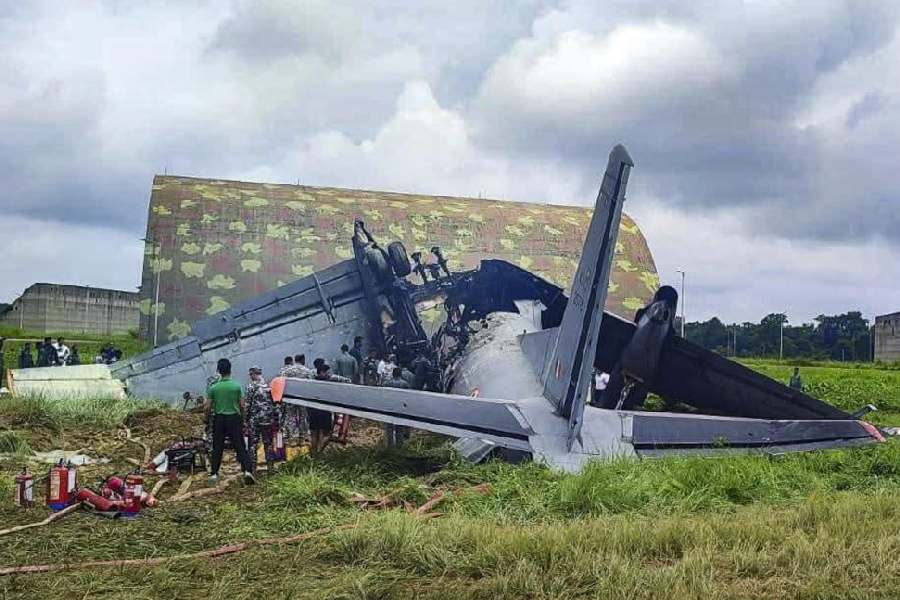
Five Indian Air Force personnel, including the pilot and the co-pilot, were killed after an AN-32 transport aircraft crashed during a routine sortie at the Air Force Station in Assam’s Jorhat on Saturday morning, drawing attention to the Russian-origin fleet’s poor safety records.
The aircraft was involved in an accident while landing during a training sortie at 10am in Jorhat. A court of inquiry had been ordered to ascertain the cause of the accident, the IAF said.
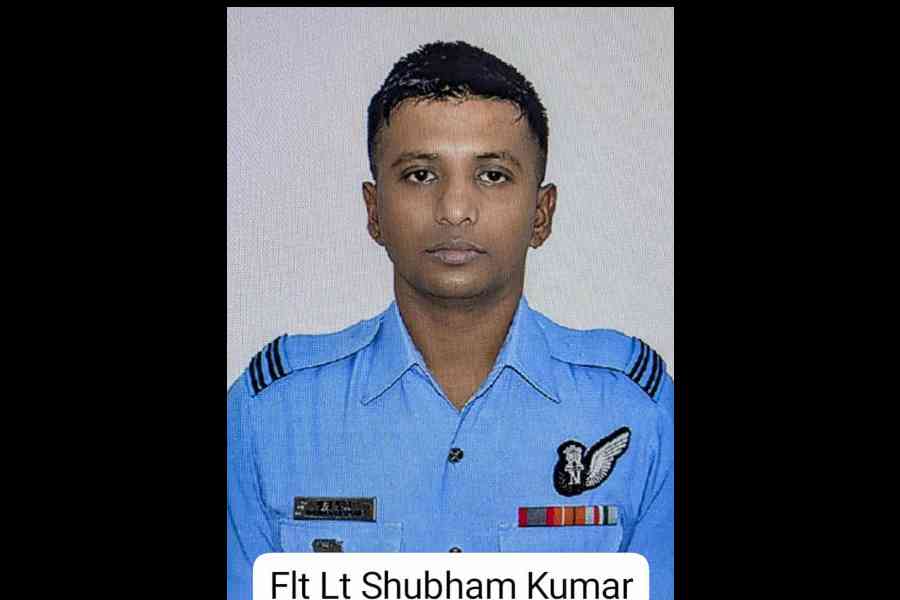
Flight Lieutenant Shubham Kumar
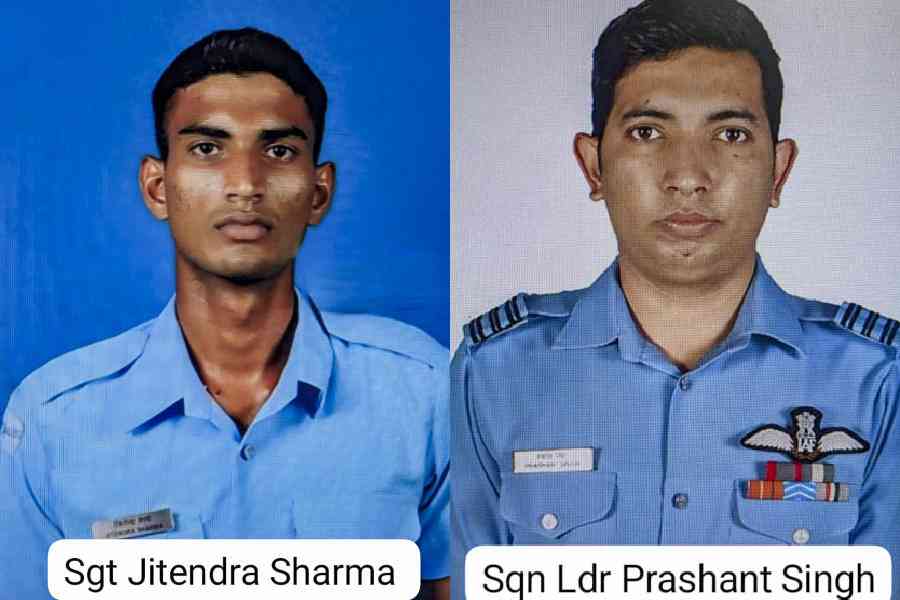
“The Indian Air Force deeply regrets the loss of five personnel in the AN-32 accident at Jorhat, Assam. Sqn Ldr Prashant Singh, Flt Lt Shubham Kumar, Sgt Jitendra Sharma, Agniveervayu Khemaram Kumawat and Agniveervayu Danish Alam made the supreme sacrifice in the line of duty,” the IAF posted on X.
During its service with the IAF, the AN-32 fleet has reported over 20 major accidents, including the mysterious disappearance of an aircraft carrying 29 personnel over the Bay of Bengal in 2016 and the crash of another plane in Arunachal Pradesh in June 2019 that killed all 13 personnel on board. The debris of the AN-32 aircraft that had gone missing over the Bay of Bengal was found after over seven years. India procured the AN-32 fleet in the 1980s.
A defence ministry official said the Antonov-32 twin-engine aircraft, usually noisy with benches, was one of the IAF’s principal transport aircraft and was integral to daily operations that include transporting troops, material and dropping rations at high-altitude posts. They are also deployed for search-and-rescue operations during natural disasters.
The AN-32 frequently made headlines after the border standoff with China in May 2020, when the armed forces undertook one of the largest sustained troop deployments along the Line of Actual Control in decades. The cargo aircraft is capable of carrying up to 6.7 tonnes of cargo or 50 paratroopers and is designed to operate from short runways and high-altitude airfields.
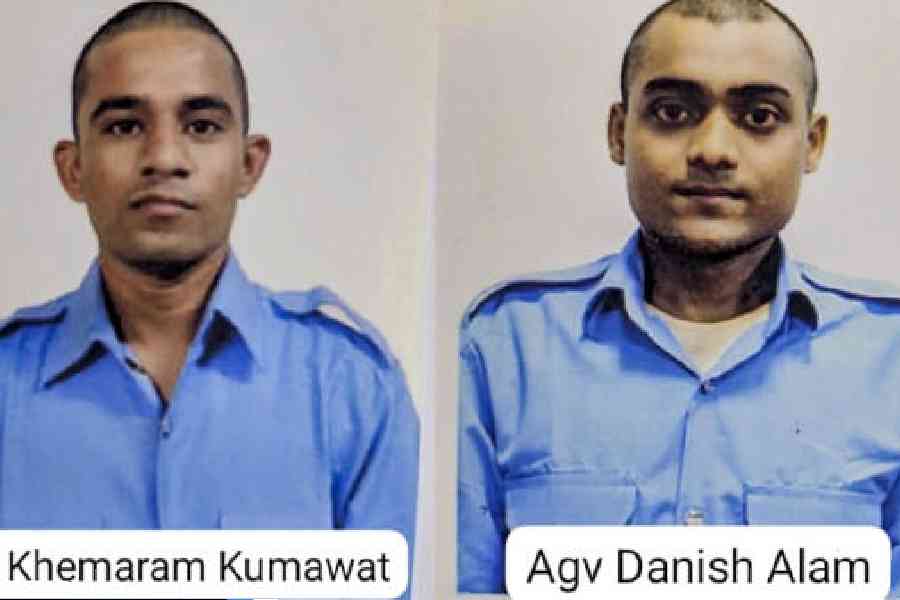
Agniveer Vayu Khemaram Kumawat and (right) Agniveer Vayu Danish Alam
“The aircraft remains the backbone of the IAF’s remote-frontier operations, specifically capable of operating in the high-altitude, low-oxygen conditions common along the China frontier,” the defence ministry official said.
Sources said that with airframes now exceeding 40 years of service, maintaining the fleet had become challenging due to the shortage of critical spares. The Russia-Ukraine war further disrupted the supply of critical spares and navigation aids, forcing the IAF to pursue indigenous alternative sourcing arrangements.
To extend the fleet’s operational life, India had in 2009 signed a contract worth $400 million with the Ukrainian manufacturer to modernise the 100 aircraft. Under the agreement between the Indian Air Force and Kyiv-based SpetsTechnoExport, the Ukrainian firm was contracted to give the workhorse of the IAF’s transport fleet a “total technical life extension” that would keep the aircraft flying beyond 2025. The work included overhauling airframes and engines to extend service life, along with the installation of new avionics, navigation systems and communication equipment.
So far, about 55 aircraft have been upgraded out of 100.
When the AN-32s were first contracted, Ukraine was a Soviet Republic. An estimated 30 per cent of the former Soviet Republic’s military industrial complex was based in Ukraine. Since the dismantling of the Soviet Union, India has continued to depend on Ukraine not only for its Antonov aircraft but also for the supply of engines for the Indian Navy’s Delhi-class warships (destroyers).