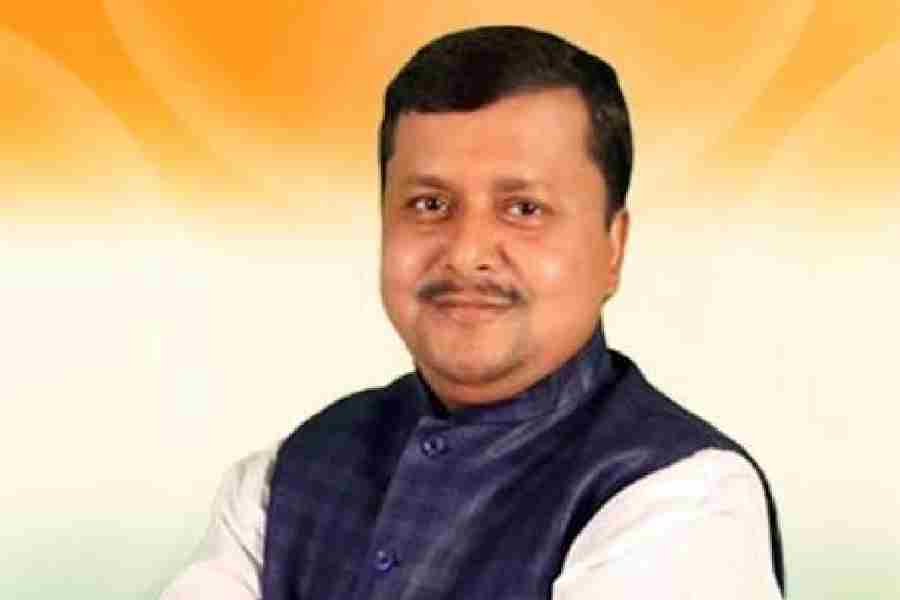
The surprise elevation of Nitin Nabin as the BJP’s national working president has fuelled speculation about an overhaul of the party organisation and the government, leaving many senior leaders nervous.
Nabin, 45, a relatively low-profile politician from Bihar, is tipped to take over as the party’s national president in the second half of January, which would make him the youngest BJP president in history. The Hindu month of Paus, considered inauspicious, ends on January 14.
Nabin’s promotion is being seen widely as a sign of the top leadership’s intent to infuse fresh blood into the party hierarchy and the government.
Speculation has been swirling since mid-year about a reshuffle in the Narendra Modi government. Party insiders hinted that it could finally happen next year after a new BJP president formally replaces J.P. Nadda.
“While a reshuffle of the party organisation is routine after the appointment of a new BJP president, the buzz this time is about the scale of the changes — with both party and government expected to be affected,” a BJP insider said.
“A significant number of senior leaders could be eased out of active politics and moved to the ‘Margdarshak Mandal’.”
Amit Shah had constituted the Mandal — an advisory body of senior leaders meant to guide the party — when he took over as BJP president in 2014 following Modi’s elevation as Prime Minister.
At the time, the powerful triumvirate — Atal Bihari Vajpayee, L.K. Advani and Murli Manohar Joshi — were removed from the BJP’s top decision-making body, the parliamentary board, and placed in the Mandal.
The Mandal, formally headed by Prime Minister Modi, has not held a single meeting till date, buttressing the view that it was primarily intended as a vehicle for sidelining senior leaders.
Since taking over the party, the Modi-Shah duopoly has systematically marginalised senior leaders from the Vajpayee-Advani era, replacing them with lower-profile politicians such as Mohan Yadav and Bhajan Lal Sharma, appointed chief ministers of Madhya Pradesh and Rajasthan, respectively.
With Nabin’s elevation, a larger transformation is now expected.
“There will be no sweeping changes. After all, experience is crucial to handling the party and the government,” a party strategist said. “But a concerted push to promote younger leaders can certainly be expected.”
Many seniors, particularly those elected to Parliament multiple times, are worried. During the just-ended winter session of Parliament, several BJP members, aged over 60, were heard jokingly asking one another in the corridors whether it was time for them to retire.
“I may be denied a party ticket to contest next time,” a 60-plus MP from Uttar Pradesh was overheard telling a former MP from the state, aged over 70, who was waiting outside home minister Shah’s office in Parliament for an opportunity to meet him.
The former MP said he was keen to contest the Uttar Pradesh Assembly elections in 2027 and wanted Shah’s support for a ticket. He left without meeting Shah after waiting for more than an hour.
A BJP veteran who now finds himself on the sidelines said: “Under the garb of a ‘generational change’, the (Modi-Shah) duo are seeking to build a cohort of loyal leaders around them. The chances of a challenge emerging are reduced when relatively unknown faces are picked and groomed.”
He underlined how, after installing relatively low-profile chief ministers in Madhya Pradesh and Rajasthan last year, the party leadership had followed a similar line in picking Mohan Charan Majhi for Odisha and Rekha Gupta for Delhi.
With the next general election due in 2029, the succession battle within the BJP is expected to intensify. Party veterans believe that Modi and Shah are keen to retain the ability to call the shots for years to come.
A tight control over the party organisation and the governments at the Centre and in the states is key to success in that project.