
Hyderabad: Differences persisted on Saturday within the CPM leadership over how any "understanding" with the Congress should be implemented, with politburo member Brinda Karat asserting that a 2016-like arrangement in Bengal is "not permissible".
The statement, in response to a specific question, made delegates from the Bengal unit restive.
Brinda was asked whether the agreed clause that replaces the contentious sentence in the draft political resolution (DPR) on the CPM's relationship with the Congress now provided room for a 2016-like loose electoral arrangement with the Grand Old Party.
"There is no question. It is not permissible," Brinda said.
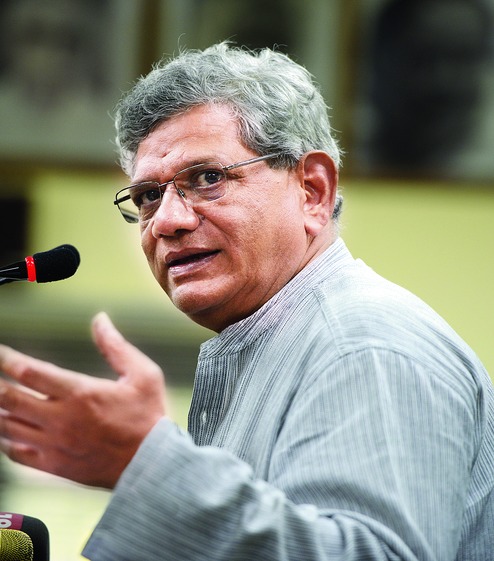
She also sought to counter the general perception that the minority view - promoted by general secretary Sitaram Yechury - had trumped the DPR cleared by the central committee by vote in January.
"The minority view has not been accepted. The paragraphs on which there were differences were redrafted. I won't say it is minority or majority view; it is an agreed resolution. We have agreed mutually and collectively to the redrafted section," Brinda said.
That the hardliners are still smarting over the defeat of their no-truck-with-Congress line in the DPR was evident since Friday night when their sympathisers began putting out posts on social media platforms that no line was defeated and that what the delegates did at the 22nd party congress was give more clarity to the word "understanding''.
Asked if he agreed with Brinda's contention that there is no change in the party's political line, and all that the redrafted clause does is give clarity to the word "understanding", politburo member from Bengal Mohammad Salim said: "There is a substantial change."

The entire sentence on fighting the BJP but "without having any understanding and electoral alliance with the Congress" has been deleted, and replaced with "without having a political alliance with the Congress", he said.
If there was no change in line, then why was it that all the 11 delegates who opposed the reworked clause belonged to the hardliner camp, the Bengal delegates asked.
On electoral strategy, both the politburo members said it would be worked out at the time of elections.
Party sources maintained that it was the demand for a secret ballot from the floor, from delegates representing 16 states - 13 of whom had given written requests - that made the regional satraps like politburo member B.V. Raghavulu, Telangana state secretary Tammineni Veerabhadram, former Tripura chief minister Manik Sarkar and Kerala chief minister Pinarayi Vijayan yield. They knew that in the event of a secret ballot, many of their members would vote for the Yechury line, showing them as weak despots.
Insiders say the demand for secret ballot is in itself a reflection of the lack of democracy in the party despite the lip service paid by the central leadership to the culture of debate and discussion in the CPM.
The party congress is now headed for its next crucial decision - the election of the new central committee and general secretary besides selection of the politburo - on Sunday. The politburo, which met late in the night to finalise the new central committee, could not arrive at a consensus and is scheduled to meet again on Sunday morning ahead of the closing session of the party congress.
The big question is if Yechury will get a second term and, if so, succeed in strengthening his position in the central committee, which is the body that clears all important decisions till the next party congress in 2021, including tactics for the 2019 Lok Sabha elections.
The political-organisational report - discussed on Saturday in the party congress - has noted how differences in the politburo on the political-tactical line and its implementation came in the way of single-minded pursuit of the direction given at the last party congress to build a broad platform against communalism.
Those who want a flexible electoral line fear that if the next central committee is packed with hardliners again, Yechury will not be able to implement the new political line at a critical juncture for Indian politics - the 17th general election, billed as a do-or-die battle.