A coal-based thermal power plant is moving ahead inside a proposed sloth bear conservation reserve in Uttar Pradesh’s Mirzapur with the Supreme Court yet to hear the legal challenge against it.
Construction-linked activity for the 1,600-megawatt power plant has steadily advanced including temporary staff quarters which are already coming up behind the boundary walls of the thermal power plant. The work, officials insist, is preliminary.

For nearly a decade, forest officials and wildlife researchers have argued that the dry deciduous forests of Mirzapur deserve protection as a conservation reserve, with the sloth bear as its flagship species.
“India is the main range for sloth bears. In Bangladesh, they are already extinct,” Debadityo Sinha, founder and managing trustee of the Vindhyan Ecology & Natural History Foundation (vindhyabachao)-a registered trust based in Mirzapur since 2012, and a long-time conservationist working on the case, told The Telegraph Online.
“They are a Schedule I species, yet the Supreme Court has not even listed the matter for months. While petitions remain pending, construction has been moving ahead. What purpose does the law serve if delays allow irreversible damage on the ground?”
A Schedule I animal, under India's Wildlife (Protection) Act, 1972, is an endangered species granted the highest level of protection, meaning hunting, trade, or harming them is strictly prohibited.
Sloth bears have historically inhabited the dry forests and hill systems of Mirzapur, surviving in conditions where few large mammals can.
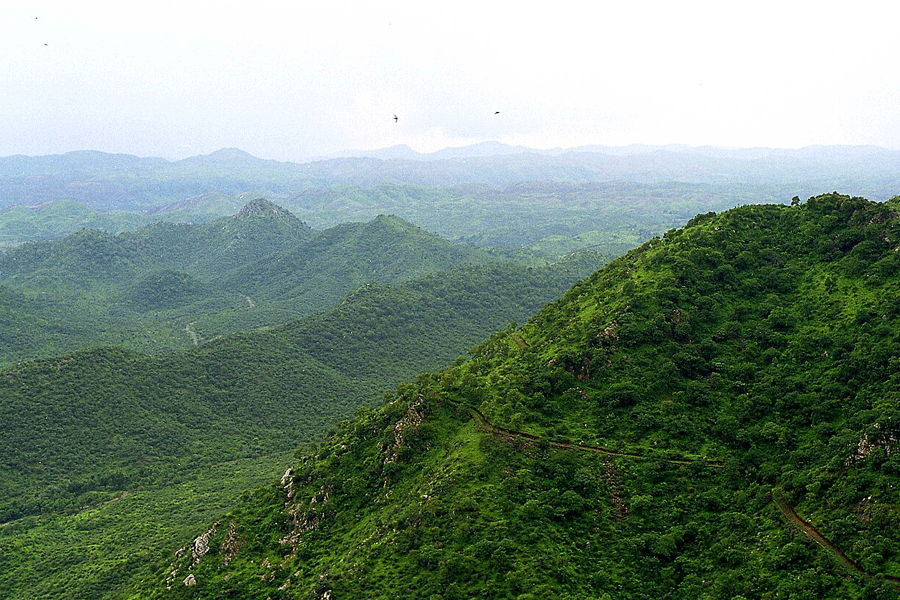
Unlike other bears, they feed primarily on ants, termites and seasonal fruits, allowing them to persist in relatively small home ranges. They are nocturnal, resilient and capable of coexisting, to an extent, with human presence — but only if their core habitats remain intact.
Protecting those habitats is now the main question.
The proposed Sloth Bear Conservation Reserve would span three forest ranges — Marihan, Sukrit and Chunar — forming a landscape that also acts as a corridor for surrounding protected areas.
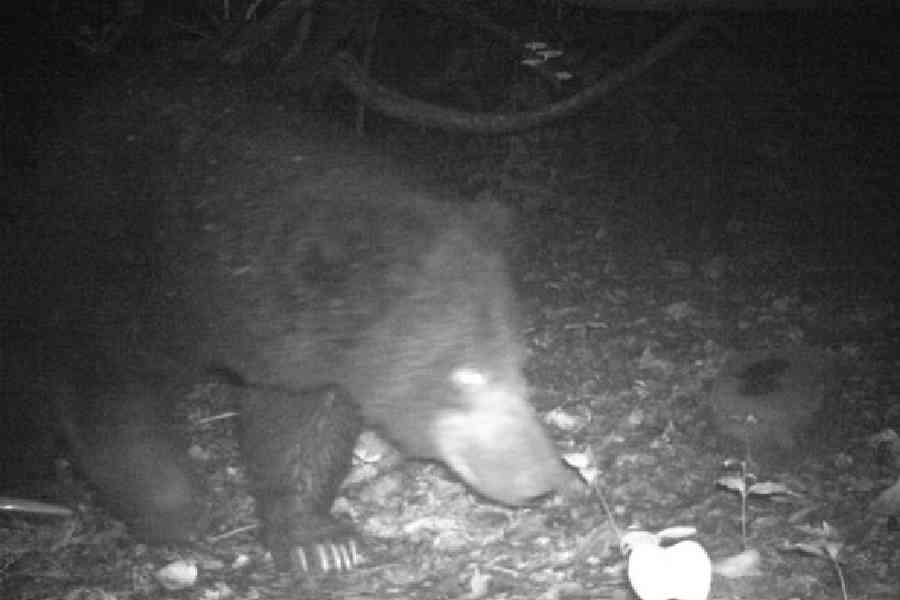
In 2019, a camera trap survey not only recorded sloth bears but also documented the Asiatic wild cat for the first time in Uttar Pradesh.
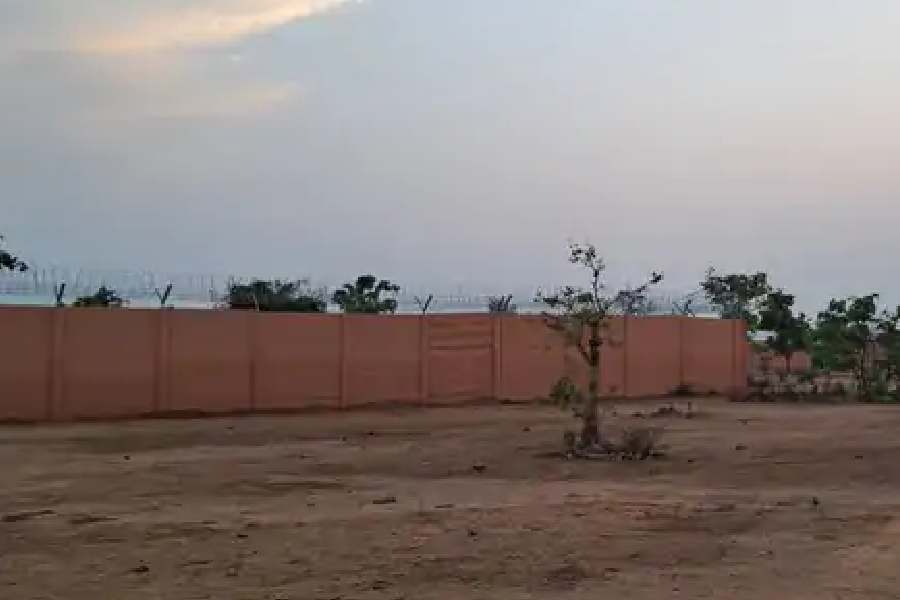
In 2019, the Divisional Forest Officer (DFO) of Mirzapur had also sent a proposal to the UP government to declare this forest as a 'Bear Conservation Reserve'.(Screengrab)
Once a major trading and administrative hub along the Ganga, Mirzapur’s forests have supported wildlife alongside human settlements for generations. Local acceptance of sloth bears has been shaped as much by culture as ecology.
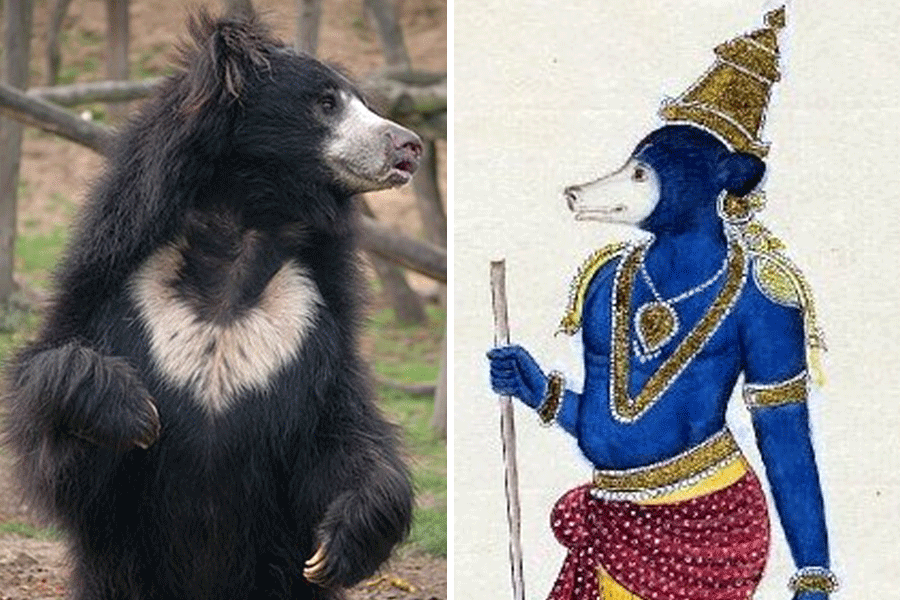
In the popular imagination, Jambavan fought alongside the gods in Ramayan(wikipedia)
“People here are not hostile to sloth bears,” Sinha said. “There is a cultural memory — Jambavan or Jambavanta from the Ramayana. Bears are seen as forest dwellers who mostly keep to themselves. They rarely come out unless forced to, or sometimes during the mahua season.”
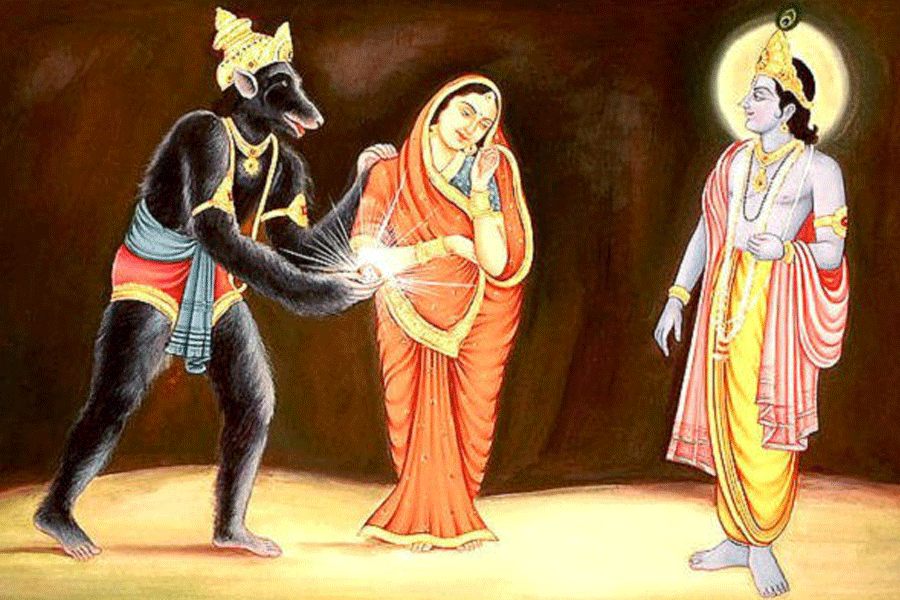
Picture: (hindupad.com)
In the popular imagination, Jambavan fought alongside the gods in Ramayan. In Mirzapur, his real-world descendants – sloth bears – are now facing a massive struggle.
The Power-plant in the forest
The power plant at the centre of the dispute was originally proposed by Welspun Energy as a 1,320-MW project. In December 2016, the National Green Tribunal (NGT) quashed its Environmental Clearance, calling it “tainted” and pointing to serious irregularities in the Environmental Impact Assessment (EIA), including the concealment of crucial information. Welspun was barred from carrying out any development and was directed to restore the site to its original condition.
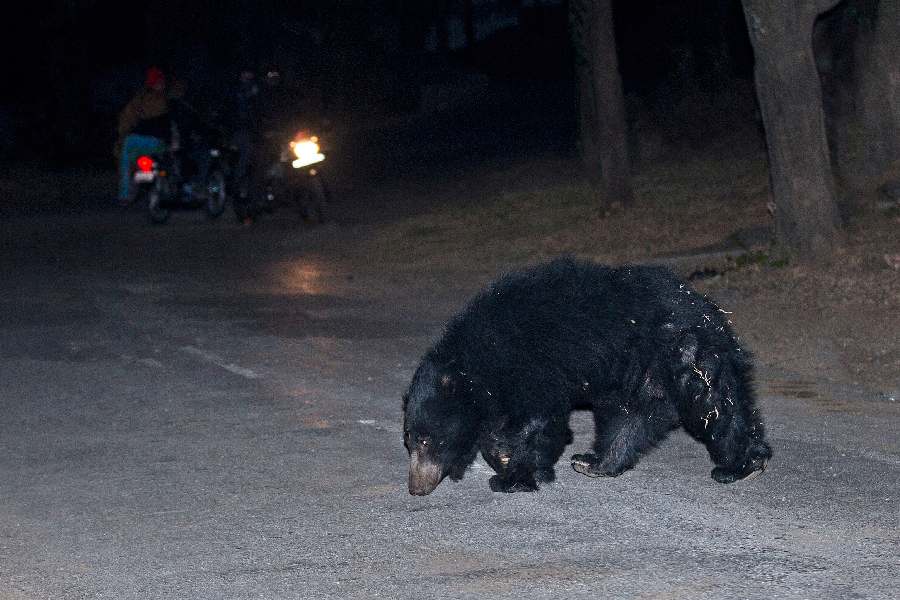
A fragile co-existence between bears and humans at Ratanmahal Sloth Bear Sanctuary, Dahod district, Gujarat (Wikipedia/Vickey Chauhan)
The project later changed hands. Mirzapur Thermal Energy (UP) Private Ltd., a subsidiary of Adani Power Limited, acquired it and proposed a larger 1,600-MW plant — two 800-MW units — requiring an estimated 6.4 million tonnes of coal annually.
The site lies close to the Marihan forest range, one of the pillars of the proposed conservation reserve.
“Once you establish a plant of this scale, it doesn’t exist in isolation,” Sinha said to The Telegraph Online. “You need water pipelines, railway lines for coal transportation, transmission corridors all slicing through contiguous forest. None of this is in the interest of wildlife.”
At the heart of the dispute is the environmental clearance process itself.
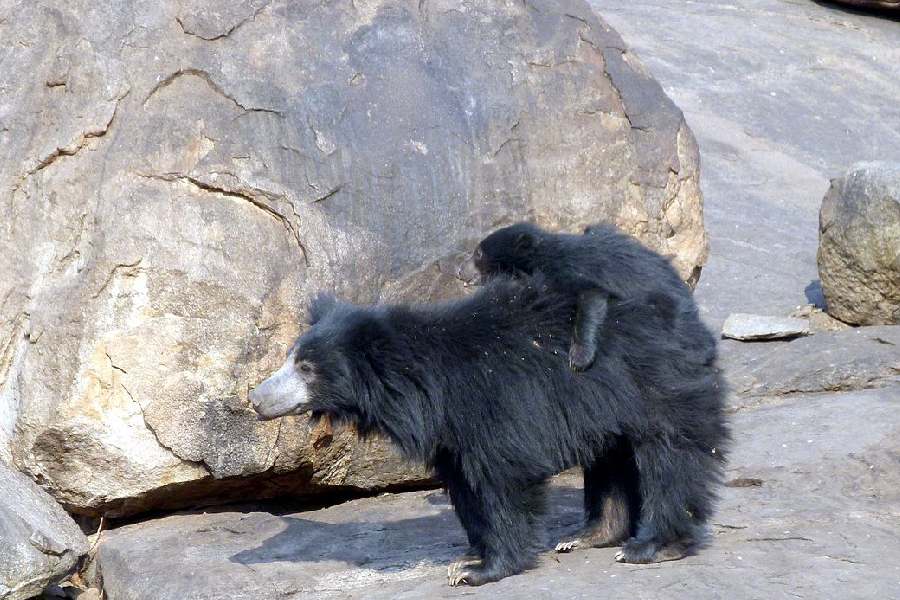
A young sloth bear cub on mother at Daroji Sloth Bear Sanctuary, Bellary, Karnataka (Wikipedia/L. Shyamal )
Sinha stressed that the EIA framework is designed to assess alternatives, evaluate social and ecological costs and enable public consultation before approvals are granted. “It is meant to be a safeguard,” he said. “Development cannot come at the cost of ecological integrity.”
Granting post-facto clearances, he argued, violates that principle. It sets a precedent where projects push ahead first and seek legal cover later.
“Many ecological losses cannot be reversed,” Sinha said. “Destroy a forest or fragment a habitat and you erase systems that took centuries to evolve. No compensatory afforestation can recreate that complexity ever”
The company disputes the allegations.
In responses filed before the NGT, Mirzapur Thermal Energy (UP) Private Ltd. said the claims against it were “false, incorrect and baseless”.
It maintained that it was in legal possession of the land and had the right to fence it. It also stated that no power plant construction had begun and that only repairs to an existing boundary wall, originally built by Welspun, were undertaken.
Photographs submitted by conservationists, the company argued, were not geotagged and could be misleading.
In earlier media interviews and public hearings, Dinesh Singh, the project manager, rejected claims that the plant encroached on forest land.
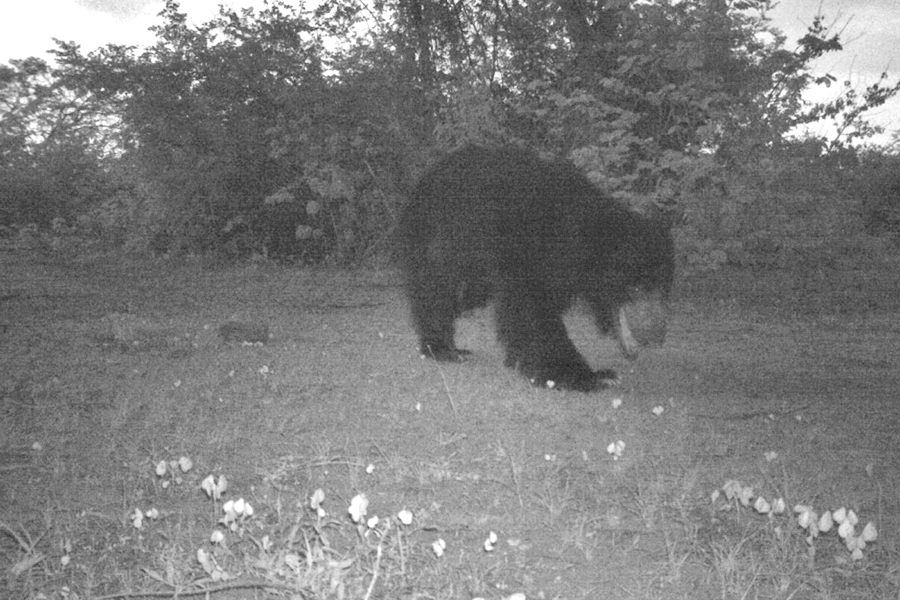
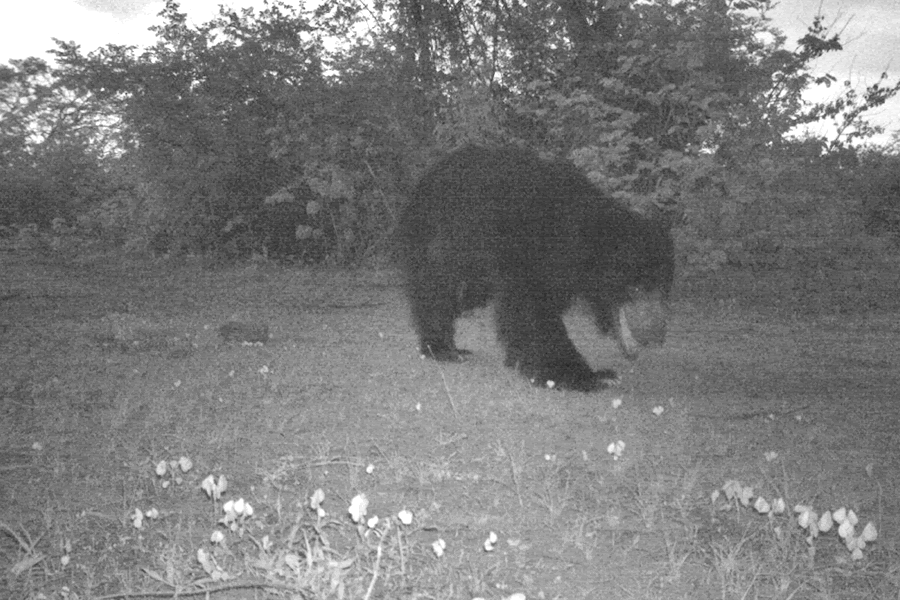
Sloth Bears have been recorded from all the forest ranges in camera traps. A sign based survey published in 2017 showed their presence in atleast 5 forest ranges under Mirzapur Div(conservationindia)
He described the site as barren and rocky, without rivers or irrigation potential, and dismissed wildlife concerns. “Which animals live here?” he asked in one interview. “Do mice count as wildlife?”
The legal battle, meanwhile, has only grown more complex.
On September 23, 2025, the Union Ministry of Environment, Forest and Climate Change (MoEFCC) granted the project a fresh environmental clearance.
The clearance acknowledged the presence of Schedule I wildlife species in the buffer zone and stated that a Wildlife Conservation Plan had been prepared and submitted to the state forest department for approval.
“All parties were asked to respond by September 17, but so far only the ministry has filed a reply, saying it has already granted the clearance,” Sinha said. “We have filed a fresh stay application, supported by recent photographs, to bring ongoing violations to the Supreme Court’s attention.”
A Supreme Court hearing scheduled for November 11 has since been pushed. No new date has been announced.
The delays, Sinha said, are existential threats. Sloth bears do not require vast landscapes like tigers, but they do need undisturbed patches of forest that allow them to forage, den and move safely.
“This project was found unviable once,” Sinha said, referring to the NGT’s 2016 order.
“There is no justification for reviving an ill-conceived, non-site-specific project at the cost of one of the last remaining wilderness areas of Mirzapur. Why can’t an alternative site be allotted?”