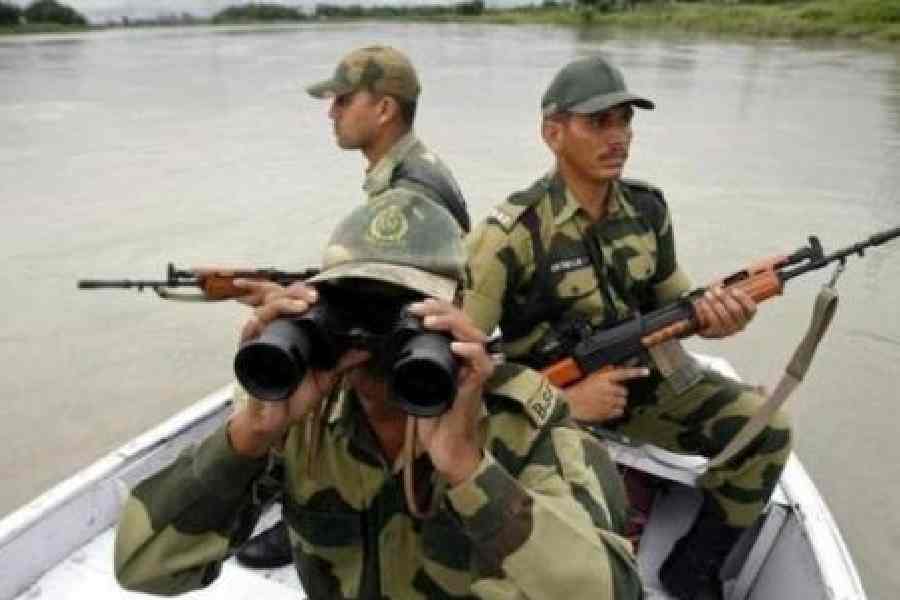
Senior officials of the BSF are divided over the Union home ministry’s controversial and unconventional proposal to deploy crocodiles and snakes in unfenced riverine areas along the India-Bangladesh border to curb infiltration and smuggling.
Speaking to The Telegraph, former BSF director-general and Padma Shri awardee Prakash Singh termed the lethal deployment of reptiles a “silly” idea, saying it would endanger the lives of civilians living close to the border. “How would crocodiles and snakes differentiate between Bangladeshis and Indians living close to the zero line of the international border? I don't know who has floated this proposal… It is a silly idea,” he said.
The proposal has come amid the ongoing intensified Assembly poll campaign in Bengal, where the BJP has been claiming an “alarming demographic shift” under the ruling Trinamool Congress’s “political patronage”. Led by Prime Minister Narendra Modi and home minister Amit Shah, the BJP has also been raising the bogey of Bangladeshi “infiltrators” entering India through Bengal and spreading across the entire country.
Sources in the BSF said the idea was mooted by the home ministry recently and senior officials of the force were directed to explore its feasibility to prevent infiltration in riverine and marshy areas along the border.
“Even senior BSF officials are divided over this deployment of reptiles in the treacherous terrains, including the riverine and marshy stretches,” said an official.
“Some of the officials opposed the idea, citing grave safety risks to civilians living along the bordering areas, especially during floods. Another meeting has been called next week over the issue.”
India and Bangladesh share a 4,096km-long international border that runs through Bengal, Tripura, Assam, Meghalaya and Mizoram. A home ministry official said the idea was being considered for vulnerable stretches of the international border where fencing was not feasible. Nearly 175km of riverine and swampy terrain has made it difficult to curb infiltration, smuggling and other illegal activities.
“This proposal is being considered as part of a deterrence-first approach to border security. The BSF has been directed to identify such riverine stretches where this plan could be implemented. The riverine gaps are difficult to monitor through standard infrastructure. So far, the proposal is at the discussion stage and nothing has been finalised,” he said.
A BSF official said the unconventional plan to use reptiles to prevent infiltration was being discussed at a time when the border guarding force was planning to introduce an artificial intelligence-powered “smart border observation and monitoring system” across the frontiers to crack down on the menace, including cross-border smuggling and drone landings. “Doesn’t it look so archaic when we are using sophisticated modern tools to safeguard the frontier? I am not sure whether the proposal will yield the desired result,” he said.
Sources in the BSF said the force had earlier identified several vulnerable points along the border, which are without fences, including the riverine stretches. “The work of sealing the border with Bangladesh using smart-technology-aided gadgets has not been completed yet,” the official said.
The smart-technology-aided fence is supposed to work both as a surveillance tool and a warning system through sophisticated devices, including cameras, sensors, lasers and radar systems. Sitting in the designated control rooms, BSF personnel can keep surveillance through a monitor using the technology. Alarms will go off as soon as there is any infiltration attempt.