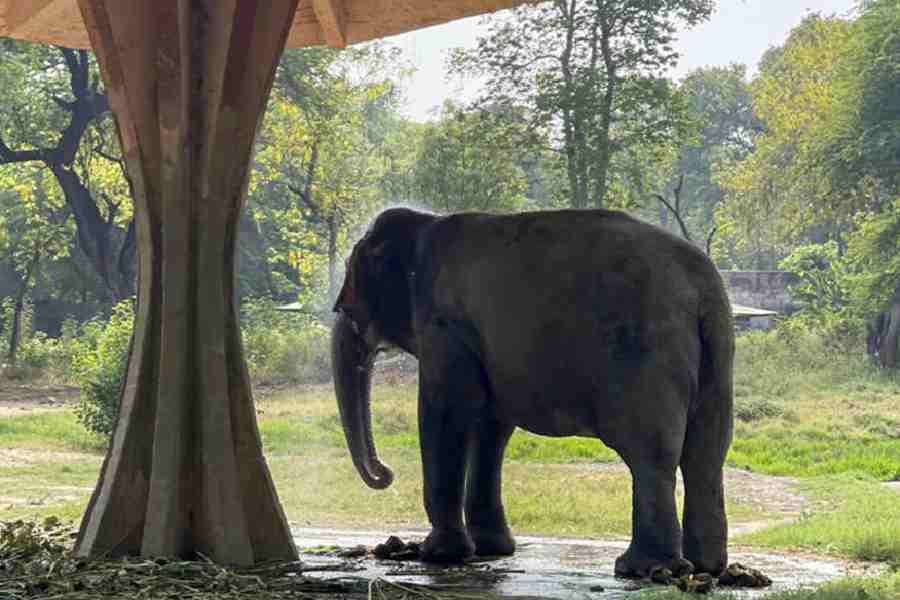
Elephants in Arunachal Pradesh have been recorded at elevations above 3,000 metres above sea level, marking the highest known elephant presence documented anywhere in the world, according to a new assessment conducted by WWF-India and the state Forest department.
The findings were presented in a report titled 'Managing Human–Elephant Conflict in Arunachal Pradesh: A Strategy and Action Plan', released by Advisor to the minister for Environment, Forests and Climate Change, Wanglin Lowangdong.
Describing the publication as timely and significant, Lowangdong said human-wildlife conflict, particularly involving elephants, remains a serious concern in the state.
The statewide assessment, carried out between December 2024 and March 2026, documented elephant distribution, human-elephant conflict (HEC) hotspots, habitat pressures and landscape connectivity across Arunachal Pradesh.
It is the first comprehensive effort to assess the scale, intensity and trends of human-elephant interactions in the state.
The study also provides the first baseline data on crop losses, property damage and human casualties caused by elephants.
Information on conflict incidents was compiled from elephant-bearing forest divisions using forest department records and consultations with local communities.
According to the report, habitat loss, degradation and fragmentation are among the major drivers of conflict between humans and elephants. It proposes measures to reduce human casualties, compensate for crop losses and promote community-led approaches to create safer shared spaces for both people and elephants.
WWF-India's national lead for Elephant Conservation, Dr Aritra Kshettry, stressed the importance of maintaining habitat connectivity to reduce conflict.
He said fragmented landscapes often push elephants into human-dominated areas, increasing the chances of encounters.
Kshettry expressed hope that the action plan would serve as a valuable tool for strengthening coexistence between people and elephants in Arunachal Pradesh.
State Principal Chief Conservator of Forests and Head of Forest Force P Subhramanyam said human-elephant conflict has become a growing concern in the state, and that promoting coexistence is essential.
He said the action plan would help guide interventions aimed at reducing conflict and improving human-elephant coexistence.
Besides recommending immediate management measures, the report highlights the need for a stronger scientific understanding of human-elephant conflict in the state.
It was observed that with evidence-based planning and locally driven action, Arunachal Pradesh has the potential to emerge as a model for managing human-elephant coexistence in rapidly changing landscapes.
Except for the headline, this story has not been edited by The Telegraph Online staff and has been published from a syndicated feed.