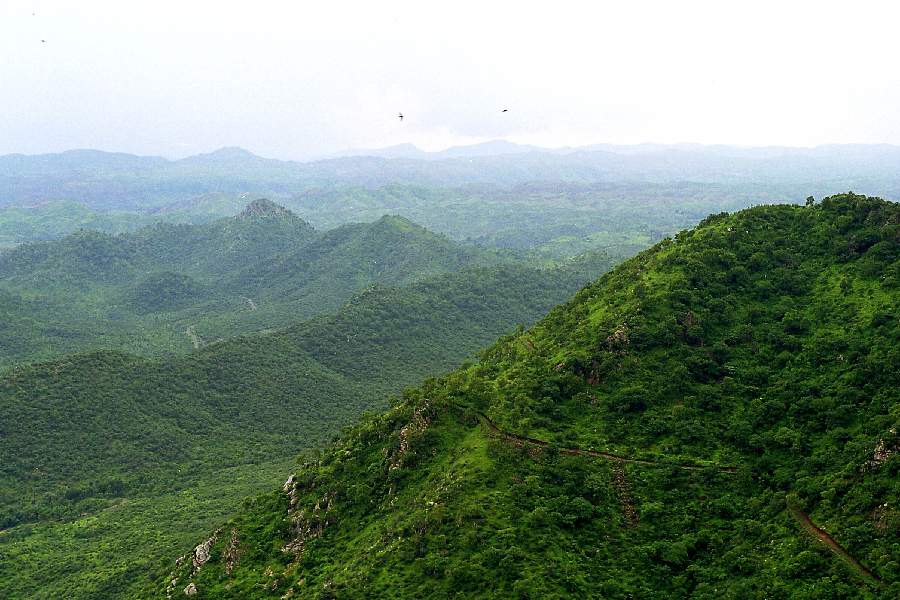
The Supreme Court’s decision to adopt the Centre’s 100-metre definition for Aravalli hills, while permitting “sustainable mining” under that framework, has been described by experts as nothing short of “a death warrant” for one of India’s oldest mountain systems.
At a seminar organised by Bharat Seva Sansthan in Jaipur, speaker after speaker warned that the order could trigger large-scale flattening of the Aravalli landscape if implemented without stronger safeguards.
They argued that narrowing the definition of what qualifies as “Aravalli” effectively removes protection from vast stretches of an ecologically sensitive range that has long shielded northern India from desert winds and supported groundwater recharge.
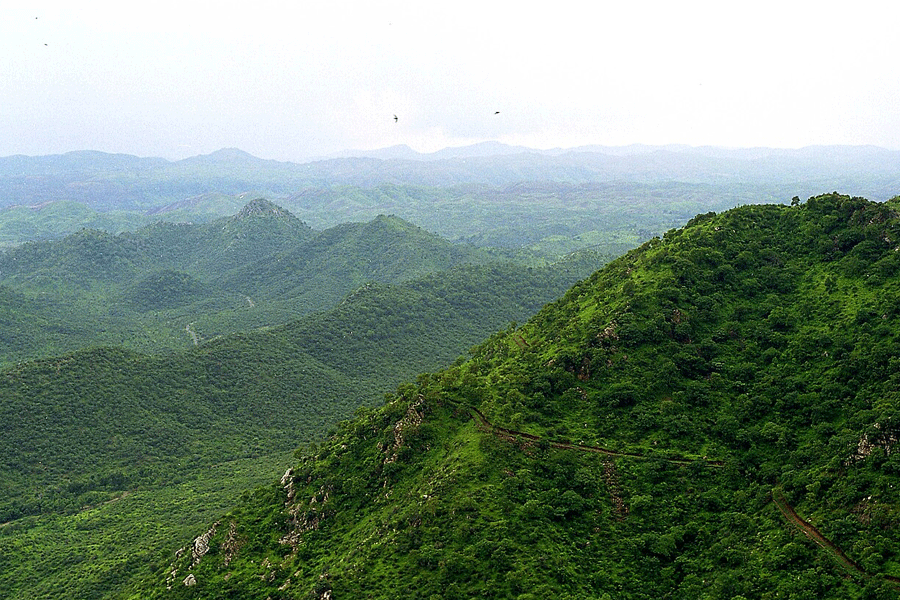
Under the Centre’s definition now accepted by the court, an “Aravali Hill” is any landform with an elevation of 100 metres or more above its local relief. An “Aravali Range” is two or more such hills within 500 metres of each other.
Experts say this change could allow mining in areas that were earlier protected, creating conditions where up to 90 per cent of the range may be erased over the coming years.
Rajendra Singh, the Magasaysay awardee known as the Waterman of India, said the order marks a break from earlier environmental thinking.
“If this decision, meant to benefit one individual, is implemented, only 7-8 per cent of the Aravalli will survive,” he said.
He emphasised that earlier governments and courts took environmental issues seriously, adding that the current approach threatens the survival of the range unless met with legal action and mass public mobilisation.
Leader of Opposition in the Rajasthan Assembly Tika Ram Jully supported the campaign, stating, “If the Aravalli doesn't survive, nothing will.”
Activists said the fallout would extend beyond the ridges themselves. Jayesh Joshi stressed that the first concern should be the tribal communities who have lived off the Aravalli ecosystem for thousands of years.
Pradeep Poonia warned that if mining expands, “not just the hills but agriculture, wildlife and sanctuaries will be wiped out”.
Congress leader Vaibhav Gehlot called the situation alarming.
“If we don't act now, future generations will never forgive us. Jhalana Leopard Safari, Ranthambore and Sariska survive because of the Aravalli,” he said, highlighting the link between the range’s health and Rajasthan’s economy.
Former advocate general G. S. Bapna urged the Centre to enact a “Mountain Conservation Act” on the lines of the Forest Conservation Act. “Once mining begins, the available technology can flatten the Aravalli in days,” he said.
The concerns extend beyond Rajasthan. Earlier this week, Harjeet Singh, founding director of the Satat Sampada Climate Foundation, said the new definition “erases the landscape that keeps North India breathing and feeds our wells”.
He added, “On paper, it's 'sustainable mining' and 'development', but on the ground it is dynamite (with) roads and pits cutting through leopard corridors, village commons and Delhi-NCR's last green shield.”
Speakers at the Jaipur event said they would pursue legal remedies while building a movement to protect the range.