India’s nights are shrinking, as people stay up later and wake just as early. Adults are typically advised to get seven to nine hours of rest a night. In India, the average is 6 hours and 28 minutes — roughly 40 minutes less than the longest-sleeping countries such as New Zealand. That puts India among the shortest-sleeping populations — alongside South Korea and Japan — in recent global dataset projections.
The report — India: The State of Sleep 2026 — has been published by the Finnish company Oura, which is entering India with its smart ring, the Oura Ring 4. The company analysed data gathered between October 2024 and September 2025 from a sample of around 5,000 adults in India, ahead of the device’s official launch in mid-March.
Part of the explanation lies in timing. Many people in India stay up late, with the average bedtime being 12.14am.
Nearly 59 per cent people fall into “evening” chronotypes, meaning close to three in five people feel more alert and productive later in the day — the highest share globally.
Wake-up times, however, remain fixed, leaving less room for adequate rest.
Shorter nights also affect sleep quality. On an average, people in India get about 81 minutes of REM sleep and 70 minutes of deep sleep (both lower than global averages).
Rapid eye movement (REM) sleep is the stage of sleep during which most dreams occur. REM sleep, according to experts, makes up about 25 per cent of your total time asleep.
Unlike in some countries, weekends here don’t make up for lost sleep. Bedtimes and wake times shift slightly, but total sleep remains almost unchanged.
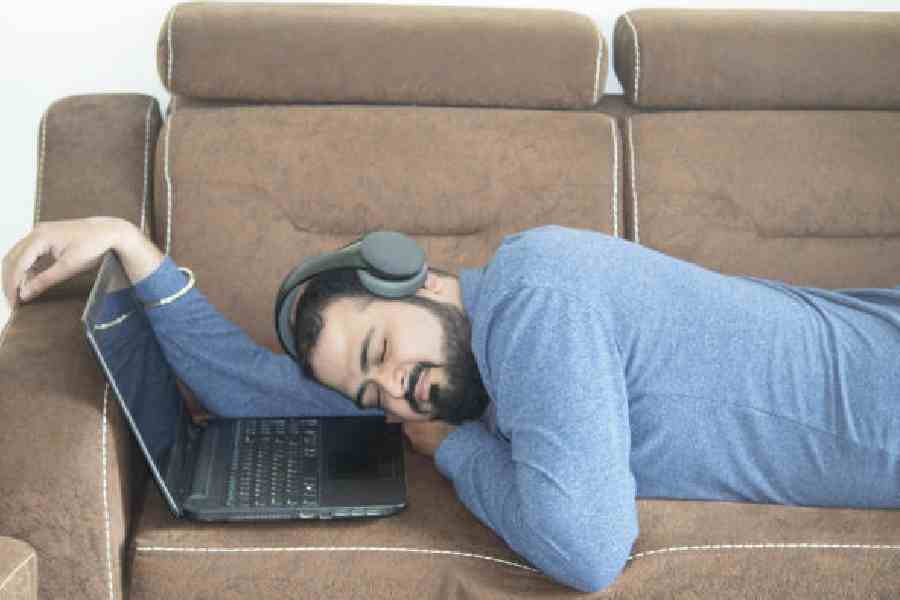
This leaves little opportunity to recover from accumulated sleep loss. Instead, recovery is shifting into the day. India records the longest average nap duration globally, at around 53 minutes, with Mondays standing out as peak nap day with 58 minutes of napping.
Changing social habits also have an impact. Alcohol intake is linked to shorter sleep. It cuts total sleep by around 35 minutes and reduces both REM and deep sleep, even when bedtimes stay the same.
Having a consistent sleep schedule is important. In a separate study published in 2024, researchers analysed sleep data from over 88,000 adults in the UK and assigned “sleep regularity” scores.
Those with the most irregular sleep patterns were about 50 per cent more likely to develop dementia than those in the middle of the range. However, scientists have yet to determine to what extent sleep irregularity comes with health risks.
Doug Sweeny, chief marketing officer at Oura, said, “The data is clear: sleep is the foundation of health, but Indians’ ultra-connected, fast-paced lives are at odds with getting good sleep.”
Oura, founded in 2013, had sold more than 5.5 million smart rings till last year. The Oura Ring 4 is one of a number of wearable devices that measure sleep. Many of these devices also track movement, body temperature and blood oxygen levels. Using this data, these trackers can offer sleep insights and a sleep score.
However, it remains unclear how people can benefit from this information. Some users may become anxious if a device suggests they are not getting enough deep sleep. What would be more helpful is a more holistic view of recovery.
The report adds, “The findings reveal a nation with a distinct sleep signature, shaped by timing, culture and lifestyle. It also highlights something equally important — small, intentional shifts in habits can make a meaningful difference.
Whether it’s understanding bedtime timing, protecting wind-down routines or aligning sleep with your natural rhythm, incremental changes can help improve both the quality and consistency of rest.”
For many, the challenge may not be sleeping more but sleeping differently.