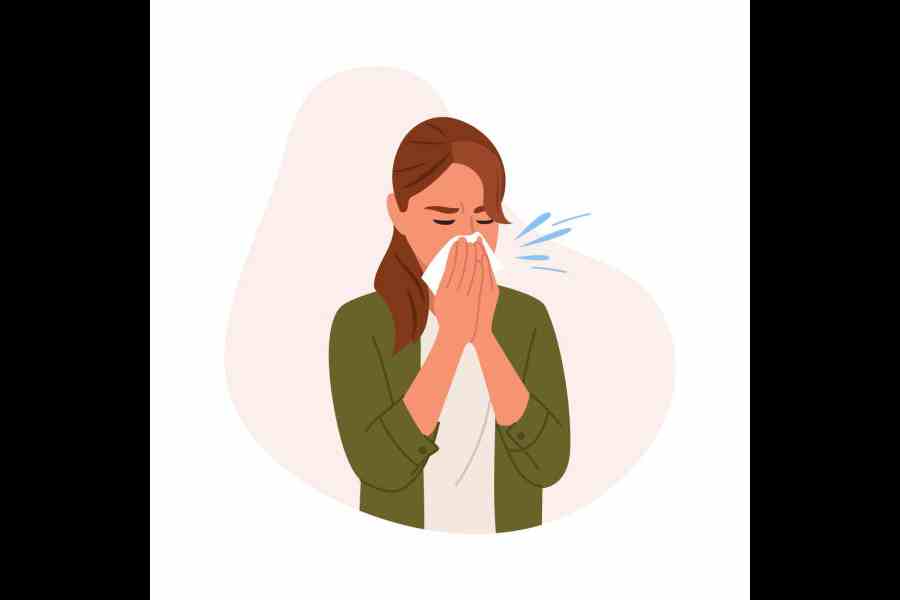
Some people suffer from self-diagnosed “chronic sinusitis”. They are sick all year round, with symptoms worsening during rainy weather or winter. They have perpetually blocked noses, complain of loss of smell, are unable to breathe comfortably, may have halitosis (bad breath) and an irritating habit of sniffing or rubbing their nose.
They often have a postnasal drip. This refers to the dripping of secretions from the nose backwards into the throat, especially while lying down. It can irritate the back of the throat and cause night-time sleep disturbances, including coughing and even choking.
Often, these symptoms are mistaken for a common cold, probably allergic in nature as there is no fever and the discharge is not yellow or green. However, such patients never recover. Therefore, if the symptoms of a common cold last for more than 10 days, it is worth consulting an ear, nose and throat (ENT) specialist. A blood-stained discharge should merit immediate attention.
It may not be possible to identify the cause of the persistent symptoms with the naked eye but using an endoscope, the doctor may detect “nasal polyps”. Sometimes, the polyps may also be seen on a CT scan. Polyps are growths that can vary in size from a teardrop to a grape. They may occur singly or in clusters and are usually non-cancerous.
Polyps affect around 4 per cent of the population. They usually occur after the age of 30 and are more common in men. However, affected women are more likely to complain of severe symptoms such as facial pain or swelling. Predisposing factors include a family history of allergies or asthma, exposure to airborne allergens such as tobacco smoke, air fresheners or vaporising mosquito repellents, chronic use of snuff and Vitamin D deficiency. Polyps and chronic sinusitis often co-exist. In such cases, headache, nasal congestion and discharge may persist throughout the year.
Antibiotic treatment for sinusitis is often ineffective when polyps are present. Repeated courses may lead to the development of resistant bacteria and, eventually, even fungal infections. It is, therefore, important to get a proper diagnosis.
Medical treatment is usually tried first. Non-absorbable steroid nasal sprays can be used twice a day. Proper technique is important — the head should be upright (not tilted back) and the spray should be directed towards the ears.
Chemical decongestant sprays may provide temporary relief but they should not be used long-term because their effectiveness decreases over time and they can become habit-forming. Antihistamines can help reduce swelling of the nasal mucosa.
Certain yoga poses, such as the bridge pose, downward-facing dog and head-to-knee forward bend, along with breathing exercises or pranayama are traditional methods that may help control chronic sinusitis and reduce polyp formation. These need to be practised regularly. They can be followed by nasal irrigation using sterile saline (salt dissolved in distilled or boiled and cooled water).
Steam inhalation helps moisturise the airways, reduce mucosal swelling and dilute nasal discharge. All these adjuvant measures provide temporary relief.
However, it is difficult to completely eliminate polyps with these methods alone. Often, after trying medical treatment for 1-2 months, surgery is recommended. This is an endoscopic procedure performed through the nose. Not only are the polyps removed but the openings of the sinuses into the nose can also be enlarged to facilitate drainage and correct underlying issues. There are no external incisions, so the operation leaves no facial scars.
Polyps have a recurrence rate of 40 per cent. Regular use of cortico-steroid nasal sprays, saline washes, steam inhalation and yoga can help prevent recurrence.
The writer has a family practice at Vellore and is the author of Staying Healthy in Modern India. If you have any questions on health issues, please write to yourhealthgm@yahoo.co.in