|
| Danny Denzongpa and others in Frozen |
After travelling 30 international film festivals, from Toronto to Pusan, London to San Francisco, Russia to Spain, Shivajee Chandrabhushan’s Frozen will release in India next month. The producer-director speaks about the war he waged against the cold to make the film and the war he has been waging to get the film released...
You started making Frozen in 2005. It may finally release in May 2009. Are you relieved?
There is a nervous excitement. It is slated to release in Mumbai on May 8. The last-minute nitty gritties have not allowed me to savour the moment. After Mumbai, it will be released in Calcutta and then in Delhi.
Why isn’t Frozen caught in the producer-multiplex tussle?
See, my film was never considered a Bollywood film within the industry and that’s why it has not been getting a release. I am the producer myself. The film is part-Hindi, part-Ladakhi. It’s not a conventional film with song and dances.
Haven’t the big producers tried to stop you from releasing the film?
 |
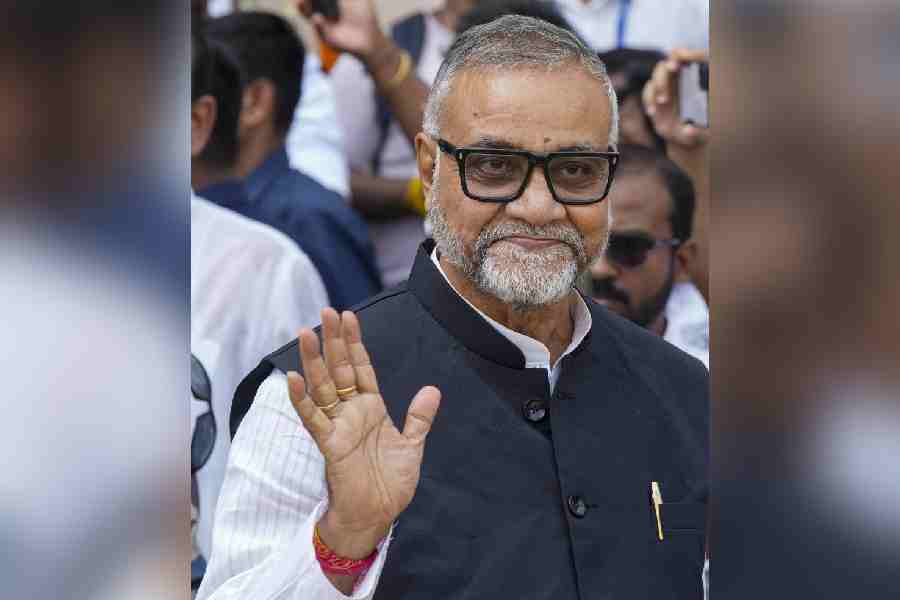
| Shivajee Chandrabhushan |
Nobody has contacted me yet. I am a very small producer. Nobody knows me, actually. I don’t know whether the big guys even know of my film. Let them call me. I also have my reasons for releasing the film.
Going back in time, how did the idea of Frozen come about?
To tell you frankly, at first the story was set in Goa. It’s very close to Mumbai and I made a lot of visits there. It was a brother-sister story with the father in the background. Then in June 2005, I drove all the way to Ladakh. And although I am a mountaineer and trekker, it was my first trip to Ladakh. When I went there and I met the people, I knew that this is the place where I have to shoot my film. The idea remained the same. The father became a little more important and I could get out a lot of local stories.
How much is Frozen about the backdrop?
The story could have been placed anywhere. I was asked the same question at the London Film Festival and I told them that I could place the story in London also. It’s a universal story and that’s why Frozen has done so well at the festivals all over the world. But what happens when you make a place-specific story, you have to have local flavour. The contribution of the location is very much there. I could show the harshness of life in winter. Maybe if it was Goa, I would have shown the rain. The story is the primary driver in this.
How difficult was it to convince Danny to play the father?
Deep down somewhere I had Dannysaab in my head. My office spoke to other actors also. We spoke to Naseersaab and Om Puri because we were looking at that age group. Om Puri has problems with winter and Naseersaab was very busy with his own film (Yun Hota Toh Kya Hota). Then we didn’t think beyond Dannysaab. Luckily we had some black-and-white photographs of the location where we were slated to shoot. That clinched the deal. He was happy with our preparation. Also, he is a pahari guy. So the conditions — minus 25 degrees Celsius and average height of 12,000-14,000 feet — also weren’t alien to him.
Why have you shot the film in black-and-white?
There are two aspects to that. One is the technical thing, the other is creative. When you shoot in winter at a place like Ladakh, the palette is very monochromatic even to your bare eyes. It’s basically black and it’s white and there are shades of brown. The sky is very blue and it gives you the feeling of summer, which wasn’t fitting into our script. Also, when you think of any mountain film, you think of colourful flags and monks wearing robes of bright hues. I wanted to strip this off... typical, Oriental film from South Asia.
But isn’t it difficult to get hold of quality black-and-white stock these days?
It is, it is... We did tests with both black-and-white and colour stocks. And the difference was there to see. My friend in LA bailed me out by sending me black-and-white stock. Then we shot in both black-and-white and colour stock and during grading changed them into black-and-white. And finally we put everything on black-and-white stock. It was a slightly longer process and much costlier but we were happy with the results.
How difficult was it to shoot in Ladakh?
Ha! The two things we were really worried about was the performance of the equipment and the adaptability of the crew. Fifty people from Mumbai who have never seen such weather to work in such conditions, that called for some man management. I was advised to give two days to everyone to acclimatise, to avoid AMS (Acute Mountain Sickness).... I gave them five days to adapt and by the fourth day, they were playing cricket on the snow! The 32-day schedule went quite smoothly. It was basically a lot of planning.
Do you think a festival film like Frozen will find favour with the general audiences?
The story is very simple. They have to come with an open mind. They will definitely be curious about it. It’s the first black-and-white Hindi film in 40 years. You have to look deeper into it. The colours of life are all there inside. Also, it’s Dannysaab’s 150th film. And he believes it is his best work till date. So that’s something to watch out for.
What next?
I am working on a big Indo-Spanish joint venture. It starts in 1950s Madrid and it ends in today’s Rajasthan. We are in talks with production companies of Antonio Banderas and Javier Bardem to be the line producers there. Penelope Cruz’s sister Monica Cruz has committed to be in the film. I might do a small film before I start this one.