Several migrant workers from open and closed tea gardens of Alipurduar returned from various states to cast their franchise in the first phase of the Assembly elections, largely driven by concerns that their names may be deleted from the rolls if they fail to vote.
Akash Oraon, from the Madhu tea estate, which has been shut for the past three years, works as a tile and marble fitter in Tamil Nadu and earns ₹720 per day with lodging at his workplace.
“I left the garden after it closed down. My parents are elderly, and I have two sisters at home. I have to earn for the family. This time, I came back to vote to ensure my name remains in the voter list,” said Akash, voicing apprehensions haunting a majority of the population in Bengal.

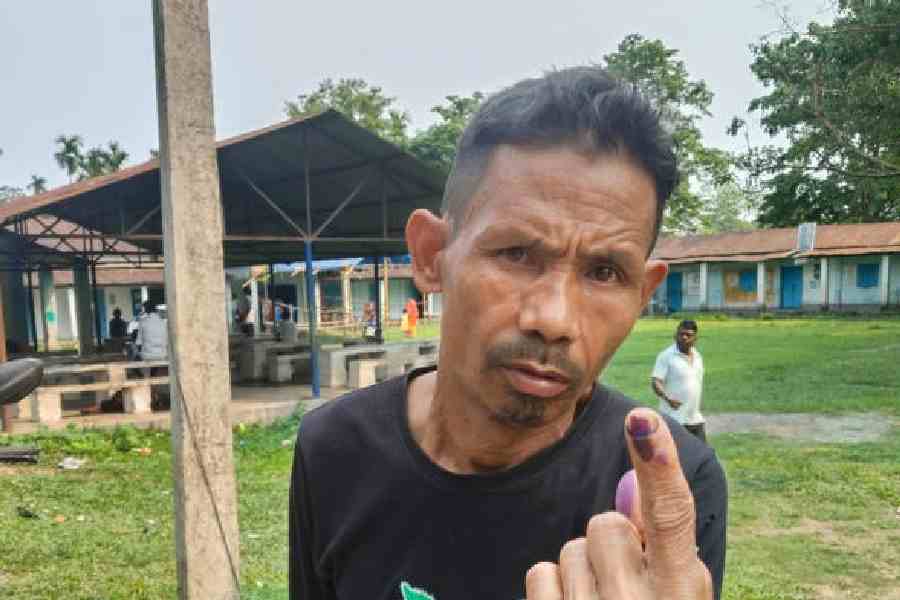
Suresh Baraik after casting his vote on the closed Madhu tea estate on Thursday
Suresh Baraik, from the same tea estate, works as a day-wage worker in Gujarat, echoed concerns about the lack of jobs.
“In our area, we do not have any alternative jobs other than working in tea
estates. When a garden closes down, it is tough for the labourers to find casual work in other tea estates. That is why we are forced to migrate,” he said.
Lalbahadur Mangar, who works at a hotel in Kashmir, drew a comparison between wage rates in Bengal and other states.
“First of all, jobs are available in our district. Even if we move to other districts, the wage rates are much lower than in most other states. Whoever comes to power should put effort into creating jobs, instead of distributing doles among unemployed youths,” he said.
In tea estates still operating, the migrants also underscored the absence of alternative jobs in the district, while referring to the wage rate of ₹250 in tea estates.
“Most of us are not interested in working in tea estates as we earn triple or more a day as compared to the tea wage rate. The absence of jobs has left us with no other alternative but to move to other states,” said Bikash Rabidas, who is from Kalchini tea estate and works as a construction worker in Kerala.
Ibram Rabidas, who is from the same garden and is a plumber in Bangalore, pointed out that they do not face problems at work, unlike Muslim migrants.
“It is true that a section of people in most of the other states are apprehensive about Bengali-speaking Muslims, considering the issue of infiltration in Bengal. We, however, do not face any problem,” he said.
“But for all of us, one thing is common. That is, Bengal lacks job opportunities,” he added.