The doorbell has replaced the loudspeaker.
The familiar crackle of “Bandhugon” over a neighbourhood public address system — that dependable soundtrack of election season in Calcutta — is fading. In its place is something quieter and more personal: the doorbell, the candidate on the threshold, a question about what’s wrong.
Across constituencies in Calcutta, workers from both Trinamool Congress and the BJP say this election has seen a sharp pull-back from street-corner meetings, once the backbone of neighbourhood campaigning. Door-to-door visits and social media have moved in to fill the gap.
The shift is not incidental. Leaders from both parties are frank about why the old format has lost its appeal. Meetings that are not addressed by heavyweights — chief minister Mamata Banerjee, leader of the Opposition Suvendu Adhikari, or other senior figures — simply do not draw crowds anymore. “Often, we find only a few party workers there and no voters standing and listening,” said one organiser.
The format has other problems too. A typical street-corner meeting runs two hours, with five or six speakers. “After a couple of speakers, everyone is saying almost identical things,” said a BJP leader from Jadavpur. “It becomes boring.”
Then there is the noise. Residents across the city have noticed — and welcomed — the change. “The ear-splitting campaigns have been significantly fewer this time,” said a Dover Lane resident, whose home falls under the Ballygunge constituency. “Earlier, parties would start announcing meetings several hours before they began and play music in between. This time, there was none of that.”
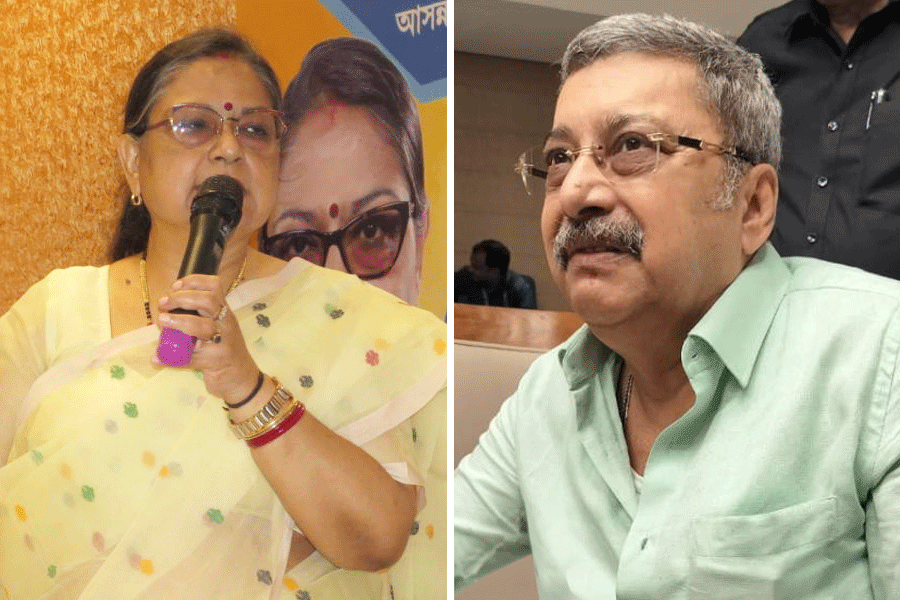
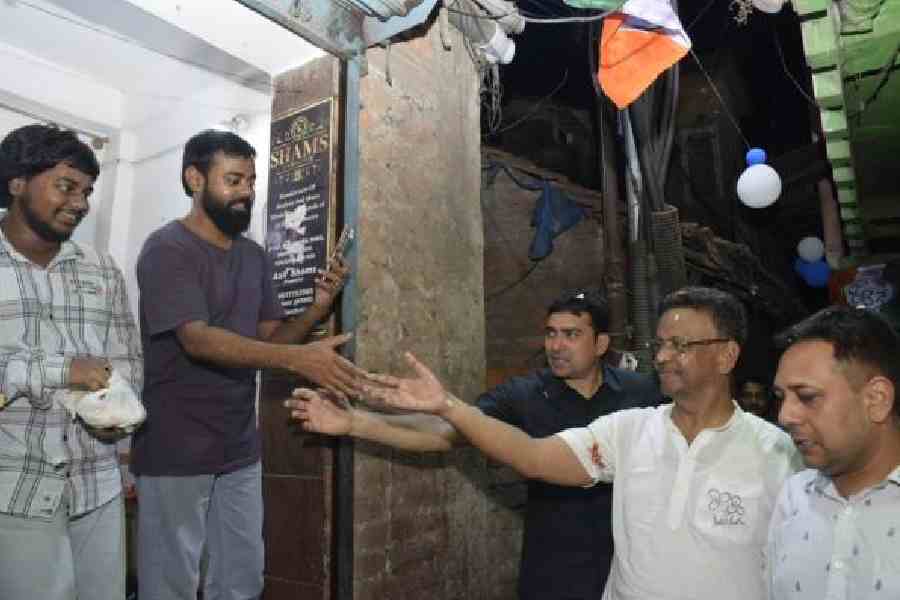
The numbers bear out the shift. A Trinamool leader managing the campaign for party candidate Debasish Kumar in part of the Rashbehari constituency said street-corner meetings this election have been roughly a third of what they were in 2021. “Our candidate has visited homes across the constituency — twice in some areas,” he said.
In Ward 50 of the Kolkata Municipal Corporation, which falls under the Chowringhee constituency, Trinamool councillor Indranil Kumar said there were no street-corner meetings at all until April 20. The entire campaign rested on door-to-door visits by candidate and sitting MLA Nayana Bandyopadhyay.
Councillor Kumar also offered a structural explanation for why the format works differently at the Assembly level. “In a Lok Sabha election, street-corner meetings make more sense — the constituency is too large for a candidate to cover on foot. An Assembly constituency is far smaller. Home visits are not only possible, they work better,” he said.
The noise is not just an inconvenience for residents. At a busy intersection in Kasba, where around 20 street-corner meetings were held during this campaign, a barber described how a political programme empties his shop. “People waiting for their turn talk on their phones. When a meeting is on, they can’t hear anything. So they leave,” he said.
Social media has accelerated the decline of the public meeting in another way. Reels of candidates circulate on WhatsApp and Instagram. Addresses by Mamata Banerjee or Narendra Modi can be watched live.
“People have already heard everything before the meeting even begins,” said a Trinamool leader in Lake Gardens. “Why would they stand on the road and listen to it again?”
What is replacing the loudspeaker is not silence but a different kind of political conversation — conducted at the door and on the phone screen. Whether it is more effective remains to be seen. But Calcutta’s election season has been, at least, a few decibels quieter.