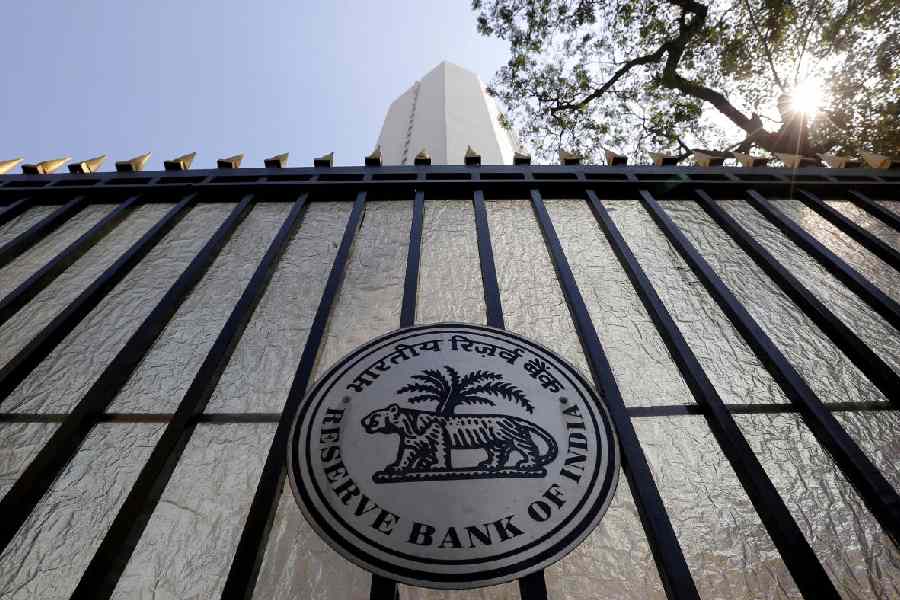
The Reserve Bank of India will issue comprehensive norms for its regulated entities on advertising, marketing and sales practices to curb mis-selling of financial products and services, according to the central bank’s Report on Trend and Progress of Banking in India 2024-25, released on Monday.
The RBI said mis-selling by regulated entities (REs) has significant adverse consequences for customers as well as for the stability and credibility of the financial sector. “It is proposed to issue comprehensive instructions to different categories of REs on advertising, marketing and sales of financial products/services, including aspects related to the prevention of mis-selling,” the report said.
RBI has also proposed a review of existing conduct-related instructions governing the engagement of recovery agents and loan recovery processes, with a view to issuing harmonised guidelines.
On digital frauds, the RBI said it continues to work closely with stakeholders, including the Union Ministry of Home Affairs, to develop and operationalise measures to curb cyber-enabled fraud and strengthen customer protection. “REs need to put in place robust internal controls, ensure sufficient grievance redress officers at all levels, and enhance digital financial literacy to address digital frauds,” the report said.
The RBI’s observations come amid rising instances of digital fraud in the banking system. In FY25, the total number of frauds was 23,879, with an amount involved worth ₹34,771 crore. In the April-September period of FY26, the total number of frauds stood at 5,092 with an amount involved of ₹21,515 crore.
Private sector banks accounted for 59.3 per cent of the total number of frauds, while public sector banks accounted for 70.7 per cent of the amount involved. Within private banks, card and internet frauds dominated in number, whereas advances-related frauds were highest by value. State-owned banks reported the highest share of advances-related frauds both by number and amount.
The report highlighted recent initiatives from RBI, such as MuleHunter.ai, developed to facilitate system-wide learning for identifying and flagging potential mule accounts. The system has been implemented in 23 banks as of December 17, 2025. Another key initiative is the digital payments intelligence platform (DPIP), which leverages artificial intelligence to flag risky transactions and enable intelligence sharing for fraud detection and prevention.
The RBI is reviewing its 2017 instructions on the limited liability of customers in unauthorised electronic banking transactions, in light of significant changes in the banking landscape, including new payment channels, higher digital transaction volumes and evolving fraud patterns.
Commercial banks have delivered a robust performance in FY25, with the gross non-performing assets ratio declining to a multi-decadal low of 2.2 per cent at March-end. “The banking sector remained resilient, underpinned by a strong balance sheet, sustained profitability, improving asset quality, and high capital buffers,” the report said.