Thursday, 07 May 2026
Thursday, 07 May 2026
Thursday, 07 May 2026
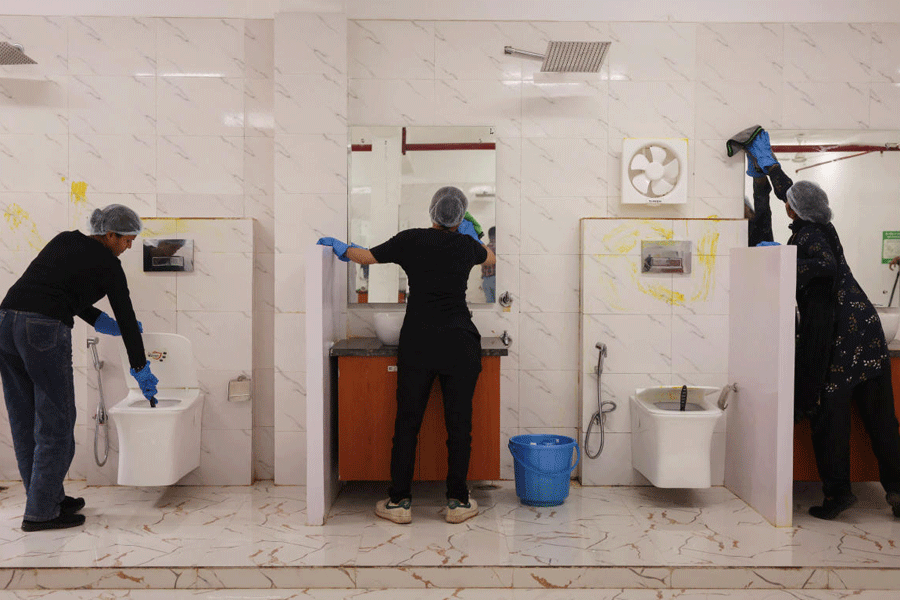
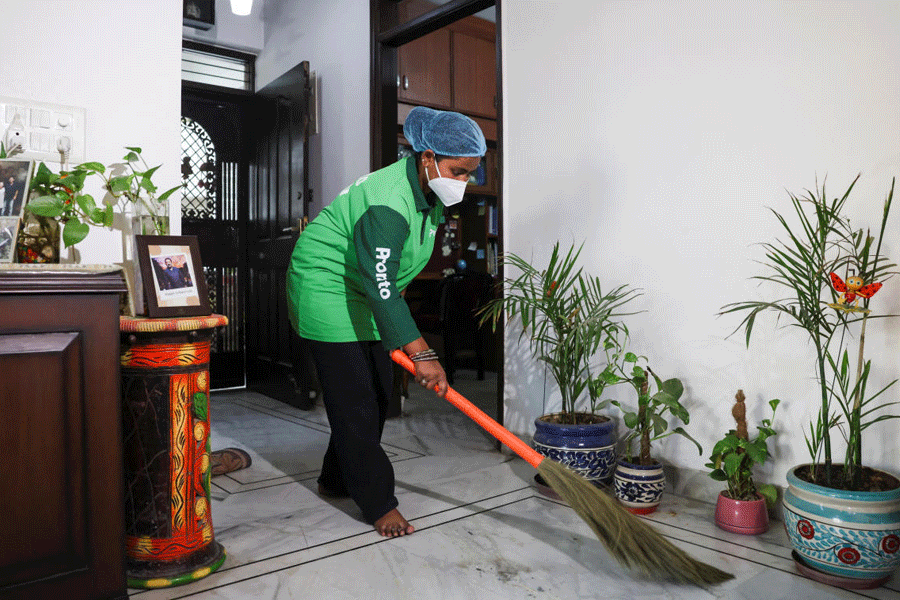
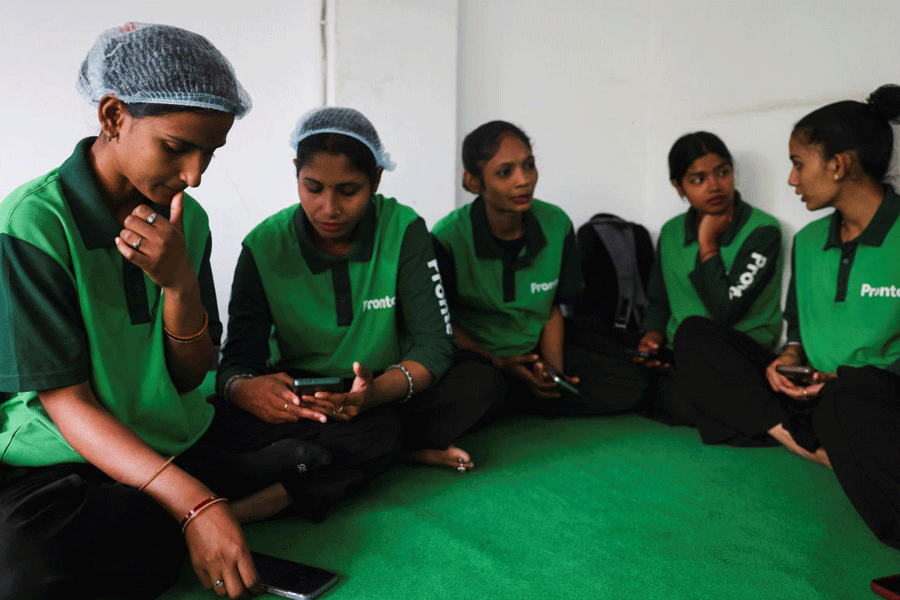
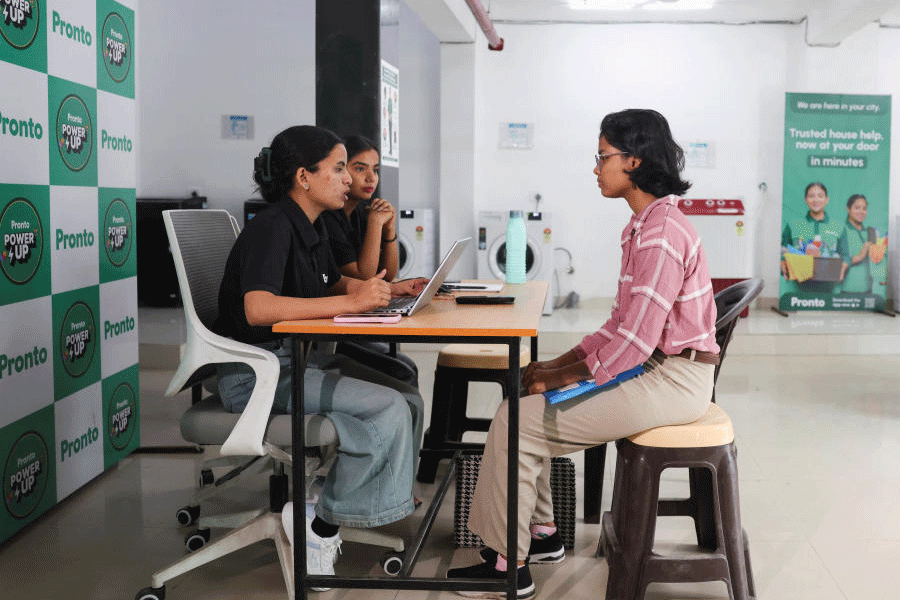
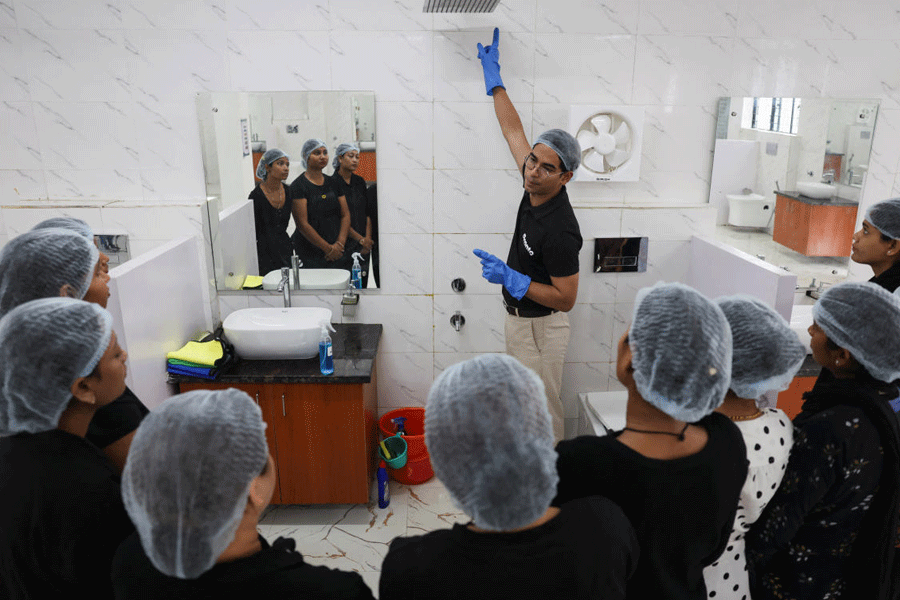
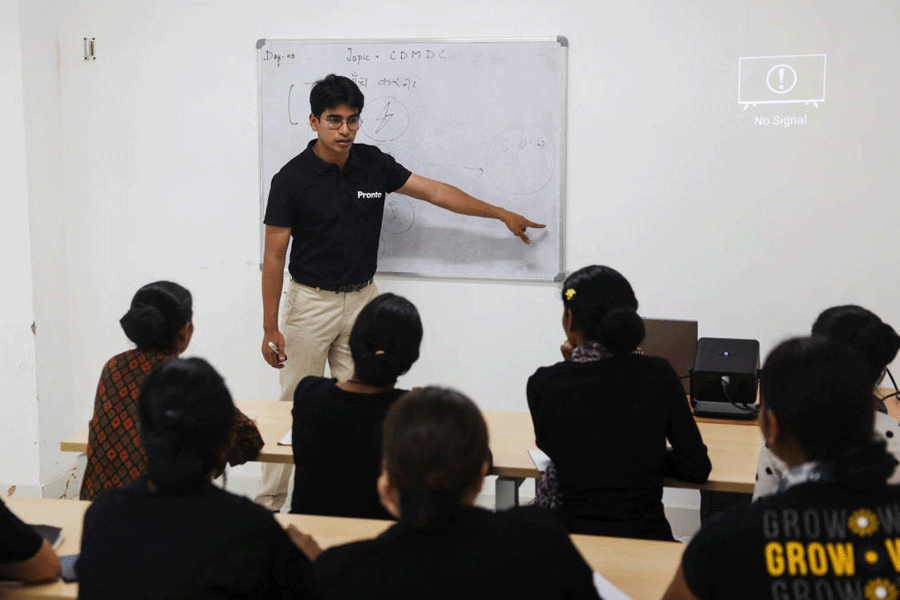
At the startup Pronto's training hub, women hone their chopping and mopping skills while learning how to send SOS signals if they feel unsafe inside customers' homes. They are set to join India's newest consumer craze: house help for less than Rs 100 an hour.
Indu Jaiswar, 35, hopes doing household chores in her first job can help fund her son's dream of becoming a doctor. "This is what we've been doing in our own homes for years. Might as well get paid for it," said the mother of two.
In a country with an entrenched culture of outsourcing household work, startups Pronto and Snabbit and listed rival Urban Company are training thousands of domestic helpers. Urban Company estimates India's rapidly growing cleaning services market is worth an estimated $9 billion and spread across 53 million households.
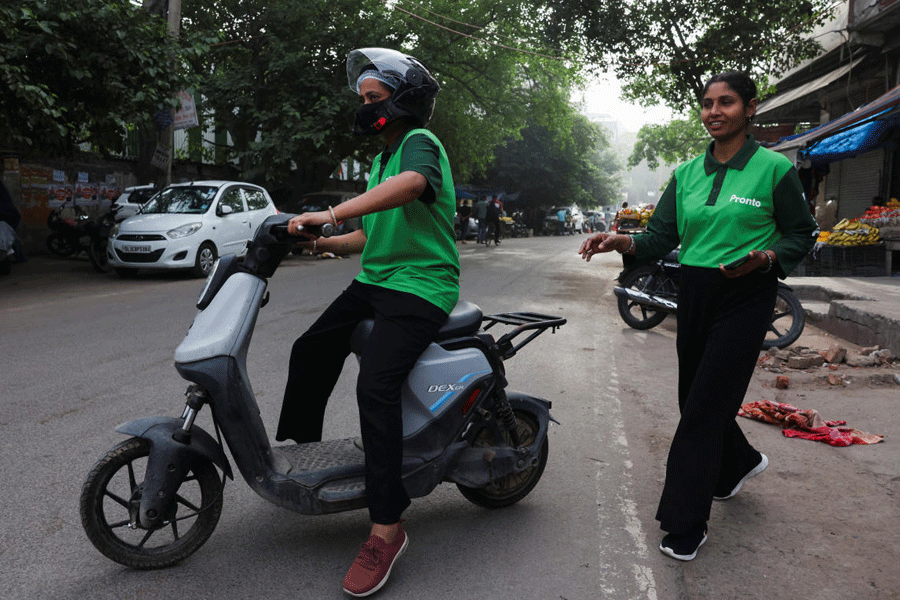
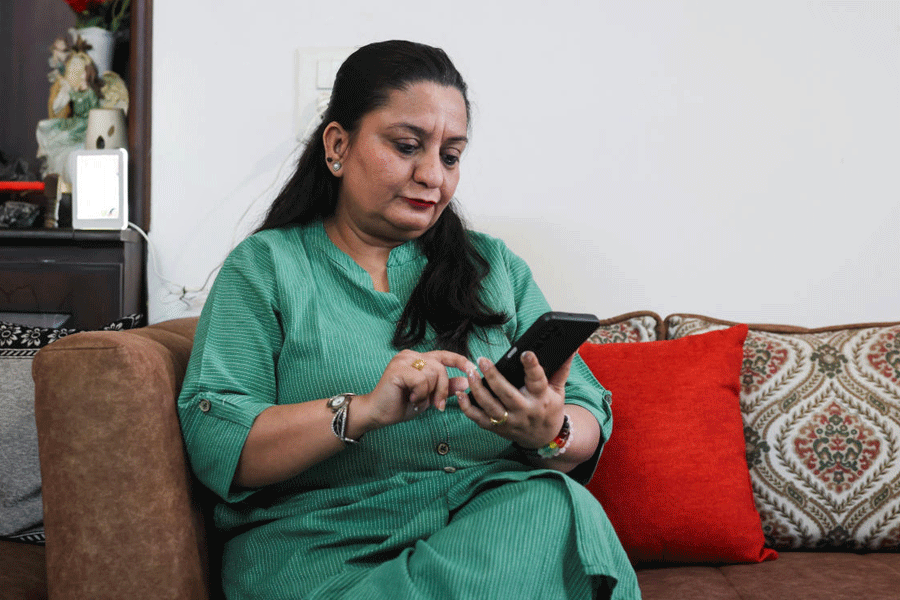
Like Uber drivers, the helpers receive bookings on their apps, directing them to apartments in assigned neighbourhoods within minutes and press a countdown timer in their apps before starting work.
The potential annual earnings from working eight hours a day can be as high as $5,000 (roughly Rs 4,66,021), a figure that far surpasses India's per capita annual income of around $3,000 ( roughly Rs 27,9612).
The companies are betting big, burning millions of dollars to lure busy professionals in cities like New Delhi and Mumbai with under Rs 99 offerings that have no global parallel. Similar services can cost around $30 (around Rs 2,796) an hour in the United States, and around $7 (around Rs 652) in China.
However, the craze among consumers and workers is tempered by concerns about women's safety in a country with high rates of sexual harassment. Unlike e-commerce couriers who spend just brief moments at doorsteps, housekeepers may spend hours inside private homes, exposing them to greater risks.
Soumya Chauhan, a principal at Dutch e-commerce investor Prosus, which has a stake in Urban Company, said she views worker safety as the fundamental operational challenge to solve.
"The platforms that successfully crack the safety protocols will earn the deepest consumer loyalty and the most sustainable market returns," she said.
Safety risks in focus
Cognisant of the challenges for a business that mainly employs women, Snabbit and Pronto said they have an in-app SOS button that alerts area supervisors in case of distress, while Pronto also offers self-defence training.
"In the offline world, the rate of abuse for a lot of these domestic workers is super high," said Pronto's 23-year-old CEO Anjali Sardana, adding that her company is trying to comfort its workers by assuring legal and medical support when needed.
Urban Company, which also offers services like plumbing, declined to comment for this story. It has previously said it offers a women-only safety helpline and an SOS app feature.
Shabnam Hashmi, a women's rights activist, said the companies run extensive background checks on workers before onboarding them but should also check customer credentials. Currently users can simply log in on apps to book home help.
"How is it ever possible for these jobs to be safe for women – even with an SOS button? Unless they carry cameras, which is of course impossible, there is no way to know what happens behind that door," she said.
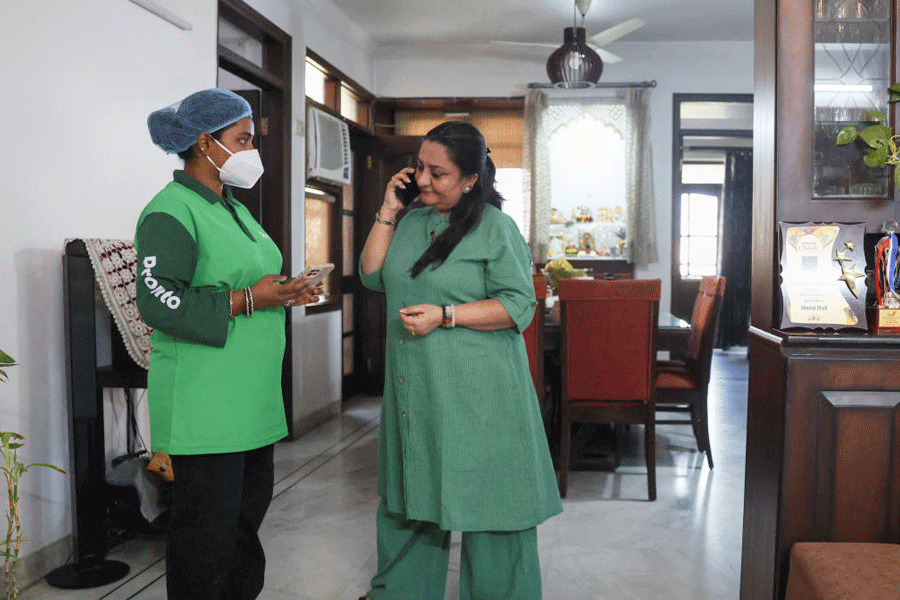
Pronto worker Jaiswar has found her own workaround: she always calls a customer before visiting a home and goes "only if there's a woman present".
Apps see rapid expansion
The companies meanwhile are getting record orders.
Urban Company recorded its highest daily home services bookings of 50,000 in February. Snabbit's have grown to 35,000 orders a day.
Bain Capital-backed Pronto logged a record 22,000 daily bookings in March, up from 2,500 daily orders in October, and raised $25 million in new funding.
Pronto CEO Sardana said she started the business last year after spotting an opportunity to serve three sides: strong demand from customers for reliable maids, workers' need for more stable and safer jobs, and a gap in the market for a scalable service.
"It's possible to build a win-win-win business," she told Reuters.
Fuelling the trend is also India's lack of a do-it-yourself culture, and Indians' love for getting things done cheap.
In Bengaluru, 30-year-old Dhruv, who uses only a first name, said he spent RS 100 per hour for Urban Company's service to help unpack his utensils and hang curtains after moving house.
That helped him "save quite a bit of time and effort," but the price does matter: "I wouldn't pay Rs 400 or Rs 500 for it."
Snabbit founder Aayush Agarwal said his service was becoming popular among young couples and singles who want to schedule housekeepers and not hire monthly domestic helpers who are infamous for skipping work.
Pronto is offering some visits for Rs 25 in Facebook ads with taglines like "Maid on Leave? Don't grieve", while an Urban Company three-visit pack costs Rs 66 an hour.
Snabbit ads said a customer booked a helper "just to peel 20 potatoes", while another had lined up a worker to "separate LEGO blocks by colour."
Cash burn
Like many startups in their growth phase, the companies are paying their workers out-of-pocket to make the jobs attractive, but also doling out hefty discounts to reel in customers.
In October to December, Urban Company disclosures show it received 1.61 million home-help orders with each incurring a loss of Rs 381. The company says its "discounts are moderating" but its order values need to almost double to break even.
"Over a period of time, it is safe to say that it will become an earn-as-you-go model," said Rahul Taneja, partner at Lightspeed, which has backed Snabbit.
At the Pronto centre, where workers get a uniform and are trained to wear polished shoes, posters revealed potential payouts: home helpers can earn around Rs 150 per hour for 12 hours of work daily in a month, 48 per cent more than what a new customer pays.
At more than Rs 46,000 a month, that's a big allure for Nisha Chandaliya, 22, who needs to support her ailing mother and has quit a call-centre job that stretched long hours and paid only around Rs 16,500 a month.
"It's exhausting to clean six-seven homes, but I need the stability. I can't afford to go back," she said.