India will consider resuming buying Iranian oil based on techno-commercial feasibility, a senior government official said after Washington temporarily removed sanctions to ease pressure on prices that followed the US-Israeli war on Iran.
Historically, India was a major buyer of Iranian crude, importing significant volumes of Iranian Light and Heavy grades due to strong refinery compatibility and favourable commercial terms. Following sanctions tightening in 2018, imports ceased from May 2019, with volumes replaced by Middle Eastern, US and other grades. At peak, Iranian crude accounted for 11.5 per cent of India's total imports.
At a news briefing on developments in West Asia, Sujata Sharma, Joint Secretary in the Ministry of Petroleum and Natural Gas, said techno-commercial feasibility will drive the decision on resuming buying Iranian crude.
"It is based on techno-commercial feasibility," she said.
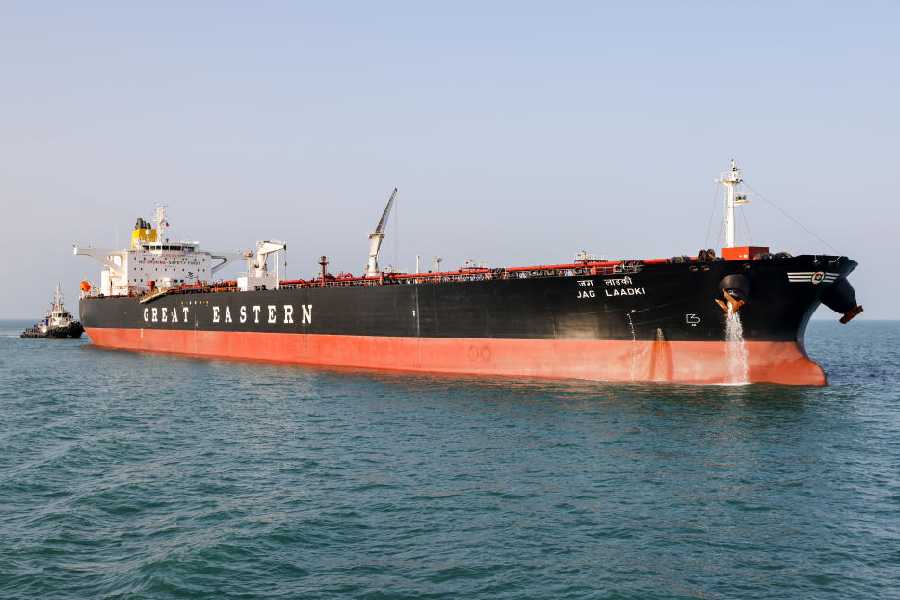
Over the weekend, the US waived sanctions on the purchase of Iranian oil at sea for 30 days in its latest attempt to ease oil prices that have been driven up by the US-Israeli war on Iran. An estimated 140 million barrels of Iranian oil is on vessels on sea.
While the waiver allowed countries to purchase those barrels, it is unclear how payments will be made.
Iran remains cut off from SWIFT (Society for Worldwide Interbank Financial Telecommunication) - a global messaging network used by banks and financial institutions to securely send and receive information about financial transactions.
Industry sources said the last purchases from Iran were done in Euro using a Turkish bank as a go-between, but that option no longer exists.
Iran was cut off from the SWIFT system in March 2012 following European Union sanctions over its nuclear programme, with the move forcing the disconnection of multiple Iranian banks and severely restricting global financial transactions.
Further disruptions occurred in 2018 after the United States reimposed sanctions, leading to renewed suspension of several Iranian banks from the network, which significantly constrained Tehran's ability to conduct international trade, receive oil payments and access foreign currency reserves.
Sumit Ritolia, analyst at Kpler, said India could emerge as a key demand centre to watch, alongside Chinese buyers and other Asian countries, for Iranian crude.
"Currently, Iranian crude availability remains elevated, with an estimated 170 million barrels on water, including floating storage and cargoes in transit. While part of these volumes are committed, a portion remains unsold," he said. "Indian refiners retain the ability to re-integrate these barrels with minimal operational adjustments, supported by prior processing experience and established trading setups."
However, any return will be driven primarily by commercial and geopolitical factors rather than technical constraints.
"Key considerations include the scope and durability of sanctions relief (including on shipping), pricing structure, and the availability of payment, insurance and logistics mechanisms. If these conditions align, a ramp-up in Indian imports of Iranian crude could be significant, similar to the rapid increase observed in Russian crude intake following the easing of Western sanctions," he added.