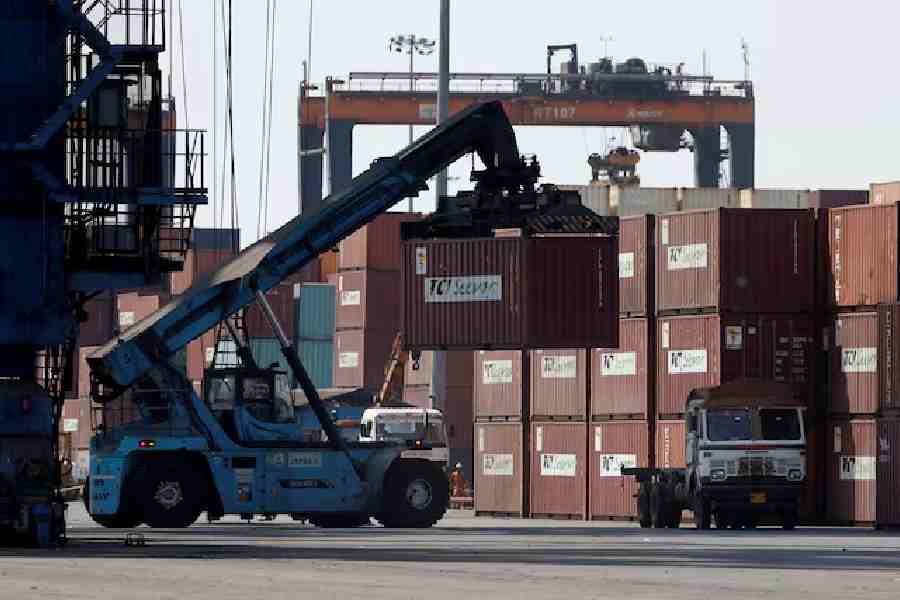
India has rolled out a one-time relief measure allowing units in Special Economic Zones (SEZs) to sell a portion of their output in the domestic market at concessional duty rates, as global trade disruptions and geopolitical tensions strain exports and supply chains.
The move, effective from April 1, 2026 to March 31, 2027, aims to support export-oriented units grappling with rising tariffs, conflict-driven supply disruptions, and weakening global demand. It was first proposed in the Union Budget to help exporters navigate higher U.S. tariffs and has gained urgency amid the ongoing Middle East conflict impacting trade routes, freight, and energy costs.
Under a notification issued by the Department of Revenue on March 31, the benefit will be available only to SEZ units that commenced production on or before March 31, 2025. Eligible units must also meet specified conditions, including a minimum value addition of 20 per cent on goods sold domestically.
SEZ units—traditionally set up to boost exports with duty-free imports of raw materials—will now be allowed to sell a capped share of products in the domestic tariff area (DTA) at reduced customs duties instead of the higher levies typically applied to imports. The concessional duty ranges roughly between 5 per cent and 12.5 per cent, varying by product and sector, including chemicals, engineering goods, machinery, textiles, footwear, pharmaceuticals, electronics, and consumer items.
Finance Minister Nirmala Sitharaman had proposed the measure as a “special one-time” relief to address underutilisation of capacities in SEZ manufacturing units due to global uncertainties. She noted that such domestic sales would be limited to a prescribed proportion of exports.
"It will also allow domestic industry to tap unused SEZ capacity and reduce reliance on imports that are becoming costlier and more delayed," said Krishan Arora, a partner at consultancy Grant Thornton LLP.
"For now the benefit is for 2026-27, but given the uncertain times - this may need to be relooked for extension for another year or so," he said adding this relaxation provides cushion to the industry from inevitable outside shocks, permitting these units to smoothly shift towards the domestic market and resolving undercapacity challenges.
The policy is also expected to improve capacity utilisation and make domestic supply more competitive.
"The move aims to make surplus capacity utilisation more cost-effective," said Rajiv Chugh, a partner at EY India, noting that SEZ units typically face higher import duties when selling in the domestic market.
Lower duties could also reduce incentives to route imports through countries with which India has free trade agreements, Chugh added.
Officials said the measure addresses long-standing demands from SEZ units, many of which have struggled to export surplus production due to volatile global conditions. Commerce and Industry Minister Piyush Goyal had earlier indicated that several SEZ units have idle capacity, and the policy would enable them to sell more in the domestic market at concessional duty, thereby reducing imports.
India currently has 276 operational SEZs housing 6,279 units. Exports from these zones rose 7.37 per cent to USD 172.27 billion in 2024-25.