India’s economy is expected to expand by 6.8 per cent to 7.2 per cent in the next financial year, underpinned by resilient domestic demand and relative macroeconomic stability, even with volatile geopolitics and trade tensions weighing in on the outlook, the Economic Survey presented by the Centre said on Thursday.
The estimate, however, points to a deceleration in the pace of growth, with the economy projected to widen by 7.4 per cent in this financial year, ending March 31.
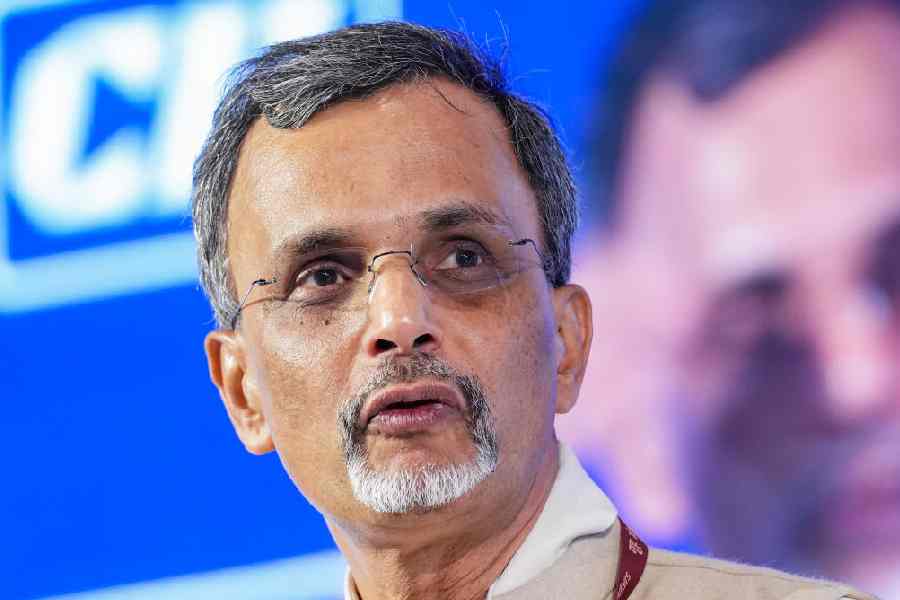
V. Anantha Nageswaran, the chief economic adviser who authored the Survey, later argued that India might attain up to 7.5 per cent growth if it focused on bolstering manufacturing, export and process reforms.
The removal of inverted customs duties, eliminating cross-subsidisation between freight and power costs, and promoting cluster-based manufacturing are among policy measures that should be under consideration, Nageswaran said.
“If we are able to achieve manufacturing and export competitiveness and pursue further process reforms in the areas of land and cost subsidisation, and bring down the cost of manufacturing, the potential growth can even rise to 7.5 per cent and 8 per cent in the next few years,” he said at a media interaction.
The Survey based its optimism on sustained reforms in tax and policy areas, arguing India’s medium-term growth outlook was “one of steady growth amid global uncertainty, requiring caution, but not pessimism”.
Investment and consumption are likely to be strengthened as firms respond to recent reforms, including GST and income-tax cuts, the overhaul of labour laws and steps to open up the tightly controlled nuclear power sector, the Survey said.
“Ongoing trade negotiations with the United States are expected to conclude during the year, which could help reduce uncertainty on the external front,” it added.
However, Nageswaran later declined to clarify whether the end of the year referred to was the fiscal or calendar year.
Finance minister Nirmala Sitharaman presented the document in Parliament in the morning. The Union budget is to be presented on Sunday, when she will have the onerous task of maintaining fiscal prudence while supporting growth amid the tariff turbulence unleashed by the US.
Commenting on the Survey in a post on X, Prime Minister Narendra Modi wrote: “The Economic Survey tabled today presents a comprehensive picture of India’s reform express, reflecting steady progress in a challenging global environment.”
He added that the document provided a road map for strengthening manufacturing, enhancing productivity in the country’s march towards becoming a developed nation.
‘Rupee a victim’
The presentation of the Survey came amid the continuing slide of the rupee, which touched an all-time intra-day low of 92 to the US dollar. The Survey regretted that the rupee had become a victim of geopolitics and strategic power gap.
“The paradox of 2025 is that India’s strongest macroeconomic performance in decades has collided with a global system that no longer rewards macroeconomic success with currency stability, capital inflows, or strategic insulation,” the Survey said.
It argued that the rupee’s valuation did not accurately reflect India’s stellar economic fundamentals. “In other words, the rupee, therefore, is punching below its weight,” the Survey said.
It, however, contended that “a weak rupee does not hurt in these times” as it offset to some extent the impact of the higher US tariffs on Indian goods, and underlined that there was now no threat to inflation from higher-priced crude oil.
At the media conference, Nageswaran declined to say whether the government had a level of the rupee against US dollar in mind, suggesting the questions should be referred to the central bank.
He, however, said that a virtuous cycle is formed when productivity-led manufacturing expansion leads to sustained export growth that turns current account deficit into surplus, followed by currency stability and lower exchange-rate depreciation, lower-risk premium and decline in capital cost, which further drive manufacturing growth.
Amid a pitch for atmanirbharata (self-reliance), the Survey called for implementing “Swadeshi” as a disciplined strategy, saying that not all import substitution is feasible or desirable.
It said Swadeshi was inevitable and necessary in the wake of export control and technology denials by developed nations.
“India must focus on building enduring national capabilities and economic sovereignty in the face of shrinking space for rules-based trading, anti-immigrant stance, weaponisation of energy sources and growing use of export controls in critical sectors,” the Survey said.
Nageswaran told the media: “We have to indigenise and there is no doubt Swadeshi matters, but we have to move on from that to strategic resilience, being able to withstand external shocks and making India irreplaceable in key global value chains. In other words, we have to start with making things at home competitively.”