The government has sharply reduced excise duty on petrol to Rs 3 per litre and fully exempted diesel from the levy, as it moves to cushion state-run fuel retailers from surging global crude prices triggered by the escalating Iran conflict.
In a notification dated March 26, the Finance Ministry cut excise duty on petrol from Rs 13 per litre to Rs 3, while slashing the duty on diesel from Rs 10 per litre to zero. The revised rates have come into effect immediately.
The move comes as Indian oil marketing companies (OMCs) — including HPCL, BPCL and IOC — face mounting financial pressure due to a prolonged freeze in retail fuel prices despite a sharp rise in global crude oil rates.
Tracking the excise duty cut notification, shares of fuel retailers IOC, BPCL and HPCL opened higher on BSE.
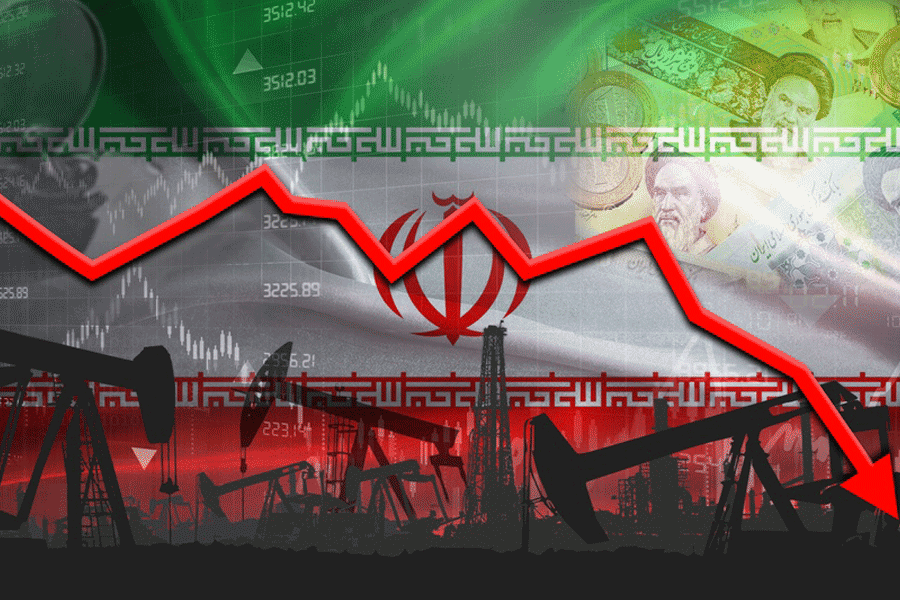
International oil prices surged nearly 50 per cent since February 28, when the United States and Israel launched military strikes against Iran, prompting retaliation from Tehran.
Crude prices touched as high as USD 119 per barrel earlier this month before easing to around USD 100 per barrel. According to rating agency ICRA, if crude averages USD 100–105 per barrel, fuel retailers could incur losses of Rs 11 per litre on petrol and Rs 14 per litre on diesel.
The geopolitical tensions have significantly disrupted global energy supplies, particularly due to the near-closure of the Strait of Hormuz — a key transit route handling about 40 per cent of global crude oil shipments. With Iran blocking the strait and insurers withdrawing coverage, tanker movements have been severely affected, tightening supply chains.
India, the world’s third-largest oil importer, is particularly vulnerable, meeting over 90 per cent of its crude oil requirements through imports, a large share of which passes through the Strait of Hormuz. The country also depends on imports for roughly half of its natural gas needs.
Despite the supply disruptions, the government has maintained that adequate arrangements are in place. Prime Minister Narendra Modi’s administration has emphasised sufficient availability of key resources, including fertilisers for the summer sowing season and coal to meet rising electricity demand.
However, the fiscal implications of the duty cuts are significant. Madhavi Arora, an economist at Emkay Global, estimated the annualised revenue impact at around Rs 1.55 trillion, noting that the reductions could offset 30–40 per cent of the annual losses incurred by OMCs on auto fuels at current prices.
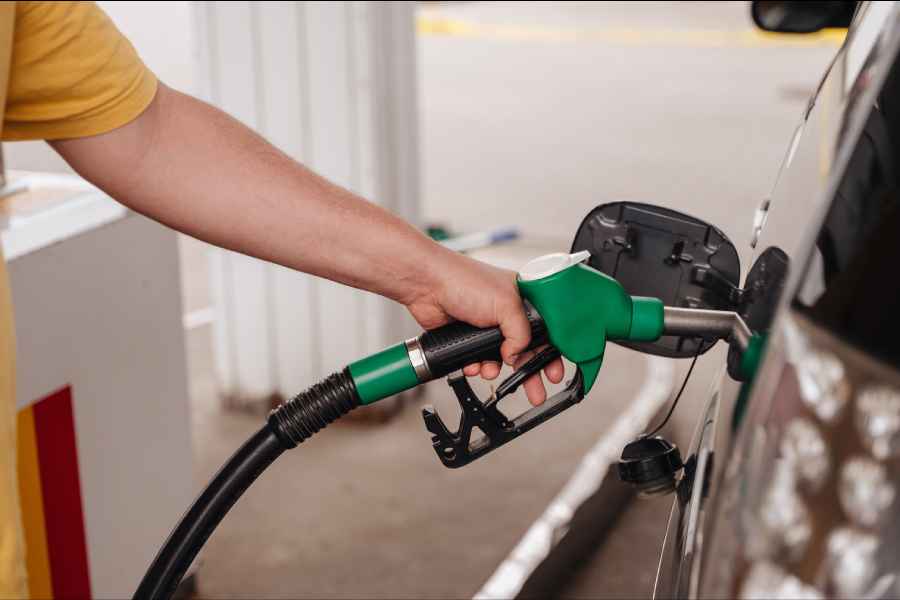
While state-run retailers, which control nearly 90 per cent of the market, have kept fuel prices unchanged, private players have begun adjusting rates. Nayara Energy has increased petrol prices to Rs 100.71 per litre and diesel to Rs 91.31 per litre. In contrast, Jio-bp — the fuel retail joint venture between Reliance Industries and BP Plc — has so far held prices steady despite incurring losses.
In Delhi, petrol continues to retail at Rs 94.77 per litre, while diesel is priced at Rs 87.67 per litre.
Opposition slams move
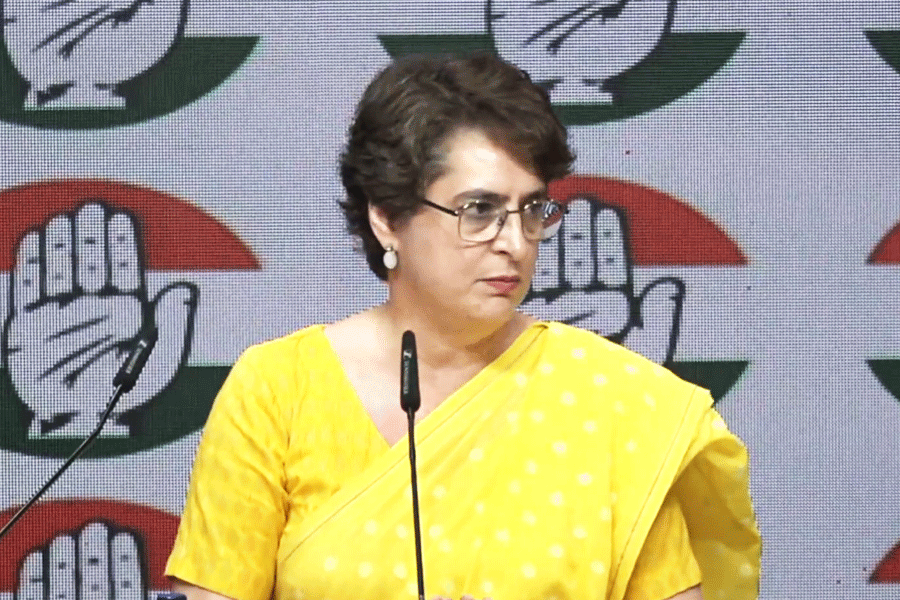
The Congress claimed that the government's excise cuts will not change prices for dealers and consumers, and that the relief exists only in the narrative, not in reality.
The Congress said the government should focus on delivering actual relief to consumers, instead of "manufacturing headlines and fooling people."
The party's media and publicity department head, Pawan Khera, said, "If you saw the headlines about petrol and diesel prices 'coming down' and thought the government had offered relief to your pocket, you'd be mistaken."
As of now, prices remain the same for dealers and for consumers, he claimed.
"What has actually been reduced is the 'special additional excise duty' — a levy paid by Oil Marketing Companies to the government. The words 'special' and 'additional' reveal how unnecessary this tax is," Khera said on X.
He pointed out that these companies have been absorbing losses since the outbreak of the conflict in West Asia.
"The government has now merely agreed to share a small part of that burden but reducing the 'special additional' levy - that too almost a month later," the Congress leader said.
"Relief exists but only in the narrative -- not in reality. Instead of manufacturing headlines and fooling people, the government should focus on delivering actual relief to consumers," Khera said.