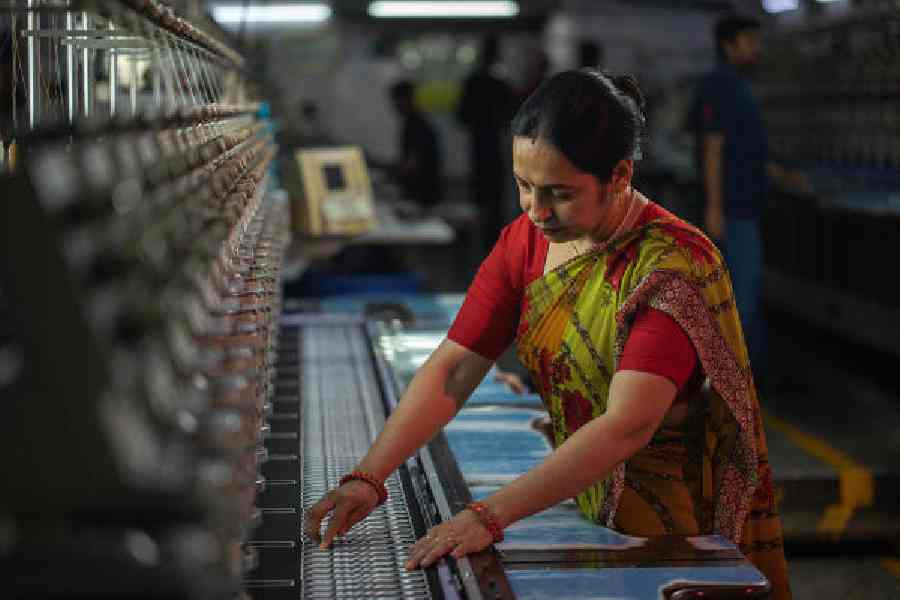
The Centre unveiled a host of plans to support the small and medium industries which are facing the brunt of tariff turmoil and geopolitical turbulence.
Finance minister Nirmala Sitharaman on Sunday proposed a three-pronged strategy, including a ₹10,000 dedicated fund, to help MSMEs grow as ‘champions’.
“I propose to introduce a dedicated ₹10,000 crore SME Growth Fund, to create future champions, incentivising enterprises based on select criteria. I also propose to top up the Self-Reliant India Fund set up in 2021, with ₹2,000 crore to continue support to micro enterprises and maintain their access to risk capital,” the finance minster said.
To provide MSMEs with liquidity support, Sitharaman announced plans to leverage the full potential of the Trade Receivables Discounting System (TReDS). With TReDS, more than ₹7 lakh crore has been made available to MSMEs.
To leverage its full potential, she proposed 4 measures, including mandating TReDS as the transaction settlement platform for all purchases from MSMEs by central public sector enterprises (CPSEs), and introducing a credit guarantee support mechanism for invoice discounting on the TReDS platform.
Sitharaman also proposed to link the government e-marketplace (GeM) with TReDS for sharing information with financiers about government purchases from MSMEs and encouraging cheaper and quicker financing.
It also proposed to introduce TReDS receivables as asset-backed securities, helping develop a secondary market, enhancing liquidity and settlement of transactions.
Rajiv Memani, president of CII, welcomed the measures, describing MSMEs as engines of employment and innovation. Observing that they would enhance access to credit and market opportunities, Memani said, “These measures will also support formalisation and enable small enterprises to scale sustainability.”
Relief for SEZs
The government announced a one-time measure allowing industrial units located in special economic zones (SEZs) to sell their goods in the domestic market at concessional duty rates, subject to certain conditions, meeting long pending demand of SEZ units.
At present, SEZ units can sell to domestic tariff area (DTA) by paying import duty.
“To address the concerns arising about utilisation of capacities by manufacturing units in the special economic zones due to global trade disruptions, I propose, as a special one-time measure, to facilitate sales by eligible manufacturing units in SEZs to the domestic tariff area (DTA) at concessional rates of duty.
“The quantity of such sales will be limited to a prescribed proportion of their exports. Necessary regulatory changes will be undertaken to operationalise these measures while ensuring level-playing field for the units working in the DTA,” Sitharaman said in her speech.
Explaining the issue, commerce minister Piyush Goyal later said several of the SEZ units have spared capacity and the announcement will help them sell in the domestic market at concessional duty, thereby reducing imports. Details of the policy would be announced in the next 1-2 months.
He, however, also promised to monitor that domestic industry would not be hurt from the measure, indicating oil refineries in SEZ area will be kept outside of the scheme ambit.