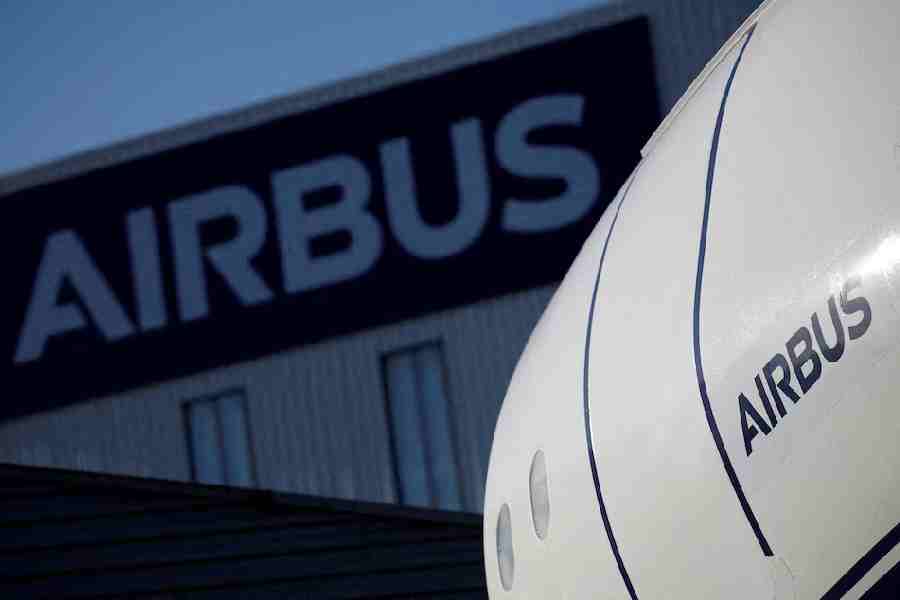
The Indian aviation market is set for sustained strong expansion, and Airbus believes its A330neo aircraft—offering economics comparable to the A350—could emerge as a strong fit for airlines in the country, a senior company executive has said.
European aerospace major Airbus, which maintains a significant footprint in India, currently has around 1,250 A320 family aircraft orders from Indian carriers. This pipeline translates into over 120 aircraft deliveries annually over the next decade.
Joost van der Heijden, Senior Vice President for Marketing, Commercial Aircraft at Airbus, said in a recent interview that global demand for aircraft remains robust despite a complex operating environment.
In the first five months of 2026, he noted, Airbus aircraft deliveries were up 8 per cent year-on-year, while A321 XLR deliveries are gaining momentum. India’s largest airline IndiGo already operates A321 XLR aircraft.
Speaking on the sidelines of the International Air Transport Association (IATA) annual general meeting, Heijden said India would continue to be a high-growth aviation market.
"There are about 800 aircraft in service today, and we see that growing at close to 9 per cent over the coming 10 years.
"I think the potential for growth in the propensity to travel, the number of trips per capita, is tremendous. Today it's about 0.13 trips on average per person in India, and that will more than double over the coming 10 years," he said.
On the potential for A330neo orders from India, Heijden highlighted its cost efficiency relative to the A350, driven by engine performance, aerodynamics and passenger experience.
"We call it A330 neo, the versatile champion because it is an aircraft that is equally efficient on domestic and regional routes as well as long-range routes," he said.
He added that India’s aviation landscape supports multiple route categories.
"There's a very strong regional market in the countries close around.
There's a very strong market to Asia as well to Australia, and then to Europe.
"So, an aircraft that's capable of flying all those types of routes and networks efficiently could be a very good option for India," he said.
According to Airbus, the A330neo can operate across a wide range of missions—from short domestic sectors to ultra-long-haul routes—supporting both high-density and premium cabin configurations.
The company also said the aircraft can fly missions ranging from 30 minutes to 17 hours, making it suitable for varied network strategies.
On supply chain constraints, Heijden said conditions had improved compared with earlier periods, though some bottlenecks persist.
"Of course, there are still tensions on the engine side, cabin and equipment," he said.
The global aviation industry continues to face supply chain disruptions, particularly in engines and aircraft components, leading to delivery delays.
Heijden said Airbus is working closely with airline customers to manage challenges.
"It is really about working hand in hand, listening to each other and trusting each other," Heijden said.
Airbus first entered India’s commercial aviation market in 1976 with the A300B2. Today, Indian carriers operate both the A320 family narrow-body aircraft and A350 wide-body jets.
"There are 120 Airbus aircraft going to India per year over the coming 10 years. That creates a very strong bond. India, as a country with all its expertise, technological knowledge and capabilities, is a very important partner for Airbus," he said.
Airbus also plans to scale up its sourcing of aerospace components and services from India to USD 2 billion by 2030.