|
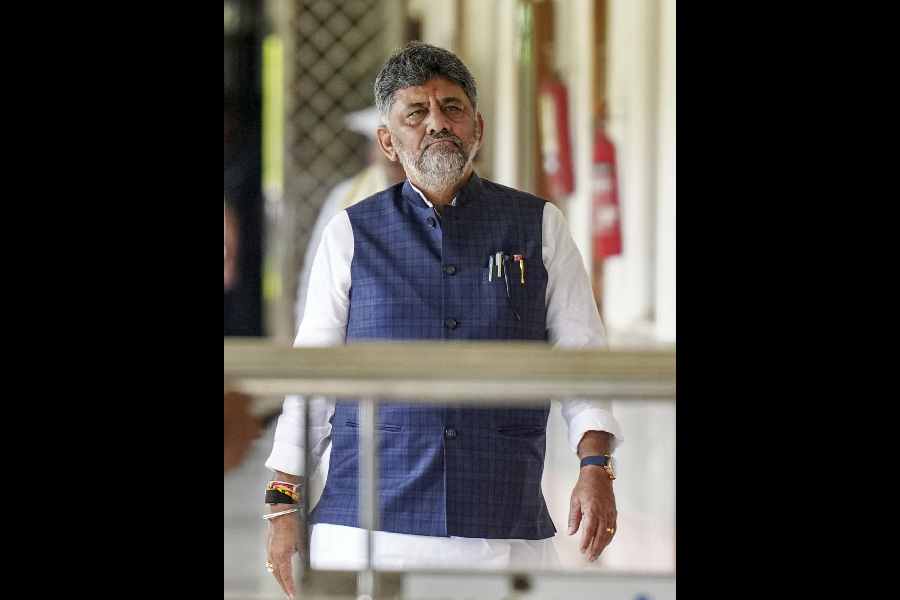
| trusted treasurer: Shriti Vadera with Gordon Brown |
The mysterious case of Shriti Vadera
One evening last week I was watching a BBC2 documentary, The Love of Money, analysing the roots of the current financial crisis, when up popped the extremely media shy Baroness Shriti Vadera to say: “It does make my blood run cold to think of how close the whole global system was to collapse.”
It certainly was a surprise when the very next day Gordon Brown announced that Vadera, his most trusted treasury adviser for eight of the 10 years he was chancellor of the exchequer, was quitting his government to take up a job with the G20.
“A rat leaving a sinking ship,” some commentators suggested unkindly for Vadera is known to be competent but unpopular.
The lady is something of a mystery. An Indian from Uganda, she has not moved in Indian circles in London, though two years ago she did accept an Asian “Hammer” award for breaking through the glass ceiling.
When Brown became Prime Minister, he gave the unelected Vadera a seat in the House of Lords and made her minister for business and also parliamentary secretary in the cabinet office.
Vadera, now 47, moved from Uganda to India when her family fled Idi Amin’s persecution in 1972, arrived in Britain at 15, got to Oxford and was an investment banker for 14 years before becoming an adviser and then a minister under Brown.
The British government’s loss might be the G20’s gain, so Manmohan Singh and Pranab Mukherjee may be seeing a lot more of her.
But they should be aware that the current chancellor Alastair Darling recently joked that the best way to deal with Britain’s incorrigible bankers was to: “Put them in a room with Shriti Vadera and lock the doors for a couple of hours.”
 |
 |
| TIMELESS:(From top) Charles Darwin immortalised in bronze; Darwin’s room at Christ’s |
Fizz in physics
Since Bikash Sinha had come over from Calcutta to spend a week as a “distinguished visiting scholar” at his old College, Christ’s, it gave me a chance to go up to Cambridge — and encourage him to write a popular book on science.
“I have just heard Stephen Hawking speak,” he enthused, referring to the author of A Brief History of Time, who, it has just been announced, is retiring as the Lucasian Professor of Mathematics at Cambridge.
Before wandering round the college gardens and paying homage to the bust of Jagadish Chandra Bose and a statue of the young Charles Darwin — Bikash remarked that they seemed to be observing each other across the shrubbery — we also popped into G4 in First Court.
This is the room which had been occupied by Darwin when he was an undergraduate at Christ’s from 1828-31 — he preceded Bose by half a century.
As part of Darwin’s bi-centenary celebrations, his room has been reconstructed with the help of college records and photographs, explained Bill ’Donnell, the Darwin visits manager at Christ’s. He added that art experts had removed layers of paint from the walls until they had got down to the original eau de nil.
There were a few odd books and some specimens but not much to suggest this is the man who, two centuries later, would be the subject of the biographical feature film, Creation, which went on general release last week.
 |
Writer’s return
Dev Anand is back in London, I am happy to report, and attended a party to celebrate his 86th birthday given by the businessman Kartar Lalvani.
One of Dev Saab’s old films, Hum Dono, from 1961, has been “colourised”, the legend revealed.
“I shall bring it to London — and also my new film, Charge Sheet,” he promised.
Had he considered writing a sequel to his entertaining autobiography, Romancing With Life?
He has, but for now he is writing a very different book about “the places I have been to all over the world”.
Dulwich boy
One of the guests at Kartar Lalvani’s party, Mumbai businessman Shashikant B. Garware, chairman of the Garware polyester and chemicals group, pointed out his attractive 37-year-old daughter, Sonia, to Dev Saab and asked: “Would you have taken her as the lead when she was younger?”
Dev Saab responded gallantly: “I’d take her now.”
Times have changed. Garware sent Sonia and two other daughters, Monika and Sarita, to America to do their MBAs. This was in marked contrast to his own father, Appasaheb Garware, who banished him in 1947 at the age of 12 to Dulwich College, an English public school, after noticing a servant tying his spoilt son’s shoe laces.
Shashikant remained at the boarding school for five years, went without hot water, had “terrible food”, polished the shoes of a boy called P.G. Carter as his fag and “cried at weekends when other boys went home”.
“Until my two brothers joined me I was the only Indian in school,” recalled Garware.
Today, Dulwich College, which I drive past most days — the school has a P.G. Wodehouse library named after its most famous old boy — is a much more liberal institution with numerous Patels.
Maybe Dev Saab should write a script about a father in India taking his daughter 60 years back in time to his schooldays in England.
“In all my five years, I did not have one racist comment,” Garware emphasised. “Now, I look back with happiness on my days at Dulwich College.”
English manners
Is Britain the best country in the world?
A lady kept nodding and smiling at me as she drove out of our local supermarket car park last week. Then she drove back and told me: “I didn’t want you to drive off with the flowers on top of your car.”
I apologised, thanked her for her kindness and explained my wife always did that.
She puts the flowers on top before placing the groceries in the boot. This is because she invariably hand carries her most precious purchase — the flowers.
My wife told me one of her friends placed a coffee cup on top and it arrived unspilt at journey’s end. This was not as bad as the story I had heard — of a mother who had driven off with the baby basket on top. This, too, had a happy ending.
Tittle tattle
Indian government officials have apparently asked to see the script of Indian Summer, starring Cate Blanchett as Edwina Mountbatten, because they are worried about the film’s treatment of the Vicereine’s relationship with Jawaharlal Nehru.
It is based on Alex von Tunzelmann’s Indian Summer in which “Churchill and Gandhi receive a kicking”.
The author told The Times: “There are only two people who know whether their relationship was sexual, and they’re both dead. They were certainly in love. There was an extraordinary intimacy there.”
The paper commented: “A film of Indian Summer may not, she (Alex) is willing to admit, follow such a nuanced approach.”
A director friend rang to remind me of the 1998 film Jinnah. Made as a Pakistani response to Attenborough’s award winning Gandhi, this film tried to demonstrate that the relationship between Nehru and Edwina was physical. It has now disappeared off the radar.
The moral is sex does not always rescue a movie.