Nearly two months of war in West Asia has weakened a crucial, multibillion-dollar market for brands selling items like crocodile-leather handbags and diamond bracelets.
The world’s luxury brands are trying to mitigate the fallout.
At Zegna Group, home of the high-end Zegna men’s clothing brand, employees have started moving inventory out of the region and into less volatile markets like London and Paris. Executives said they hoped that expatriates who had left their homes in cities like Dubai, UAE, and Manama, Bahrain, would keep spending on luxury goods in other countries, and that tourists planning trips to areas now affected by the war would make their purchases elsewhere.
But as for the Persian Gulf nations themselves, where tourism has slowed to a trickle, there is little relief in sight, other than a short-term ceasefire between the US, Israel and Iran. For brands, there is not much else to do but wait.
“That merchandise has to go somewhere else,” Ermenegildo Zegna, the executive chairman of Zegna, said in an interview. “What we are hoping is to get those important clients, if not there, then in some other part of the world.”
West Asia had emerged as a vital source of growth for many upscale brands as sales of luxury goods have slowed in Europe and Asia in recent years. These businesses doubled down on the Gulf region, which accounts for a significant share of global wealth, by opening more stores and putting more money into their e-commerce operations.
Luxury brands such as Dior, Ferragamo and Moncler have invested in a deep retail network throughout West Asia, operating stores in urban hubs such as Dubai and Abu Dhabi in the Emirates and in Doha, Qatar.
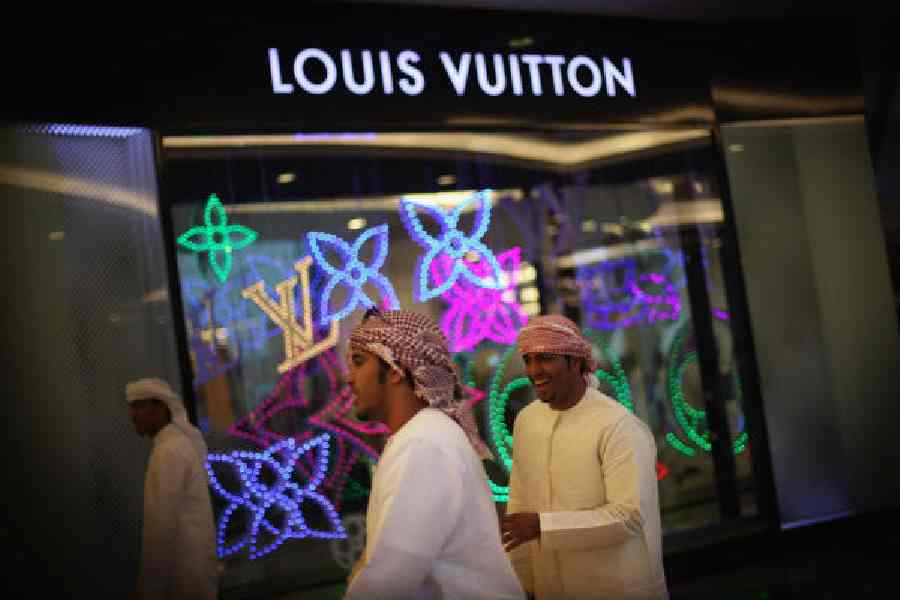
European fashion labels have also pumped money into marketing in the region. Last year, Louis Vuitton created a Ramzan pop-up in Dubai, and Prada released an exclusive Eid ul-Fitr collection. Zegna hosted a summer fashion show at the Dubai Opera.
In the days after the US-led war in Iran began in February, brands closed many of their stores across Gulf nations. Most have been reopened, but sales have fallen precipitously.
LVMH Moët Hennessy Louis Vuitton, the world’s largest luxury company, which owns upscale brands in categories across fashion, beauty and spirits, said demand for some brands in the region fell as much as 70 per cent as the war escalated in March. Management said it was counting on West Asia’s wealthy elite to continue spending abroad.
“What we see today is still that demand is very much down,” Cécile Cabanis, the chief financial officer of LVMH, told investors on a conference call this month. “What we know is that the wealth has not evaporated.”
Kering, which owns fashion houses such as Gucci and Saint Laurent, said it had activated a crisis unit to manage its business in West Asia. Its retail network in the region is back up and running, but revenue fell 11 per cent last quarter despite a fast start to the year.
“In the Middle East, it’s tourist flows that are suffering more than the locals,” Armelle Poulou, the chief financial officer of Kering, told investors this month.
But tourism problems are also developing outside West Asia, especially in places that Gulf residents often visit.
Hermès, known for its leather handbags, said some of its stores across Europe were seeing fewer shoppers from places like the Emirates, Kuwait and Bahrain. Sales at its stores in Paris have been particularly weak.
“We can see in Europe a drop in the number of tourists from the Middle East,” Eric du Halgouët, the chief financial officer of Hermès, recently told investors. “We see it in Switzerland, in the UK, for example, but also in Italy.”
Hermès has also had to stop or postpone deliveries to its third-party-run stores in Qatar, Bahrain and Kuwait, the company said. It has had difficulties sending goods to stores in airports in Asia as well, because those items often transit through the airport in Dubai, which has been disrupted throughout the war.
Foot traffic to Brunello Cucinelli stores, known for their cashmere knitwear, in West Asia fell 50 per cent in March, though all of the brand’s stores remain open and operational. But company executives still have big plans for the Gulf region.
The brand’s founder, Brunello Cucinelli, who is also the executive chairman and creative director, told investors that company leaders would be travelling the world to present a documentary this year, culminating with the trip to West Asia to court customers in December, if possible, despite a “painful and unexpected” war.
New York Times News Service