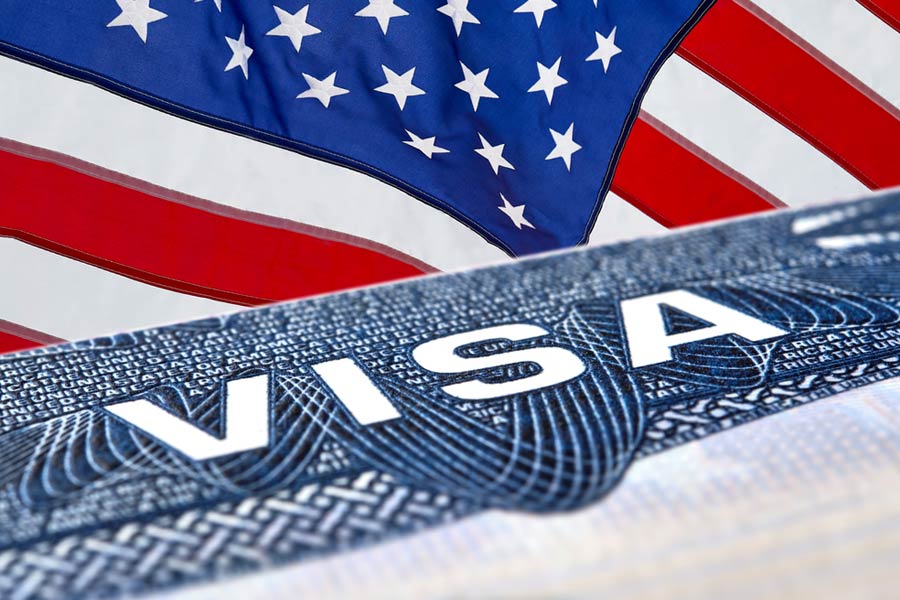
The US Embassy in Dhaka announced on Monday that Bangladeshi nationals approved for B1 and B2 business and tourist visas will now have to pay a bond of up to $15,000, starting January 21, 2026.
The embassy said the bond requirement will apply to applicants granted B1/B2 visas on or after January 21. Those who already hold a valid B1/B2 visa issued before that date will not be subject to the new condition, according to the statement.
The embassy has also warned applicants not to pay any bond before their visa interview. It clarified that paying in advance does not guarantee visa approval and cautioned that several third-party websites offering such services may be scams.
"Do NOT pay your bond in advance. Paying early does not guarantee you a visa, and third -party sites can be a scam. Any payment made before your interview is not refundable," the US Embassy in Dhaka said in a post.
According to the advisory, the bond will be applicable only after a visa has been approved. The amount will be refunded if the visa holder complies with all the terms and conditions of their stay in the United States.
Visa applicants have been urged to follow official guidance and avoid paying before completing the interview process.
The US state department has listed 38 countries whose nationals may be required to post a visa bond when applying for B1/B2 (business and tourist) visas under a pilot programme.
Besides Bangladesh, the list includes nations across Africa, Asia, the Caribbean, and the Pacific, such as Nigeria, Nepal, Bhutan, Cuba, Senegal, Venezuela, and Zimbabwe.
According to reports, Washington has been reviewing immigration compliance data and overstay trends, prompting tougher enforcement measures for certain nationalities.