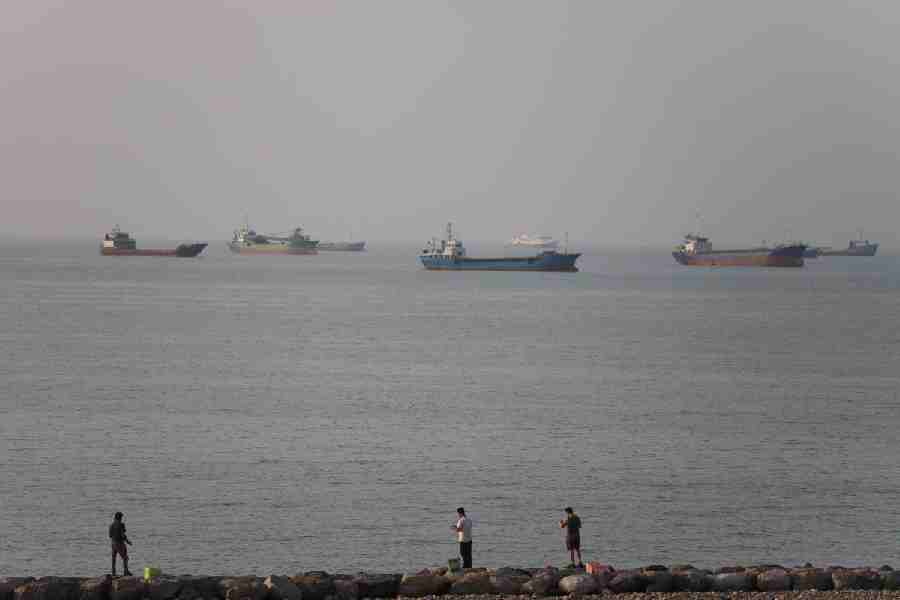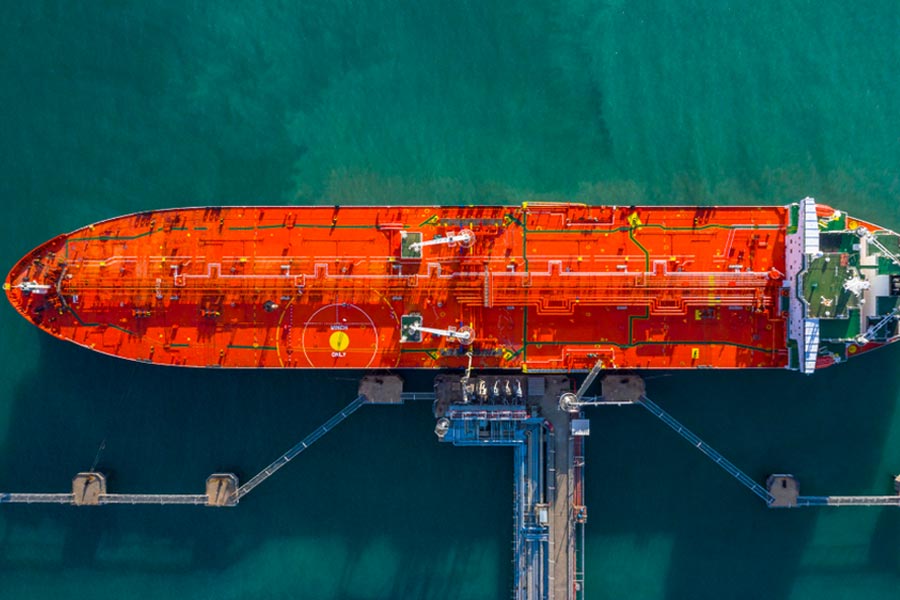
At least 16 oil tankers hit by US sanctions appear to have made an attempt to evade a major American naval blockade on Venezuela’s energy exports over the last two days, in part by disguising their true locations or turning off their transmission signals.
For weeks, the ships had been spotted on satellite imagery docked in Venezuelan ports, according to an analysis by The New York Times. But by Saturday, in the wake of President Nicholas Maduro’s capture by US forces, all were gone from those locations.
Four have been tracked by satellite sailing east 48km from shore, using fake ship names and misrepresenting their positions, a deceptive tactic known as “spoofing”. These four have left port without the interim government’s authorisation, according to internal communications from Venezuela’s state-owned oil company and two people in the Venezuelan oil industry, who spoke on condition of anonymity out of fear of retribution. The departures could be seen as an early act of defiance of interim President Delcy Rodríguez’s control. The other 12 are not broadcasting any signals and have not been located in new imagery.
President Donald Trump unilaterally imposed a “complete blockade” on sanctioned Venezuelan oil tankers on December 16, an effort that secretary of state Marco Rubio said on Sunday was one of the largest “quarantines” in modern history, and was successfully “paralysing” the regime’s ability to generate revenue. The blockade has notably exempted oil shipped by American company Chevron to the US Gulf Coast.
The tankers’ evasion strategies appear to be relying on deception, but also saturation. At least three of the ships were in proximity as they left Venezuelan waters in the same direction, suggesting at least some coordination.
“The only real way for oil-laden tankers to break through a naval blockade is to overwhelm it with outbound vessels,” said Samir Madani, the co-founder of TankerTrackers.com, a website that monitors shipping and identified several of the vessels in satellite imagery.
New York Times News Service