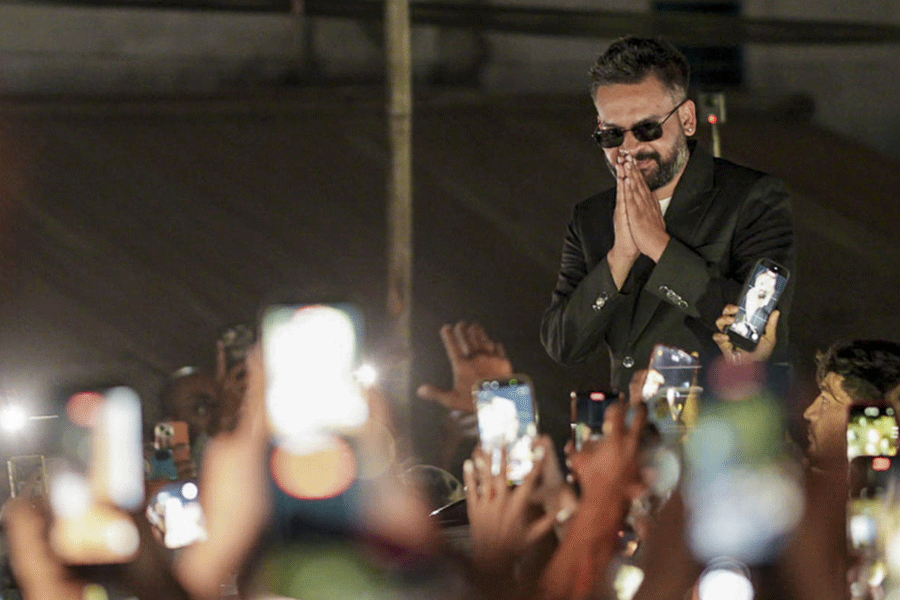
What is it about rap artists that seems to give them a natural flair for politics? In Nepal, rapper-turned-politician Balendra Shah has delivered the clearest answer yet, surging all the way to power in what is arguably the most electorally successful transition from music to politics so far.
The scale of the victory has stunned even seasoned observers, not least because it breaks sharply with Nepal’s pattern of fragile coalition governments stitched together from multiple parties.
“It's a historic mandate,” says Biswas Baral, editor of The Kathmandu Post. “The last time a party won a two-thirds mandate was in the first democratic election in 1959. Something like this has not happened since, and now it has absolute power to even push through constitutional changes.”
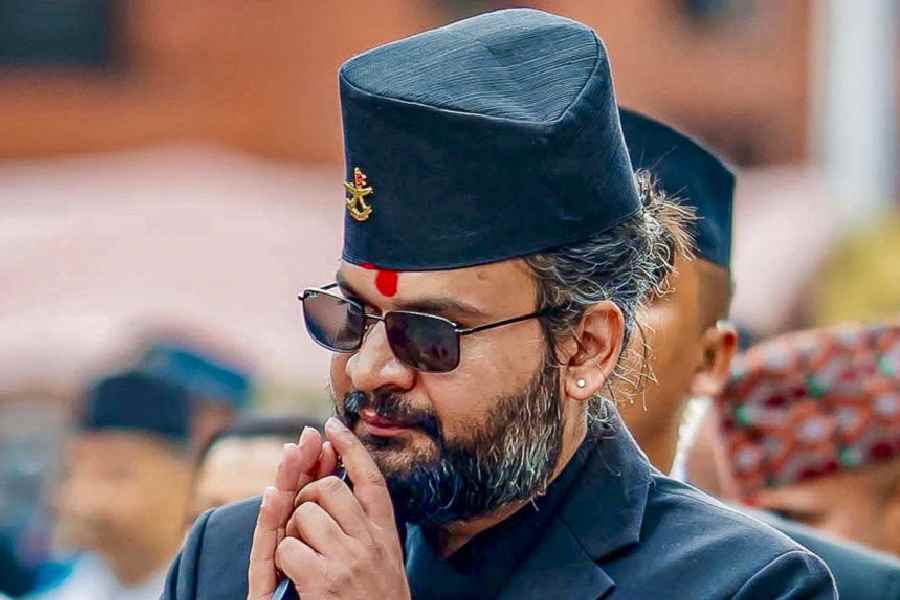
Still only 35, Shah may look an unlikely figure as prime minister. He trained as a structural engineer – he earned his master’s at Bangalore’s Nitte Meenakshi Institute of Technology. But even while studying, he was rapping – on corruption, poverty, abysmal urban infrastructure, and inequality – and laying the ground for his successful run to become mayor of Kathmandu in 2022.
Once in office, he established a can-do reputation as an effective, no-nonsense administrator focused on delivery. With frustration boiling over at the traditional parties and massive street protests, once Shah had shown he could govern Kathmandu, he and his supporters argued that he could remake the country.
On the campaign trail, Shah’s message was disarmingly simple. He asked voters to “give me a chance to work” and promised to “show it through work.” The pitch cut across generations: younger voters were drawn to his background as a rapper and political outsider, while older voters saw in his engineering background and record as Kathmandu mayor a candidate capable of governing.
“He has a very technical background, an engineering background, and he's a rapper, and he was someone from outside the political circles,” Baral says. “When he became the mayor of Kathmandu, he developed an image of a competent, clean administrator. So people said, ‘Why do we need someone else?’ ”
His party, the Rastriya Swatantra Party, founded in 2022, aims to be a centrist, reformist force dedicated to anti-corruption and good governance.
The election result reflected a mood that had been building for some time. Across Nepal, frustration with the political establishment had reached a tipping point. The outcome was driven in part by Gen Z, but ultimately it was a cross-generational revolt, says Baral.
“It wasn’t just the youngsters,” he says. “When people before the election were asked about their voting intentions, voters from across the age and income spectrum said they wanted change, they wanted something different from what the traditional parties were offering. They had had enough of them. So change is what we’ve got.”
“People were fed up with the old political parties,” Baral adds. “More than that, the same three leaders were alternating as prime ministers. So it seemed like musical chairs.”
The disillusionment cut across geography as well as class. “This is urban and rural,” Baral adds.
Nepal has a mountain to climb
At the heart of the upheaval are deeper economic and social strains that have been building for years. Nepal, with its 30-million population, remains one of South Asia’s poorer economies, with limited industry, high youth unemployment and heavy dependence on remittances from workers abroad.
For many voters, the system itself appeared beyond repair. “There did not seem to be any way for people to change the system or change the political party through these parties, because people thought that the parties are beyond redemption. So we needed something new,” Baral says.
That desire has been sharpened by the lack of jobs at home. Large numbers of Nepalis have migrated overseas in search of work, sending money back but also raising expectations about what their own country could deliver.
“One of the major constituencies is people living abroad,” Baral says. “They have gone abroad, they have seen what is possible in other countries. They want similar development in Nepal, and so many of the immigrants from Nepal were putting pressure on their families and friends back home.”
That pressure has been amplified by technology, with digital networks helping the relatively new party overcome traditional organisational disadvantages. “Shah’s party made very good use of social media. They showed how they did not need to have a strong party organisation to win elections,” Baral notes.
Shah’s background also carries political weight. He is a Madhesi, from Nepal’s southern Terai region bordering India. Madhesis, from Nepal’s southern plains, have long complained of political exclusion in a country dominated by hill elites. That one has now risen to the top job on a national, not regional, platform, which marks a significant shift,
In a telling upset that underscored the scale of the political shift, Shah also defeated former prime minister K. P. Sharma Oli in his own long-held constituency, ousting one of the country’s most established political figures.
Baral argues that Shah himself was central to the scale of the victory. “I think it is due to Balendra,” he says. “Not only me, most people think that it is due to Balendra.”
Even so, the new government faces internal tests. The relationship between Shah and Rabi Lamichhane, founder of the Rastriya Swatantra Party, could prove messy. Lamichhane, 50, is a former TV host turned firebrand populist who critics say is more performer than policy-maker.
“The two don't necessarily get along. They have very different personalities,” Baral notes. “So the success or failure of the new RSP government will largely depend on how the two manage their clash of personalities.”
The broader leadership team reinforces the image of a generational shift. Likely finance minister Swarnim Wagle brings experience from the World Bank, while Sumana Shrestha, educated at Bryn Mawr College and MIT Sloan School of Management, represents a younger, globally exposed cohort.
As Baral puts it, voters are now placing their faith in “a collection of technocrats” who have come to power on promises of development and anti-corruption.
Mic drop: Rare unity
The result, he suggests, has been a rare moment of national unity. “In this election cycle, people in all regions in Nepal spoke with one voice. They said, this is a new political party. This is a new leadership. We back it.”
Shah’s identity as a Madhesi also resonated strongly. “He projected himself as a son of Madhesh… In one way, it's a rare occasion when a leader unifies the whole country.”
Only after that breakthrough does the broader pattern come into focus. Elsewhere, rappers have entered politics with mixed results.
Bobi Wine in Uganda has built a formidable opposition movement but has not taken power. In Belize, Shyne has succeeded within the system, rising to Leader of the Opposition. In the United States, Killer Mike has emerged as one of hip-hop’s most influential political voices, though he has stopped short of seeking elected office. Beyond hip-hop, entertainers have made the leap, most notably Volodymyr Zelenskyy, the comedian who became Ukraine’s president.
Regional powers are watching warily. China has seen its traditional allies weakened, while India is wary of Shah’s past positions, including disputes over historical maps and trade routes such as the Lipulekh Pass.
On foreign policy, Shah has signalled a break from Nepal’s traditional balancing act, positioning himself as neither pro-India nor pro-China but firmly pro-Nepal and saying he wants strong ties with both countries.
The new administration is set to be sworn in on Friday once parliament convenes, and expectations are high. Having ridden a wave of public anger and hope, Shah and his colleagues now face the harder task of delivering results. Their appeal was built on the promise of clean, effective governance and economic revival. In a country grappling with poverty, unemployment, and outward migration, they now have to turn that pledge into reality.