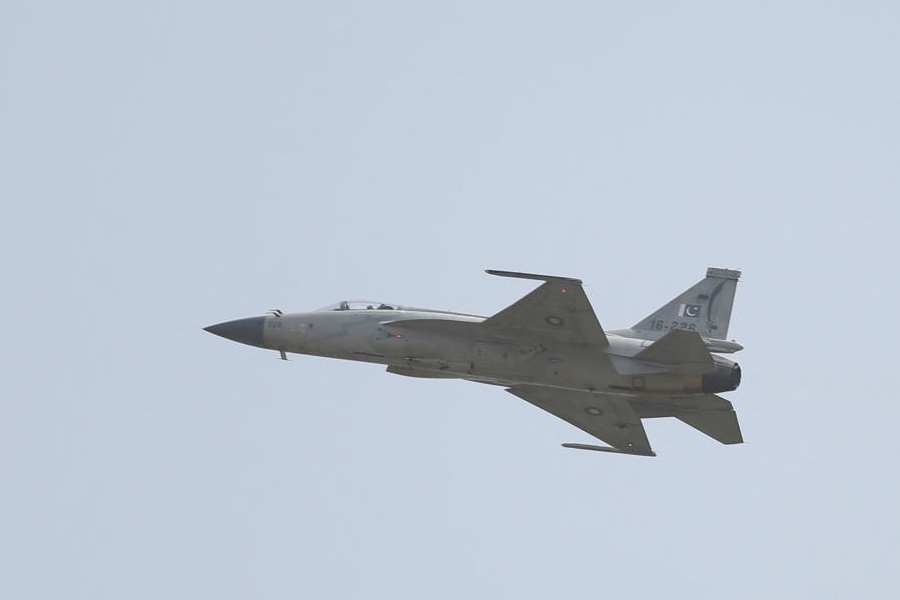
Pakistan on Saturday said Iraq has expressed “keen interest” in acquiring JF-17 Thunder fighter jets and Super Mushshak training aircraft, underlining Islamabad’s expanding push to market its domestically produced military hardware amid acute economic pressure at home.
The interest was conveyed during talks between Pakistan Air Force chief Air Chief Marshal Zaheer Ahmed Baber Sidhu and Lieutenant General Staff Pilot Mohanad Ghalib Mohammed Radi Al-Asadi, commander of the Iraqi Air Force, during Sidhu’s official visit to Iraq, according to a statement issued by the Pakistan army.
Discussions focused on enhancing bilateral military cooperation, with emphasis on joint training, capacity building and improved operational collaboration.
The Iraqi air chief praised the professionalism and technological advancement of the Pakistan Air Force and expressed interest in benefiting from its training ecosystem, the statement said.
“The Iraqi Air Chief … expressed keen interest in JF-17 Thunder fighter jets and Super Mushshak trainer aircraft,” the army said, adding that both sides agreed to pursue joint exercises to strengthen interoperability.
Sidhu highlighted the religious, cultural and historical ties between Pakistan and Iraq and reaffirmed Islamabad’s commitment to support the Iraqi Air Force in training and capacity development.
The latest outreach comes days after Pakistan and Bangladesh air chiefs held talks in Islamabad on the “potential procurement” of JF-17 Thunder aircraft by Dhaka, though Bangladesh has not publicly confirmed any such plan.
Pakistan also assured Bangladesh of fast-tracked delivery of Super Mushshak trainer aircraft along with long-term training and support.
The JF-17 Thunder is a single-engine, lightweight combat aircraft jointly developed by China’s Chengdu Aircraft Corporation and the Pakistan Aeronautical Complex.
Islamabad says the jet has been tested in combat, having been deployed during last year’s brief but intense conflict with India, though independent assessments of its effectiveness remain limited.
Military experts note that Pakistan relied heavily on Chinese-origin Chengdu J-10 fighters during the May 7–10 clashes.
Pakistan’s stepped-up sales pitch is part of a broader effort to monetise its defence industry. Officials and analysts say Islamabad is in talks with or has finalised defence deals with multiple countries, including in the Middle East and North Africa.
Last month, Pakistan announced a weapons deal worth more than $4 billion with Libya’s eastern-based Libyan National Army, which includes JF-17 fighter jets and training aircraft.
Behind the export drive lies economic urgency. Pakistan is currently under a $7 billion programme with the International Monetary Fund, its 24th, following years of balance-of-payments stress.
Defence Minister Khawaja Asif recently claimed that strong demand for Pakistani weapons could eventually reduce the country’s dependence on IMF bailouts.
Pakistan has also been in talks with Saudi Arabia to convert around $2 billion of Saudi loans into a JF-17 fighter jet deal, according to sources familiar with the discussions.
The negotiations, which could value the overall package at about $4 billion with additional equipment, come months after the two countries signed a mutual defence pact pledging to treat aggression against either as an attack on both.
Saudi Arabia has long provided financial lifelines to Pakistan, including a $6 billion support package announced in 2018 and repeated rollovers of deposits at Pakistan’s central bank.
Analysts see the proposed jet deal as a way for Islamabad to deepen defence ties while easing financial strain.
With Iraq now signalling interest, Pakistan’s defence diplomacy appears to be gathering momentum, as Islamabad looks beyond South Asia to expand its footprint in the global arms market and shore up a fragile economy.