Nato allies said on Monday they will not take part in US President Donald Trump’s plan linked to blocking the Strait of Hormuz. European members pushed instead for action after fighting ends, not during the conflict.
Trump linked the move to the ongoing war involving Iran and maritime movement through the key oil route. “The Blockade will begin shortly. Other Countries will be involved with this Blockade,” Trump said in a post on Truth Social on Sunday.
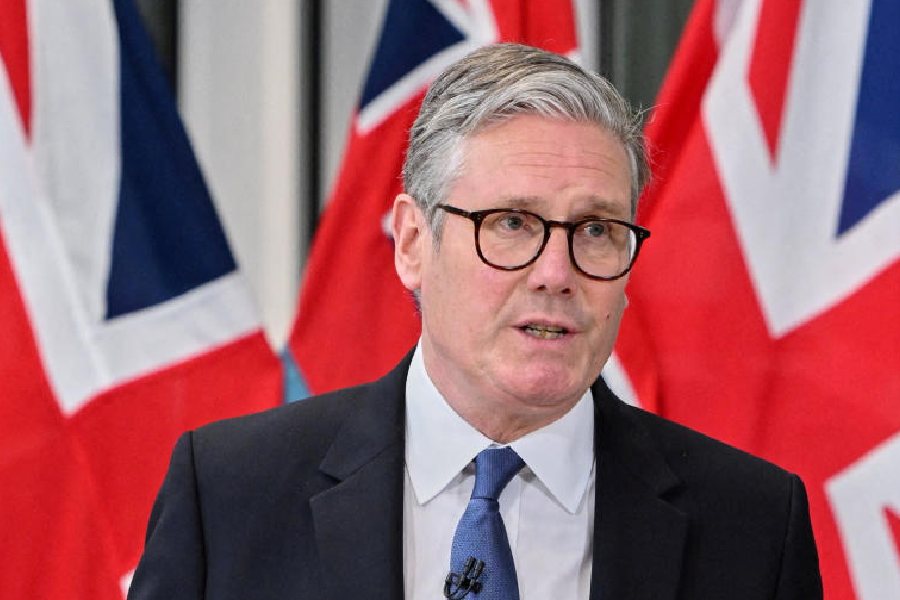
Britain and France said they will not join the blockade effort. “We're not supporting the blockade,” British Prime Minister Keir Starmer told the BBC.
“My decision has been very clearly that whatever the pressure, and there's been some considerable pressure, we're not getting dragged into the war,” he said.
The Strait of Hormuz remains central to global oil shipments, with movement already affected since February 28. Iran has tightened control over passage, limiting traffic mainly to its own vessels.
European countries are now discussing a separate plan focused on restoring shipping after hostilities ease. French President Emmanuel Macron outlined a proposal for a multinational mission.
“This strictly defensive mission, distinct from the belligerents, will be deployed as soon as the situation allows,” Macron said. The idea involves around 30 countries, including Gulf states, India, Greece, Spain, Italy, the Netherlands and Sweden.
The plan focuses on escorting commercial ships and setting coordination rules for safe passage. “We're working on an initiative to open the waterway, where a fifth of global oil supplies normally pass,” officials said.
Nato secretary general Mark Rutte said any role would depend on agreement among member states. The European Union also backed discussions on coordinated maritime security.
EU foreign policy chief Kaja Kallas said at the UN Security Council: "She did not specify what such a coalition would do specifically, but added the European Union rejected any arrangement that would limit "the free and safe passage through the straits in accordance with the international law.""
German officials said talks are still ongoing and described the US move as pressure, not a final step.
“The supposed blockade ... does not mark the end of this diplomatic process,” a German spokesperson said. “We see it as a move to ramp up the pressure.”
Russia warned of market impact from the plan. “Such actions will likely continue to negatively impact international markets. This can be assumed with a high degree of certainty,” Kremlin spokesman Dmitry Peskov said.
China called for restraint and continued diplomacy.
"China hopes the relevant parties will abide by the temporary ceasefire arrangements, remain committed to resolving disputes through political and diplomatic means, and avoid a resumption of hostilities," foreign ministry spokesperson Guo Jiakun said.
Turkey said reopening the strait should be handled through negotiations.
“There are many difficulties to intervening here with an international armed force. Especially as the war continues, how much will it narrow, expand? We see many countries are not keen on this,” foreign minister Hakan Fidan said.
France said it will soon host talks with Britain and other countries to plan a maritime security mission once conditions allow.