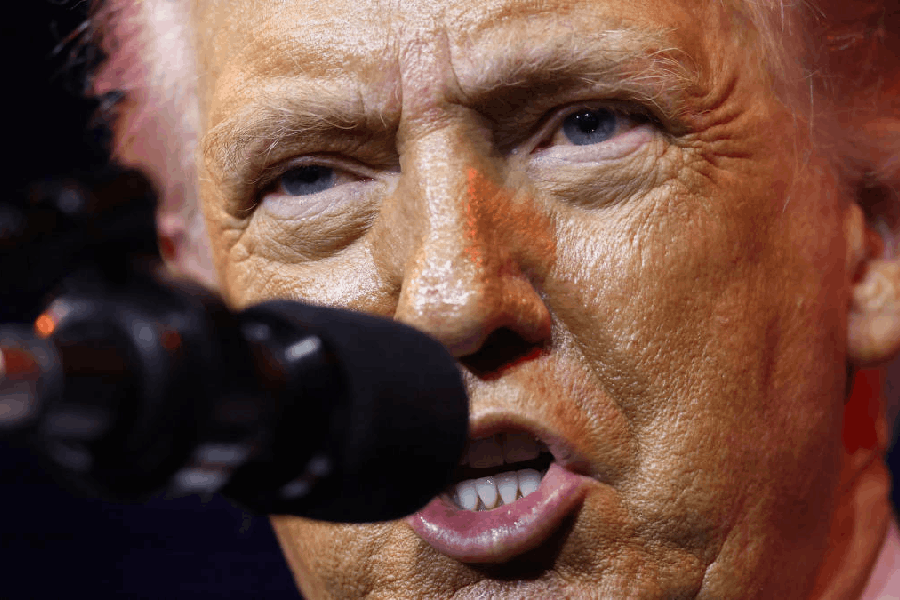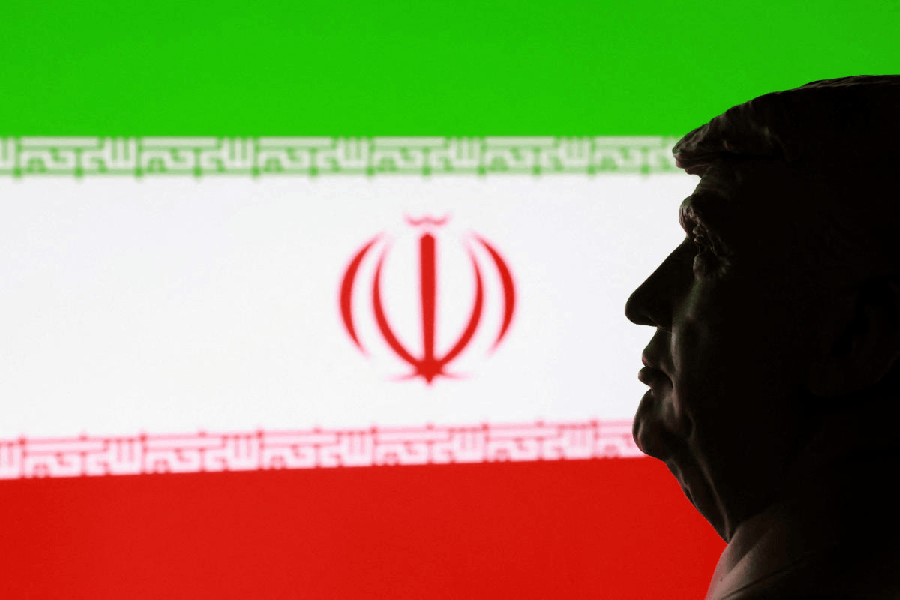
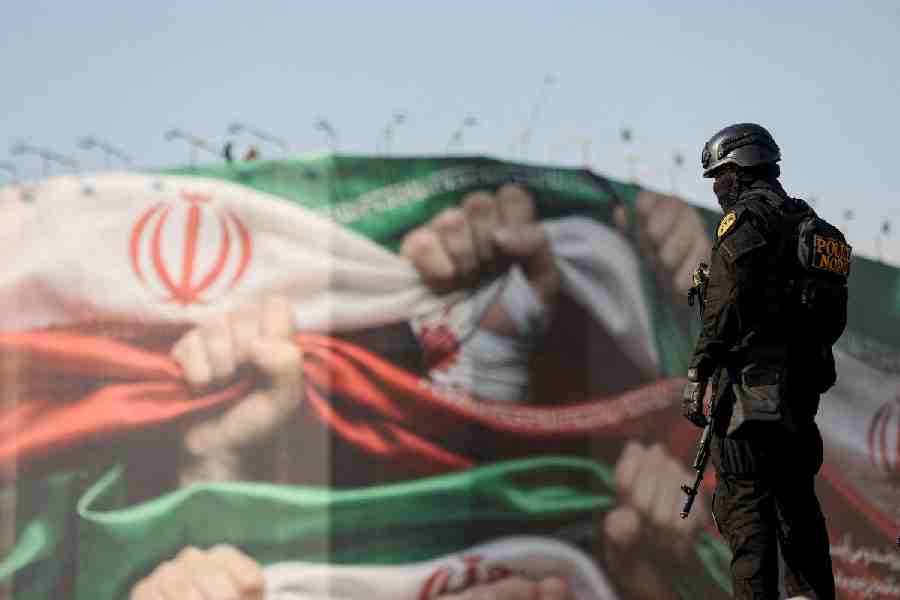
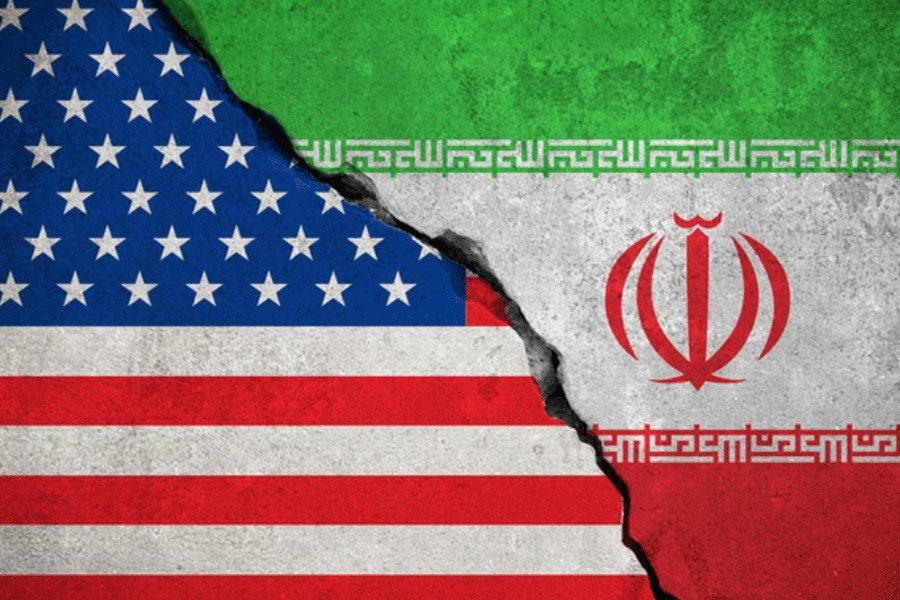
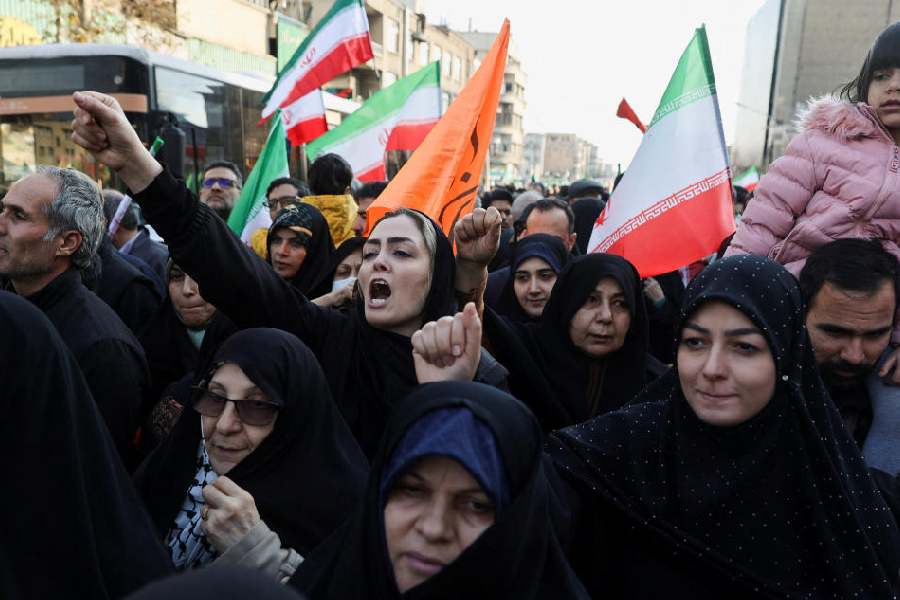
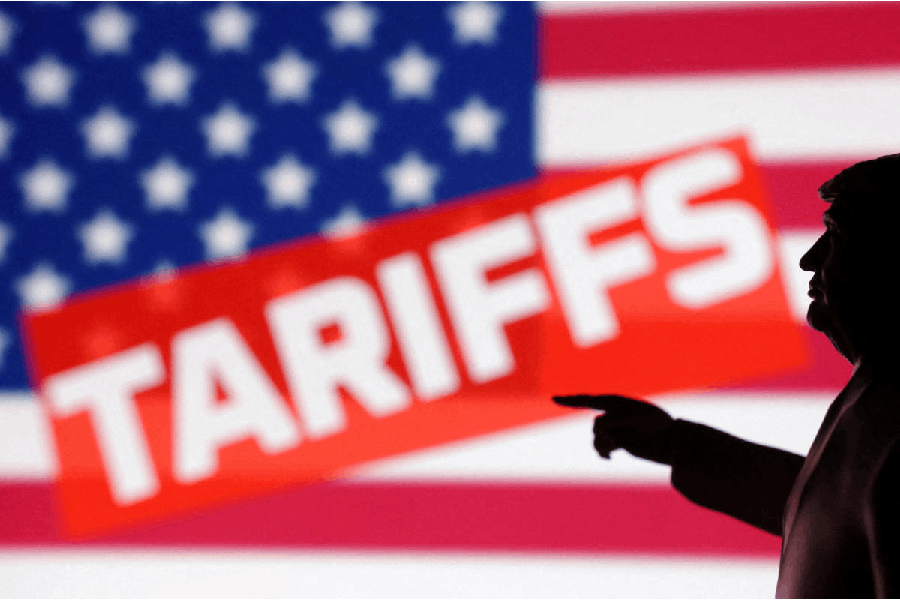
US President Donald Trump's threat to slap a 25 per cent tariff on countries that trade with Iran risks reopening old wounds with Beijing, Tehran's biggest trading partner.
Iran became a flashpoint in US-China ties during Trump's 2017-21 first term as president as Washington tightened sanctions on Tehran and put China's Huawei, accused of selling technology to the Islamic Republic, in its crosshairs.
The arrest of Meng Wenzhou, the daughter of Huawei's founder, in Canada at Washington's request sparked retaliation and a hostage crisis, with bitter recriminations lingering for the remainder of Trump's first administration.
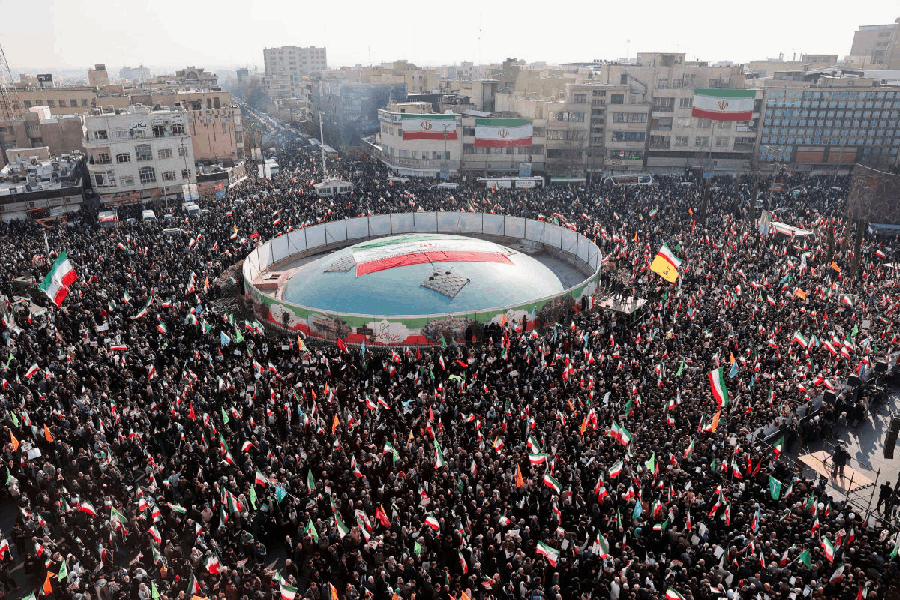
With Iran in his sights once again, the duty would see Chinese shipments to the US incurring levies exceeding 70 per cent, higher than the effective 57.5 per cent tariffs in place before Trump and Chinese President Xi Jinping struck a deal in October to de-escalate their trade war.
It remains unclear which countries with Iranian business links Trump might target, and he has not named China.
The US president has also made offhand remarks that threatened to upend US foreign policy without acting on them before.
"China will call (Trump's) bluff. I can assure you that Trump has no guts to impose the extra 25 per cent tariffs on China, and if he does, China will retaliate and he will be punished," said Wu Xinbo, dean of the Institute of International Studies at Fudan University, "just like in Meng Wenzhou's case."
Back to the future
Some Chinese experts questioned why Trump seemed intent on revisiting one of the most contentious foreign policy issues from his first term, despite having already made Beijing think twice about providing economic support to Tehran.
"China and Iran are not as close as in the public imagination," said a Beijing-based Chinese academic who advises the foreign ministry on Iran policy, and requested anonymity as they were not authorised to speak to media.
China has sharply reduced Iranian imports in recent years, according to Chinese customs data, with Chinese companies wary of being sanctioned by the US government.
China bought just $2.9 billion of Iranian goods in the first 11 months of last year, the latest customs figures show, compared with a peak of $21 billion in 2018 during Trump's first presidency.
That said, Beijing moves around 80 per cent of Iran's shipped oil through small independent refiners trading off the books to skirt US sanctions over the country's nuclear ambitions.
China's state-backed oil majors have not done any business with Iran since 2022. Some analysts say the independents' shipments means the total value of China's purchases remains in the tens of billions of dollars.
"China is just an excuse, a kind of disguise for the Trump administration, to impose new pressure (on) Iran," said Wang Jin at the Beijing Club for International Dialogue think tank.
When asked at Tuesday's regular press conference on Trump's tariff threat, China's foreign ministry said that Beijing would "resolutely safeguard its legitimate rights and interests".
High stakes
Still, Iran remains substantially bigger business for China than Venezuela, where Trump acted to curb Beijing's stake with a commando raid to capture President Nicolas Maduro to face drug charges in the United States.
Analysts said Trump's renewed push to cut off Iran from global trade flows is likely to deepen scrutiny of Xi's flagship Belt and Road Initiative, where Iran is a strategic hub for the passage of Chinese goods to the Middle East.
It also raises uncertainty over whether Trump will visit Beijing in April as expected, with analysts anticipating the announcement of a sweeping trade agreement with Xi.
"Whether Trump's tariffs are enforceable remains a question," said Xu Tianchen, a Beijing-based analyst at the Economist Intelligence Unit.
"Last year he announced tariffs related to 'illicit' Russian oil trade, but their implementation was patchy."
"Trump is also the kind of person who likes bullying the weak," Xu said. "He should manage his actions to avoid these tariffs escalating into direct confrontation with China."