Iran's parliament is working on a bill to formalise the fees it is reportedly charging on some ships transiting through the Strait of Hormuz, local media reported even as the war continued Thursday with sirens sounding in central Israel early morning and heavy strikes reported around Isfahan in Iran.
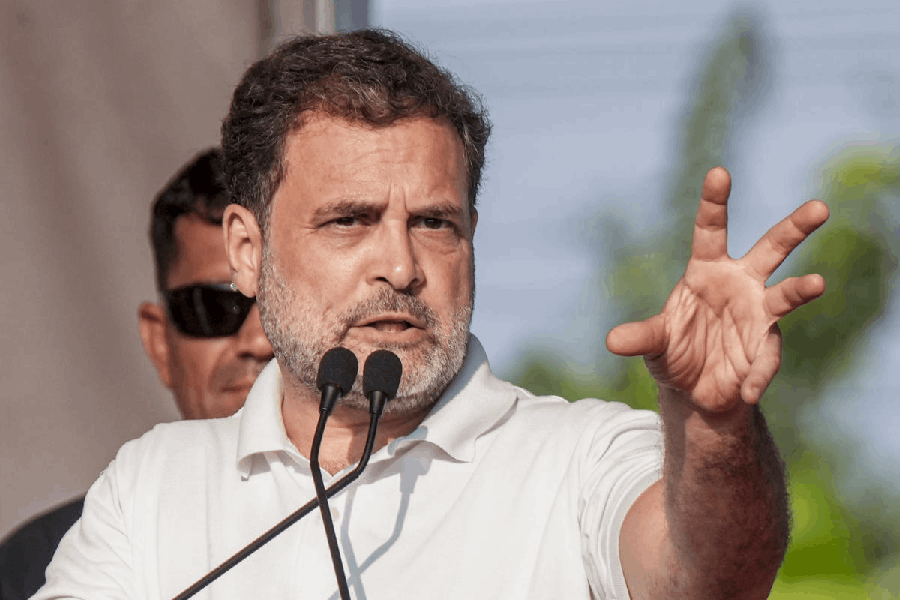
The Fars and Tasnim news agencies, both close to Iran's Revolutionary Guard, quoted lawmaker Mohammadreza Rezaei Kouchi as saying that "parliament is pursuing a plan to formally codify Iran's sovereignty, control and oversight over the Strait of Hormuz, while also creating a source of revenue through the collection of fees".
"This is entirely natural, just as goods pay transit fees when passing through other corridors, the Strait of Hormuz is also a corridor," he reportedly said.
"We provide its security, and it is natural that ships and oil tankers should pay such fees."
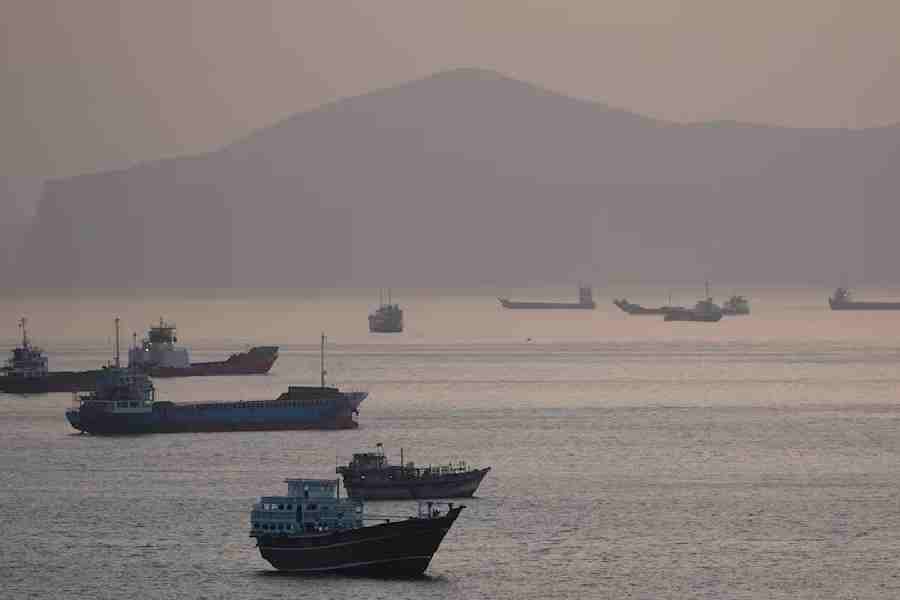
The Strait of Hormuz, the narrow mouth of the Persian Gulf, is considered an international waterway open to all shipping.
Imposing fees would end that and likely be strongly opposed by the Gulf Arab states, the United States and others.
‘Iran running de facto toll booth’
Iran is running a "de facto toll booth' regime" in the Strait of Hormuz, controlling which ships come through and getting payment for their safe passage, a leading shipping intelligence firm said Thursday.
Lloyd's List Intelligence published an analysis highlighting Iran's practices through the strait.
It described vessels having to provide manifests, crew details and their destination to Iran's Revolutionary Guard.
The information goes to the Guard's "Hormozgan Provincial Command for sanctions screening, cargo alignment checks that currently prioritises oil over all other commodities, and for what is described as geopolitical vetting", Lloyd's List said.
"While not all ships are paying a direct toll at least two vessels have and the payment is settled in yuan," Lloyd's List said, referring to China's national currency.
Such payments likely would run afoul of American and European sanctions on the Guard, a key power centre within Iran that controls its ballistic missile arsenal and was key in suppressing nationwide protests in January.
Iran has not directly explained the process for ships to go through the strait, though a foreign ministry spokesperson appeared to acknowledge Tehran was receiving payments for some ships in an interview.
Sirens sound in central Israel
Sirens sounded about an hour after sunrise across a large swath of central Israel, including areas around Tel Aviv and Jerusalem, and in the occupied West Bank.
Israel's military said early Thursday morning that Iran had launched missiles toward the country.
The first such alert of the day came after an unusually long lull of more than 14 hours.
Hezbollah rocket fire, however, remained constant overnight in northern Israel, and once reached the Tel Aviv area overnight.
Heavy strikes around Isfahan
Activists in Iran reported heavy strikes early Thursday morning around Isfahan, a city some 330 kilometres south of Iran's capital, Tehran.
The pro-reform newspaper Ham Mihan reported online about strikes in the area.
Isfahan is home to a major Iranian air base and other military sites, as well as one of the nuclear sites bombed by the United States during the 12-day war between Israel and Iran in June.
The semiofficial Fars news agency, close to the paramilitary Revolutionary Guard, described the attacks as targeting "two residential areas", without elaborating.
Earlier, Israel's military said it had completed "a wide-scale wave of strikes" across Iran, including in Isfahan.
Latest reports of live fire
A missile alert sounded on mobile phones in Dubai, United Arab Emirates, on Thursday morning.
Saudi Arabia's defence ministry said it intercepted multiple drones over its oil-rich Eastern Province on Thursday morning.
Kuwait reported it was working to intercept incoming Iranian fire early Thursday morning.
Bahrain sounded its missile alert sirens early Thursday morning.
The United Arab Emirates air defences early Thursday also worked to intercept incoming fire.
What about the peace plan?
Earlier, US President Donald Trump said Wednesday that a deal to end the Iran war was near, after Tehran dismissed his 15-point ceasefire plan and issued its own sweeping demands to stop fighting.
Two officials from Pakistan described the 15-point US proposal broadly, saying it included sanctions relief, a rollback of Iran's nuclear programme, limits on missiles and reopening the Strait of Hormuz, through which a fifth of the world's oil is normally shipped.
Iran issued its own plan via state TV, which includes a halt to killings of its officials, means to make sure no other war is waged against it, reparations for the war, the end of hostilities, and Iran's sovereignty over the Strait of Hormuz.
"No negotiations have happened with the enemy until now, and we do not plan on any negotiations," Iran's foreign minister later told state TV.
Trump insisted at a Republican fundraiser Wednesday night that talks were underway with Iran's leaders.
"They are negotiating, by the way, and they want to make a deal so badly, but they're afraid to say it because they figure they'll be killed by their own people," Trump said.
The death toll from the war has risen to more than 1,500 people in Iran, nearly 1,100 people in Lebanon, 20 in Israel and 13 US military members, as well as a number of civilians on land and sea in the Gulf region.
Millions of people in Lebanon and Iran have been displaced.