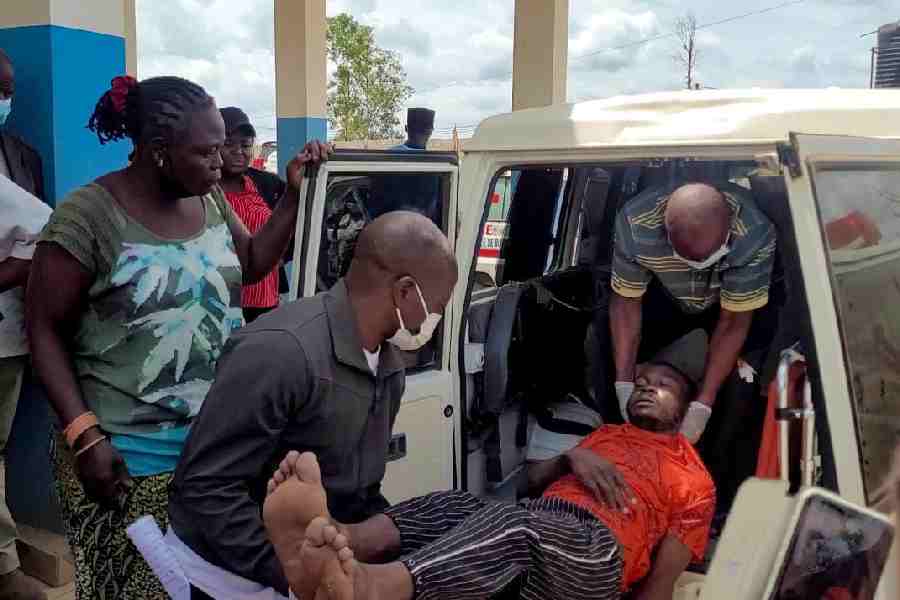
Delayed diagnosis, faulty testing and funeral gatherings allowed a rare Ebola strain to spread undetected across eastern Democratic Republic of the Congo for weeks, prompting the World Health Organization to declare a global health emergency as Congo rushed to open treatment centres amid rising deaths and fears of cross-border transmission.
By the time health officials confirmed new Ebola infections in the country’s conflict-hit Ituri province last week, the outbreak had already become one of the largest recorded in recent years.
Health authorities say the current outbreak is caused by the Bundibugyo strain of Ebola, a rare variant for which there are no approved vaccines or treatments. It is only the third time the strain has been detected since it was first identified in Uganda in 2007.
The WHO on Sunday declared the outbreak a public health emergency of international concern. As of Monday, Congo’s Health Cluster reported more than 390 suspected cases and 105 deaths in Congo, while neighbouring Uganda reported two deaths.
The outbreak is centred in Ituri province in northeastern Congo, a region grappling with armed conflict, displacement and weak health infrastructure. Cases have also been reported in Kinshasa and Goma, eastern Congo’s largest city.
A series of missteps delayed detection of the outbreak, two Congolese officials familiar with the response told Reuters.
According to the officials, local funeral practices helped spread the virus before any alarm was raised, diagnostic tests in a laboratory in Bunia were calibrated for the wrong Ebola strain, and samples sent to Kinshasa were improperly stored and transported.
Experts warned the delays could severely undermine efforts to contain the outbreak.
‘It’s just a scattered mess right now. I don’t think we have anything close to a real idea of how many cases there are,’ said Craig Spencer, an emergency physician and public health professor at Brown University.
The first known patient developed fever, vomiting and haemorrhaging before dying at a medical centre in Bunia on April 24, Congo’s Health Minister Samuel Roger Kamba said.
The patient was a health worker, leading experts to believe the virus had already spread before the first official case was identified.
Kamba said mourners attended the victim’s funeral believing the death was caused by a mystical illness.
‘Everyone is touching him, everyone is doing this ... and that’s when the cases start to explode,’ he said.
Jean-Pierre Badombo, former mayor of Mongbwalu town, said local officials recorded between six and eight deaths per day at one stage, with an estimated 60 to 80 deaths in Mongbwalu alone before authorities raised the alarm.
The WHO said it was informed on May 5 about an unknown illness with high mortality in Mongbwalu, including the deaths of four health workers within four days.
Jean-Jacques Muyembe, director of Congo’s National Institute for Biomedical Research, said local laboratories initially used testing cartridges designed for the Zaire strain of Ebola, which caused most of Congo’s previous outbreaks.
But the current outbreak involves the Bundibugyo strain, which requires genetic sequencing capabilities unavailable in Bunia.
After tests returned negative for the Zaire strain, officials reportedly set the samples aside instead of escalating them for further investigation.
Muyembe also said samples later sent to Kinshasa arrived at incorrect temperatures and in insufficient quantities, limiting testing capacity.
Internal WHO documents seen by Reuters described the delay between the first known symptoms and laboratory confirmation as ‘a critical four-week detection gap’.
The WHO warned Monday that the outbreak is spreading in areas affected by armed violence and humanitarian instability, creating additional risks for health workers and aid operations.
Since January 2025, the organisation said, Congo has recorded 44 attacks on healthcare facilities and 742 incidents affecting humanitarian workers.
Aid groups Médecins Sans Frontières and the International Rescue Committee said they had dispatched emergency teams to support response efforts.
Congo’s government said it would open three Ebola treatment centres in Ituri to expand capacity as hospitals struggle to cope with rising patient numbers.
‘We know that the hospitals are already under stress because of the patients,’ Kamba said during a visit to Bunia on Sunday.
The WHO Regional Office for Africa said a team of 35 experts had arrived in Bunia along with seven tonnes of emergency medical supplies and equipment.
The outbreak has also triggered regional concern.
Rwanda closed its land border with Congo on Sunday, while the US Centers for Disease Control and Prevention issued travel advisories urging travellers to avoid contact with symptomatic individuals in Congo and Uganda.
The Africa Centres for Disease Control and Prevention warned the outbreak risked spreading further because of intense cross-border movement and ongoing insecurity in eastern Congo.
‘The outbreak is currently occurring in provinces marred by crisis, including insecurity, presence of armed actors, large displacement and weak health systems,’ the WHO said.
Public health experts warned that foreign aid cuts and chronic underinvestment in eastern Congo’s healthcare system had weakened disease surveillance systems critical for early detection.
Lievin Bangali, senior health coordinator for the International Rescue Committee in Congo, said the region was already facing shortages of protective equipment.
‘Today, Ituri serves as a case in point, with virtually no PPE kits available,’ Bangali said.
Despite Congo’s long experience handling Ebola outbreaks, health officials acknowledged the rare Bundibugyo strain and worsening humanitarian conditions could complicate containment efforts in the weeks ahead.
Congo will open three treatment centers for the Ebola virus in the eastern Ituri province following an outbreak of a variant that has no approved therapeutics or vaccines, as the World Health Organization sent a team of experts and supplies to help combat the spread of the disease.
"We know that the hospitals are already under stress because of the patients," said Samuel Roger Kamba, the Congolese health minister, during a visit to Bunia, Ituri's capital and largest city, on Sunday. "But we are preparing to have treatment centers at all three sites in order to be able to expand our capabilities."