India on Friday sought to project neutrality on the Bangladesh situation, saying the return of BNP acting chairman Tarique Rahman to Dhaka should be seen in the context of “free, fair and inclusive” elections.
This is the same language New Delhi has been using while addressing questions about the ban in Bangladesh on the Awami League of deposed Prime Minister Sheikh Hasina, who has been in India since August last year.
“India supports free, fair and inclusive elections in Bangladesh. This development should be seen in that context,” external affairs ministry spokesperson Randhir Jaiswal said, asked about India’s views on Rahman’s return ahead of the national elections, scheduled for February.
Jaiswal expressed “great concern” at the “unremitting hostility against minorities in Bangladesh” and condemned the lynching of a Hindu youth in the neighbouring country.
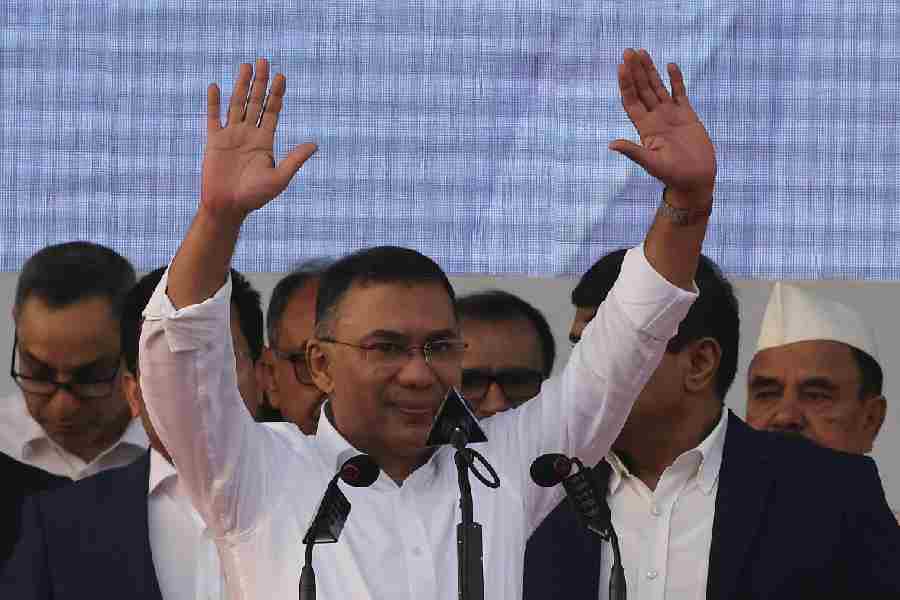
Rahman, effectively the head of the Bangladesh Nationalist Party and son of ailing former Prime Minister Khaleda Zia and slain President Ziaur Rahman, arrived in Bangladesh to a hero’s welcome on Thursday after 17 years of self-imposed exile in the UK.
With the ban on the Awami League, imposed by the interim government in Bangladesh, unlikely to be lifted anytime soon, India is treading cautiously, particularly given its history of strained relations with the BNP.
However, compared with the forces that have emerged in Bangladesh in the vacuum left by Hasina’s ouster 16 months ago, the BNP is a known entity with which India has institutional links despite the strain.
At Friday’s weekly briefing, Jaiswal had to field multiple questions on the ban on the Awami League. Among these were whether an election held without the Awami League could be considered an inclusive one, and whether India would recognise an electoral process from which the party was barred.
Jaiswal did not budge from his stock reply, formulated soon after the Muhammad Yunus administration outlawed the Awami League in May.
“We stand for free, fair, inclusive and participatory elections in Bangladesh, which is to be held in a peaceful atmosphere,” the spokesperson said.
On whether an election without the Awami League could be considered inclusive, he said: “All the elements, persuasions should participate.”
Jaiswal expressed “great concern” at the anti-India rhetoric that continues to be spewed in Bangladesh alongside attacks on minorities.
“The unremitting hostility against minorities in Bangladesh, including Hindus, Christians and Buddhists, at the hands of extremists is a matter of great concern,” he said.
“We condemn the recent gruesome killing of a Hindu youth in Mymensingh andexpect that the perpetratorsof the crime would be brought to justice.”
He added: “Over 2,900 incidents of violence against minorities, including cases of killings, arson, land-grab, have been documented by independent sources during the tenure of the interim government. These incidents cannot be brushed aside as mere media exaggerations or dismissed as political violence.”
Jaiswal was asked whether India planned to impose sanctions on Bangladesh or rethink the development projects and other elements of bilateral cooperation, given the anti-India rhetoric that has been raging over the past week in particular.
He replied: “India stands for strengthening our ties with people of Bangladesh; we favour peace and stability in Bangladesh.”
Diplomatic ties between the two capitals have been strained further over the past 10 days, with protests outside both countries’ missions and diplomatic posts.
The July Oikyo — a coalition of primarily youth groups that emerged after the uprising of July-August 2024 — has been protesting outside Indian missions in Bangladesh, demanding New Delhi extradite Hasina to face the death sentence a tribunal awarded her in November.
Hindutva groups have demonstrated outside the Bangladeshi high commission and posts in Indian to condemn the lynching of the Hindu youth last week.