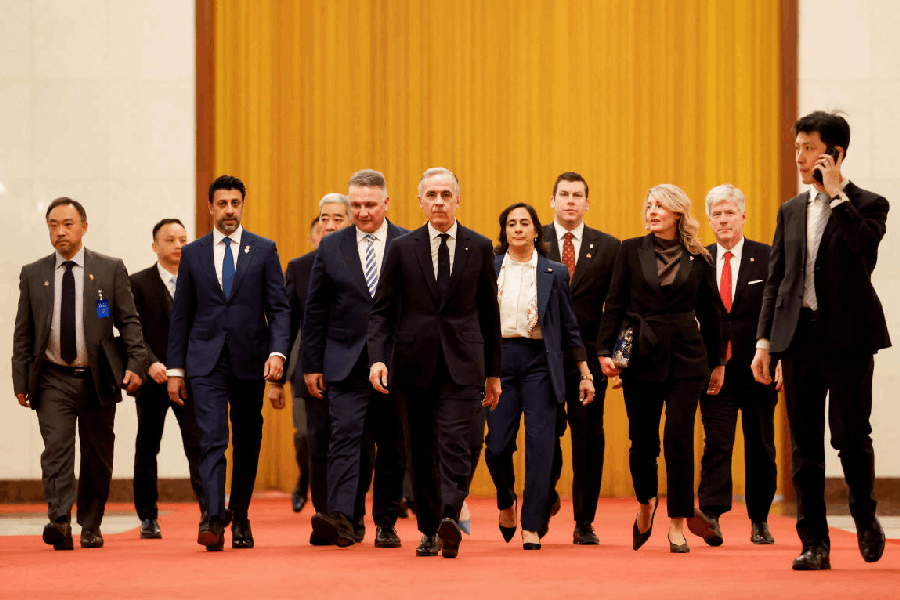
Canadian Prime Minister Mark Carney is trying to foster a new global trading order by working more closely with China and inking smaller trade deals, but faces constraints from Canada's still overwhelming economic dependency on the United States.
Last week, Carney took his trade diversification push further than his allies in Europe by signing a deal with China, and aims to project Canada as a potential leader in a new global trading order after US President Donald Trump's tariffs upended long-standing relationships.
Forging new alliances and trading partnerships has taken on new urgency for countries like Canada as Trump's foreign policy grows more aggressive and unpredictable.
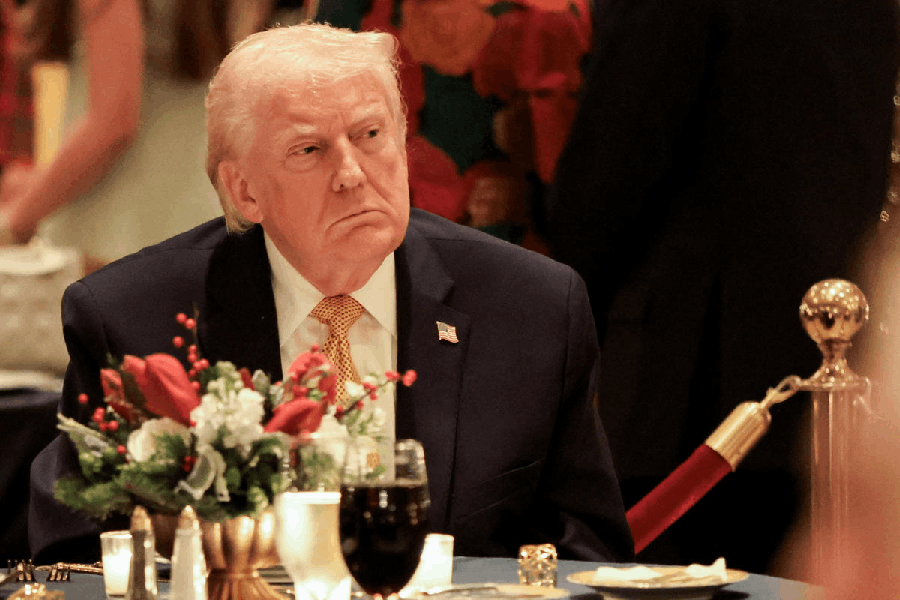
Trump has intensified his push to wrest sovereignty over Greenland from fellow Nato member Denmark, prompting the European Union to weigh hitting back with its own measures.
Carney, the former head of both the Bank of England and the Bank of Canada, won an election last year promising to create new economic alliances to help Canada survive Trump's tariffs and threats to annex Canada.
Before arriving at an annual gathering of the global elite in Davos on Monday, he circled the world and visited countries previously overlooked by Canada.

"A number of the multilateral relationships, institutions, rules-based systems, are being eroded by various decisions of various countries, the United States included," Carney said in Doha on Sunday, where he pledged more cooperation on defense and security and said progress had been made on an investment promotion agreement.
"Where there is progress, and where Canada and like-minded countries are looking to make progress, is through plurilateral deals," Carney said, advocating for agreements between a smaller number of countries.
Carney said Canada was already advocating to be a bridge between the European Union and Pacific Rim nations.
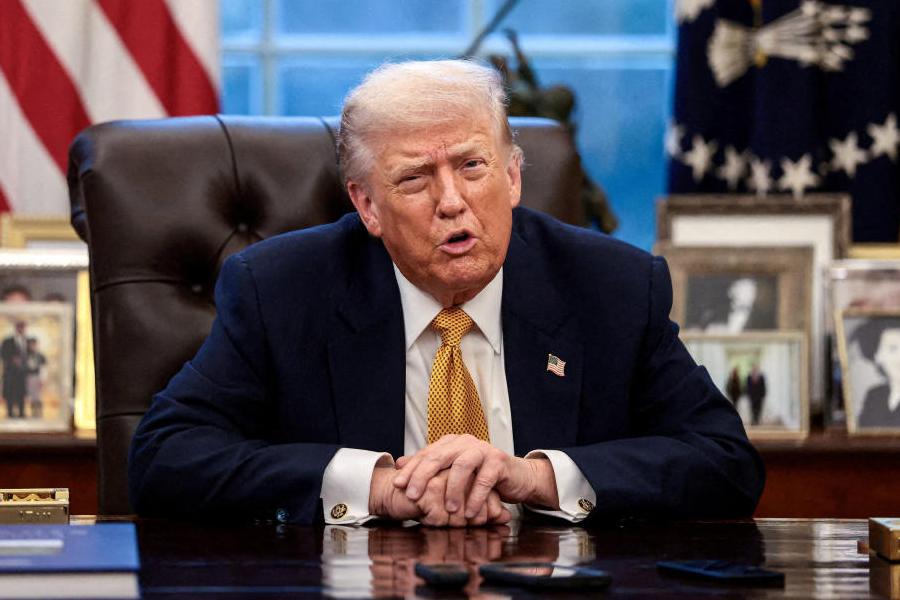
"In this moment of volatility, Canada will step up and lead. We will make sure that we are bringing countries to the table who will assist in this role," foreign minister Anita Anand told Reuters in an interview in Doha.
US trade dependency
The European Union is also intensifying its trade diversification efforts - signing a deal with South American trade bloc Mercosur after 25 years of talks, concluding a deal with Indonesia in September and updating agreements with Mexico.
The EU has resumed trade agreement negotiations with Malaysia, the Philippines, the United Arab Emirates and India.
But while the EU relies on the US for just over 20 per cent of goods exports, Canada still sends close to 70 per cent of its exports south of the border.
For Canada to reduce merchandise exports to the US by 10 per cent, it would have to double its exports to China, Germany, France, Mexico, Italy and India or find similar countries of that size, said Prince Owusu, senior economist with Export Development Canada.
Carney has pledged to double Canada's non-US exports over the next decade.
Trade experts and economists say to achieve this, Canada has to heavily rely on China, currently its No. 2 trade partner.
"We have to be very cautious... Moving too quickly and integrating too quickly with China also creates some issues around long-term stability for the economy," said William Pellerin, partner and co-head for international trade at law firm McMillan.
Chinese manufacturers have the ability to flood the Canadian market overnight in just about every category of goods, he said.
China's shipments to the US fell last year but rose sharply to the rest of the world.
Canada's share of exports to the US fell to their lowest ever level outside the COVID-19 pandemic years in October, according to official data.
But the US still accounted for 67.3 per cent of all exports. While the government hopes to sell more oil to Asia, 90% of Canadian crude goes to the US.
Economists say the US share of Canadian exports is unlikely to decline much more anytime soon, with many companies awaiting the outcome of negotiations over the US-Mexico-Canada trade agreement this year.
Pursuing multiple trade deals
Carney last week became the first Canadian prime minister to visit Qatar and the first to visit China since 2017.
In Beijing, Carney said China had become a more predictable partner than the US.
He is expected to visit India soon, after the two countries restored diplomatic ties and agreed to restart trade talks that had stalled under his predecessor Justin Trudeau.
Canada has also wrapped up trade deals with Ecuador and Indonesia and signed investment agreements with the United Arab Emirates.
Carney's Trade Minister Maninder Sidhu said Canada will next focus on the Philippines, Thailand, Mercosur and Saudi Arabia, as well as India.
"Normally, the government of Canada signs one trade agreement a year," Sidhu said in an interview in Dubai. "We want to make sure we get those done as soon as possible."