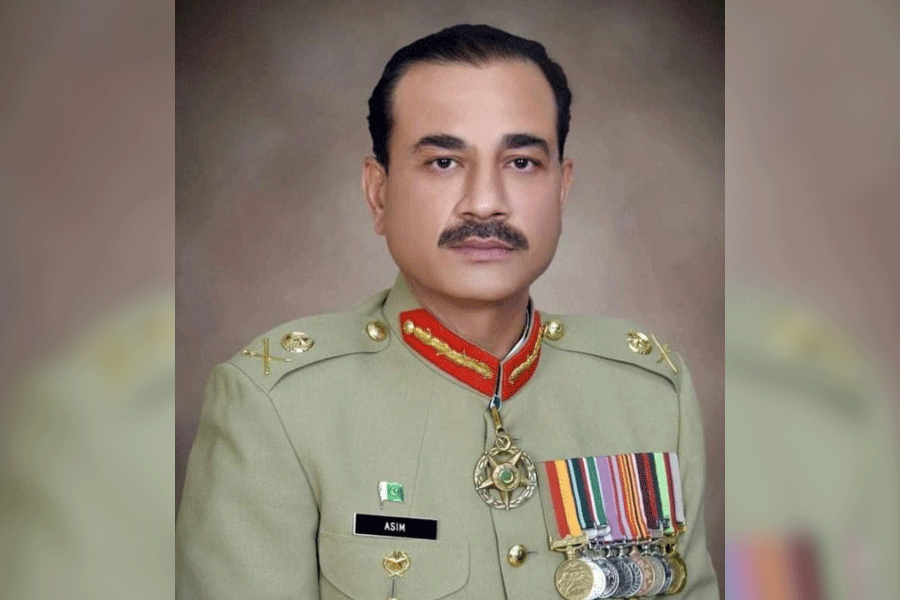
Syed Asim Munir, Pakistan’s army chief and the country’s most powerful man, has in recent weeks emerged as a central figure in behind-the-scenes diplomacy aimed at easing tensions between the US and Iran.
His role highlights both Islamabad’s acute exposure to regional instability and newly found geopolitical relevance built on the personal relationship Field Marshal Munir has built with US President Donald Trump, analysts say.
“Pakistan likely never had the kind of access to the White House it has now,” said Qamar Cheema, a Pakistani security analyst.
Field Marshal Munir is a career military officer who rose to lead the Inter-Services Intelligence, the country’s premier spy agency, before assuming command of the army in 2022. He also has
lifelong legal immunity in Pakistan, after lawmakers approved a constitutional amendment last year that gave him sweeping authority over all military branches and limited the independence of the country’s highest court.
Since then, he has embraced an increasingly visible profile, particularly since Pakistan’s brief war with India last May. Last year, he met twice with Trump, who refers to him as his “favourite field marshal”.
Pakistan is now using that relationship to re-establish its status as a major US partner in Asia, after years
of being snubbed by the Biden administration in the wake of the US withdrawal from neighbouring Afghanistan in 2021.
New Delhi ‘frustrated’
Pakistan on Thursday took a strong exception to the external affairs minister S. Jaishankar’s dalaal comments, saying it showed a “deeper sense of frustration” on the part of Indian leadership.
Pakistan’s Foreign Office spokesperson Tahir Andrabi was asked about the alleged “foul language” used by Jaishankar against Pakistan, to which he responded: “First of all, we dismiss the Indian statement with the contempt that it deserves.
“Such undiplomatic rhetoric betrays a deeper sense of frustration. When arguments run thin, invective appears to fill the gap. Pakistan does not subscribe to such megaphone theatrics. Our approach is anchored in restraint, decorum and not in rhetorical excesses,” he said.
New York Times News Service and PTI