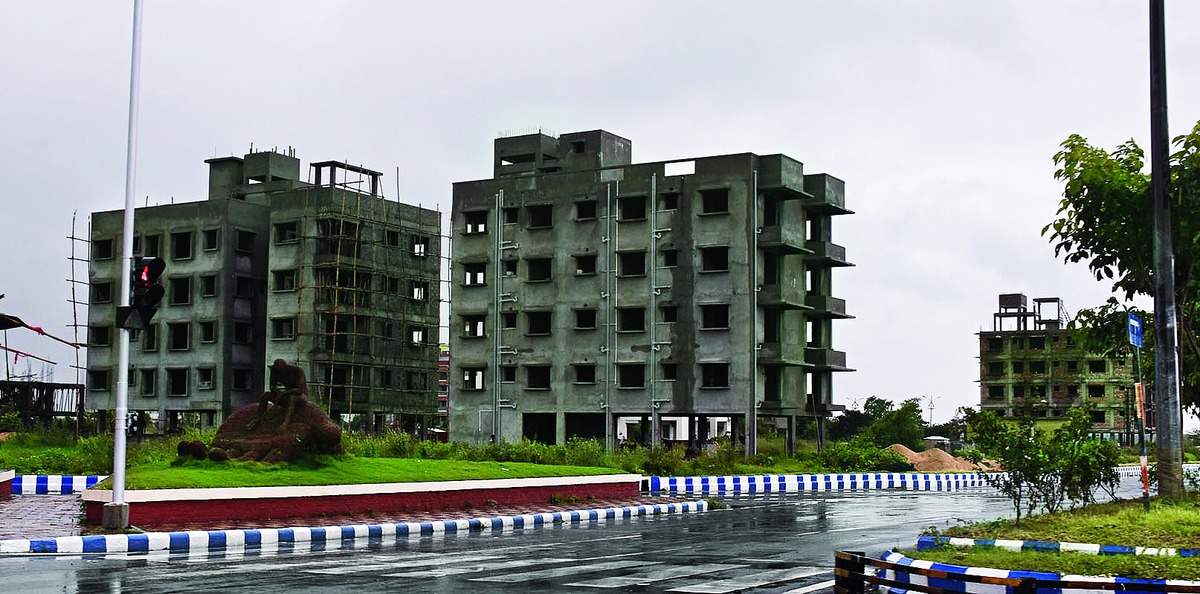

New Town: Pools of stagnant water at construction sites will invite a notice from the New Town Kolkata Development Authority (NKDA) to the builder.
Vector-control teams from the NKDA will inspect construction sites, spray larvicide wherever water is found to have accumulated and ask the site supervisers to clear the site.
The dengue-causing Aedes aegypti mosquito can breed in a blob of freshwater the size of a coin.
The NKDA, the administrative body that provides civic services to the township is banking on guppy fish and Bacillus Thuringiensis Israelensis (BTI), a kind of bacteria that kills mosquito larvae when sprayed in a breeding zone, to combat dengue this year.
The use of BTI is a new measure taken up by the NKDA at the suggestion of an entomologist, an NKDA official said. A naturally occurring bacteria, BTI produces toxins that specifically target and destroy larvae of mosquitoes, black flies and fungus gnat. Strains of the bacteria kill only these insects and not any other insect, fish or mammal thus making it safe for ponds and water bodies, the NKDA officer quoted the entomologist as saying.
Temephos and citronella oil - a natural mosquito repellent - will also be sprayed.
More than one lakh guppy fish have been released in water bodies in the New Town area, including Bagjola canal, the canal next to Upasanasthal immersion ghat near Tall Tree nursery and the Balaka pass canal that flows through the township and in manholes of several residential blocks such as AB, AC, AE, BA and CE.
Guppy fish are known to feed on mosquito larvae and microbes. "We will release more guppy fish in the coming months," said Debashis Sen, the chairman of NKDA.
Two-member teams of surveyors will go door to door in residential complexes spread over Action Areas I, II and III to check for stagnant water on roofs and inside household articles such as flower vases, used tyres, refrigerator trays and around air-conditioning units.
"If larvae is found, our team will immediately spray larvicide and serve a notice to the residents asking them to keep the premises clean and free from water," Sen said.
Fumigation will be carried out as well.
At least 240 surveyors and 24 supervisers have been taken in from an agency for the vector-control campaign.