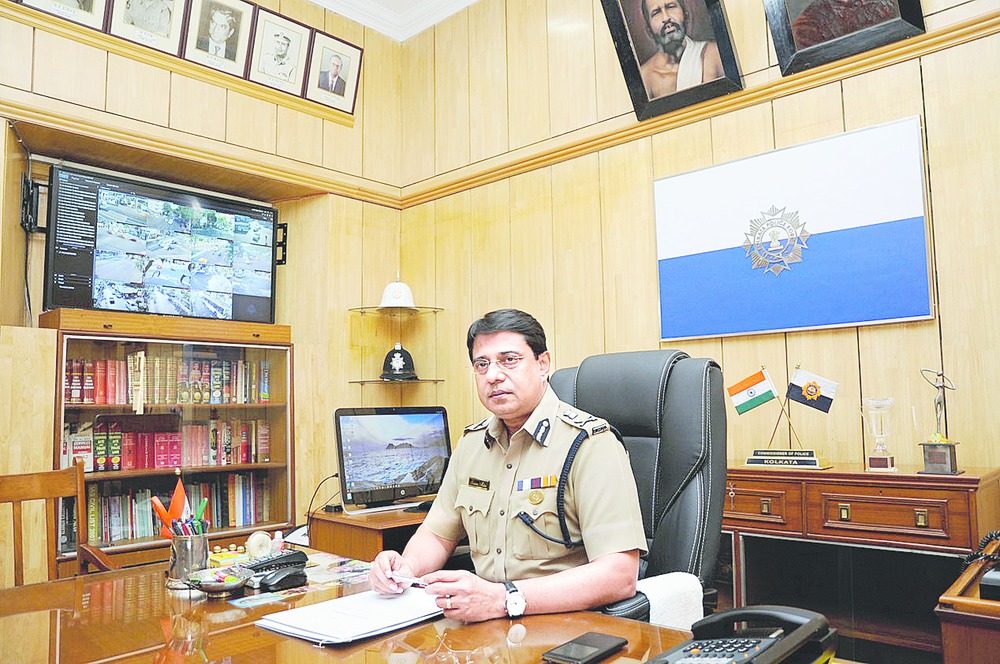

Soumen Mitra on Wednesday took over as commissioner of Calcutta police, a post that fell vacant after the Election Commission of India ordered Rajeev Kumar's removal.
Mitra, a 1988-batch IPS officer whose last posting was as additional director-general of CID, said after taking over as the city top cop that his force would have to conduct the Assembly elections in a "difficult situation".
Calcutta goes to the polls on April 21 and 30.
"The Calcutta police are going to conduct the elections amidst a difficult situation... the elections are very close, not much time is left. It would be a challenge as the commissioner," Mitra said at Lalbazar.
Kumar's removal came after all major Opposition parties accused him of bias towards the ruling party and demanded his ouster before the city went to polls.
Asked about his predecessor's removal, Mitra said: "My posting has come on behalf of the West Bengal government. As a civil servant, a bureaucrat and a police officer, postings could happen any time. This was one such posting."
Lalbazar went into election mode within an hour of Mitrastepping into the city police headquarters as commissioner. At his first meeting with senior officers, Mitra instructed all those above the rank of deputy commissioner to oversee the poll preparations and familiarise themselves with the polling booths in their areas.
Sources said till now only deputy commissioners were attending meetings with election observers for the upcoming polls.
Mitra, a history graduate from the erstwhile Presidency College, did his MPhil from Jawaharlal Nehru University on "the football crowds in Calcutta Maidans".
He has served in multiple posts across Bengal - including deputy commissioner of the detective department in Calcutta, additional and special commissioner of Calcutta police and additional director-general of CID.
During his stint as deputy commissioner of the detective department, Mitra had read up half-a-dozen books on financial fraud while leading the Calcutta Stock Exchange scam probe in 2001, colleagues said.
"He would not hesitate to call chartered accountants and financial experts to his office to help him understand the subject better," an officer who has worked with him recounted.
Mitra is known to be comfortable in the company of academicians and has retained his historical bent of mind. The 'traffic museum' in Lalbazar is something that he proudly displays to friends from various walks of life.
A colleague who has worked with Mitra on multiple assignments said he had the "vision for the welfare and modernisation of the force" but was "always cross with the media".
Mitra became "anti-media" after the coverage of Operation Sunshine (removal of hawkers from pavements) in the late 1990s. Later, as deputy commissioner of the detective department, he had barred reporters' entry into his department. The bar was lifted after six days.