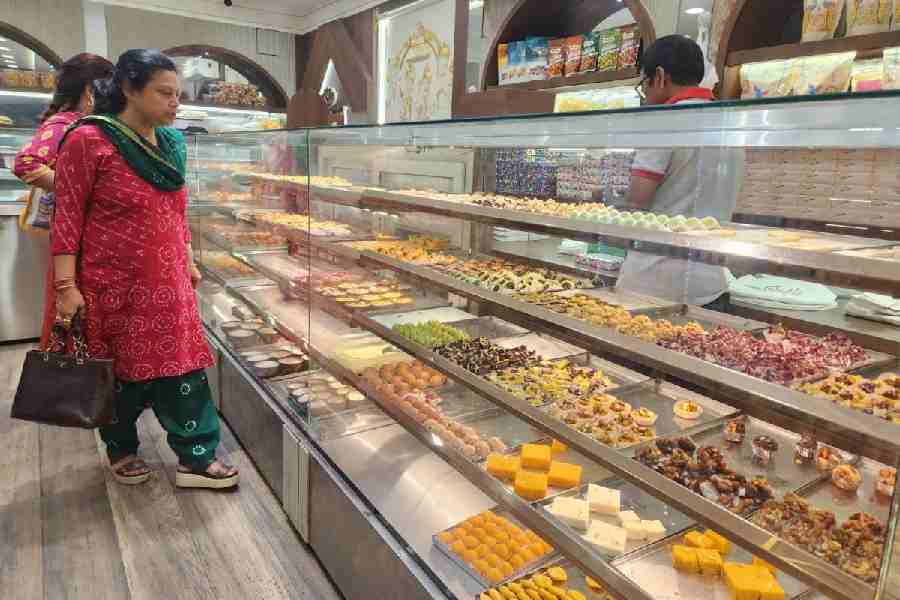
It’s less than a week to Poila Baisakh, and plans are being finalised. Some residents will visit relatives, others will take part in cultural programmes…. But there’s one ritual every household will look forward to – relishing Bengali sweets.
This year, the Iran war, however, has come as a rude awakening, and with the LPG shortage hitting sweets shops hard, many are now grappling with little more to offer than sweet nothings.
Widespread chaos
“Poila Baisakh is one of our top-selling days in the year, after Ashtami, Dashami, Kali puja and Lakshmi puja. We usually come up with many special sweets on this day, but without gas, we are at sea,” says Manoj Nandy of Shree Krishna Mistanna Bhandar in New Town. “Post Dol, sweets shops start preparing for Poila Baisakh as it’s not possible to meet the huge demand overnight. So we make semi-finished sandesh and freeze them, that can stay for four to five months. But this year, that entire period, we didn’t even have gas. We somehow met the demand for Hanuman Jayanti last week with laddu and darbesh but Poila Baisakh will need much larger quantities.”
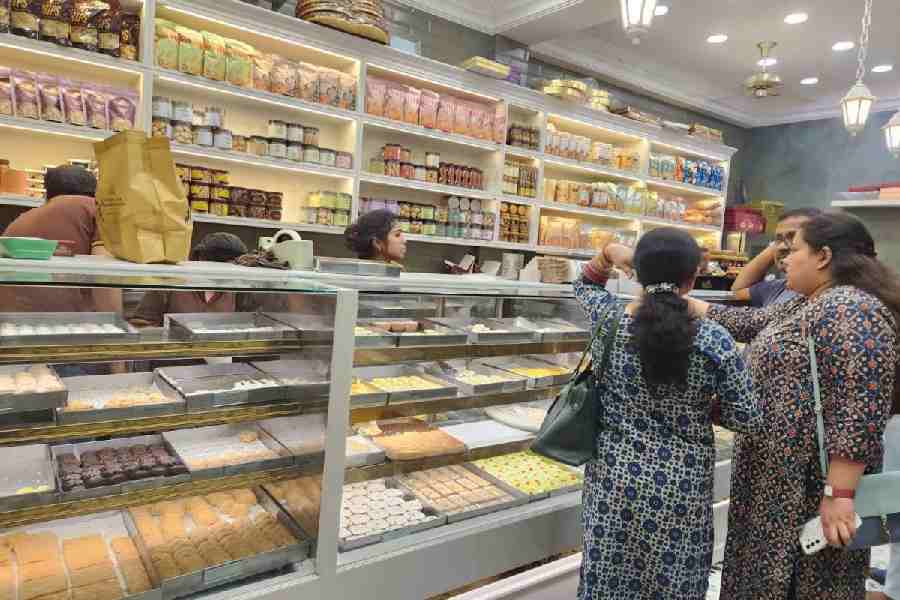
Balaram Mullick & Radharaman Mullick Salt Lake.
Their chain has three shops in New Town – near Reliance Fresh, Tank 3 and CB community hall — and they would have opened a fourth in CD Block in March if it wasn’t for the gas crisis.
Sudip Mullick, the owner of Balaram Mullick & Radharaman Mullick, is also in a dilemma. “Poila Baisakh is our biggest single-day opportunity for business, which is second to Bhaiphota only in over-the-counter sales.”
The occasion, he explained, is mostly about getting and delivering business orders, unlike Bhaiphota. “Because of the war in Iran, the LPG situation continues to be tight,” he lamented. Balaram Mullick has three outlets east of the Bypass — in Salt Lake, Lake Town and on VIP Road, near Haldiram’s.
Sandip Sen, one of the directors of Sen Mahasay, is also the president of Paschimbanga Mistanna Byabasayee Samity. “We have over 70,000 members, and I’m getting hounded by calls from all districts, asking how they can source gas,” says Sen. “And I have no answer.”
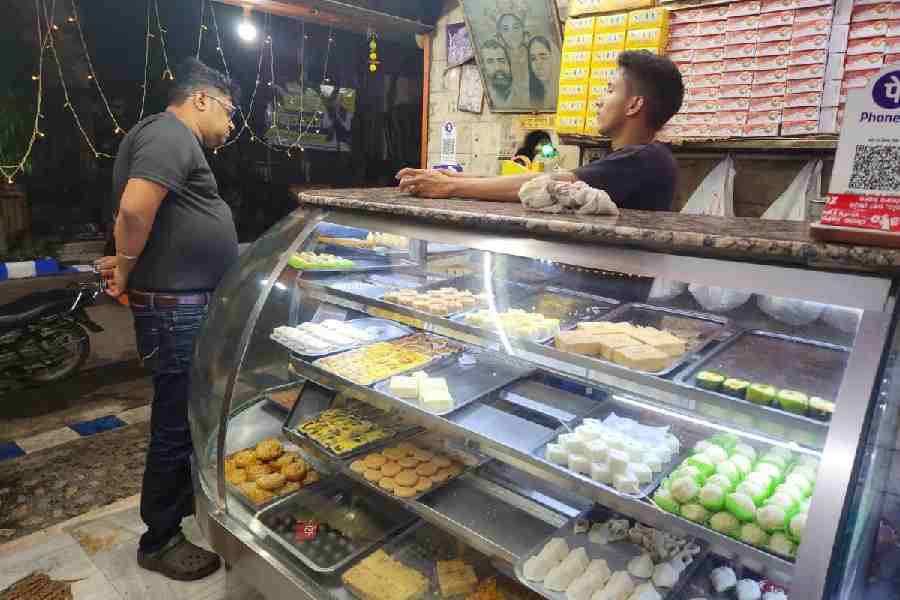
Products on offer at VIP Sweet in DL Block.
In Salt Lake, the Sen Mahasay outlet came up in AE Block in 1991 but their flagship store near Shyambazar started in 1885. “We have been doing business for more than a century, and it’s only during the Naxalite movement and the “Dum Dum dawai” period that we had to down shutters for a while. Even during the pandemic, our association, after appealing to the chief minister, managed to reopen sweets shops. But this time, we have no solace. Such is the crisis that we had seriously considered closing down our stores till the matter got sorted,” Sen says. “The truth is that without gas, our industry is in trouble.”
Gas out, diesel in
“In February, the 19kg commercial gas cylinders that we use cost Rs 1,641, and they now cost Rs 2,218. And even then they are out of stock. In the black, they’re selling for Rs 5,000. Occasionally, the 5kg cylinders become available, but at Rs 700, they are exorbitant,” says Nandy, whose Shree Krishna Mistanna Bhandar outlets usually raise prices of sweets once a year, before Poila Baisakh. “This time we haven’t raised prices as everything is so uncertain.”
Like many shops, they have shifted to “diesel bhatti”, a commercial cooking appliance that runs on diesel. “Items like rosogolla need very high temperatures to cook, that isn’t attainable on induction cookers,” says the proprietor, who has already procured three diesel bhattis and paid in advance for two more. “These machines used to cost within Rs 4,500 a piece before the war, but now I’m paying Rs 11,500 a piece. And am still on the waiting list! I just pray they arrive before Poila Baisakh.”
When Sen Mahasay started business over 140 years ago, they would prepare sweets on the unoon. “Then, due to pollution, we switched to diesel and then gas. It is unfortunate that after all these years we are having to return to primitive means,” says Sen, shaking his head. “And even then, it takes days and costs good money to transition from an existing setup of gas to diesel. For all you know, the price of diesel may shoot up next. Then what?”
Mullick of Balaram Mullick & Radharaman Mullick says turning to induction oven is not a solution for the traditional sweets industry. “Our handis and kadais are big. So we need industrial induction oven. Those are expensive and hard to access,” he said.
Balaram Mullick has reduced the production of fried syrupy items, like rosogolla and pantua, to use less gas. “But we have not stopped their production. That is a silver lining,” Sudip said.
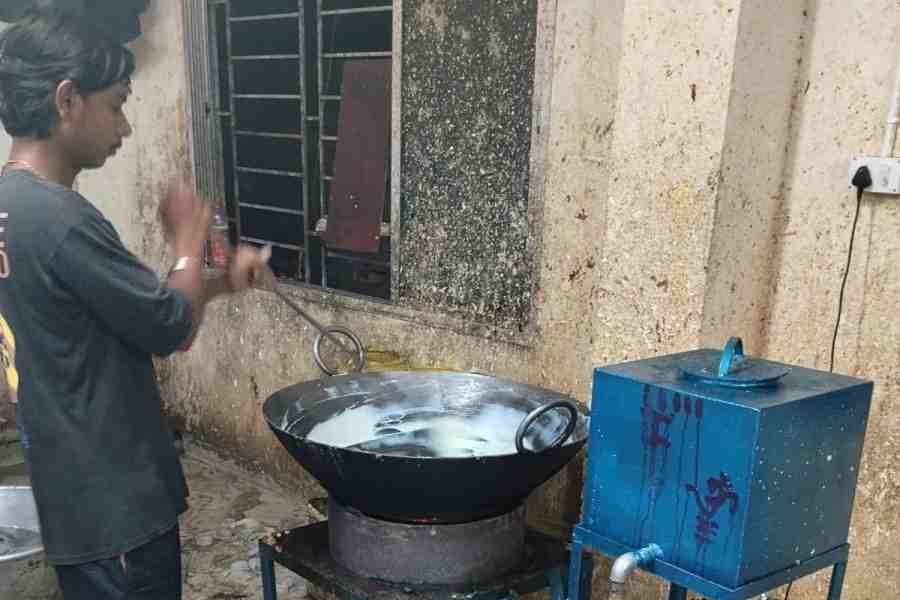
Sandesh being prepared using the “diesel bhatti” system in the absence of LPG, at Shree Krishna Mistanna Bhandar’s factory behind DLF building in New Town .
VIP Sweets Pvt Ltd was struggling initially, “but we managed as we have many gas connections,” said Shiksha Ghosh, on behalf of the chain. They have branches in HA Block, DL Block, FD Block, Ultadanga, Chinar Park and opposite the TCS Gitanjali Park in New Town. “Still, we have had to reduce the quantity of deep-fried items like Shor Bhaja and Gulab Jamun, and are only making sweets like rabri once in a few days. We are also falling back on the unoon at times and using electric gadgets for baked dishes.”
Initially, VIP Sweets was making smaller quantities of mishti in the morning and topping it up based on demand, before evening. “But we have more or less stabilised the situation now and are even planning on special sweets for Poila Baisakh using raw mango and the like,” Ghosh says.
Price point
On Poila Baisakh, Nepal Sweets anticipates huge demand for their signature Gulab Patti Sandesh, as well as Balushahi, Kheer Kadam, Malai Chamcham and the like. “We also offer sandesh inscribed with “Shubho Nava Varsha” to mark the festival,” says Siddharth Gupta, the CEO. In Salt Lake their branch is next to City Centre.
“So far, Hanuman Jayanti was the biggest festival we faced during the LPG crisis and anticipating the shortage, we had transitioned to alternative cooking methods such as electricity and biodiesel, which helped us maintain uninterrupted service,” Gupta says. “Pre‑orders are always helpful as they reduce wait times and allow us to plan production efficiently. But we have decided to absorb the impact of the gas price rise ourselves. Neither have we hiked the prices of sweets nor reduced their sizes.”
They have, however, temporarily discontinued dishes like Khaman Dhokla, Khandvi, and a few other savoury items.
Shree Krishna Mistanna Bhandar has stopped making Dahi Vada and Malpoa. “Before this, we used to boil 30 to 40l of milk for dahi on the gas non-stop from 10am to 2pm, which is out of the question now,” says Nandy, adding that he is even wary of accepting bulk orders this season.
Sen Mahasay too isn’t taking bulk orders. “We are requesting customers to visit the stores and pick up from what is available. As for prices, we don’t have the heart to increase them before Poila Baisakh. Soon after this festival, the wedding season starts and we aren’t being able to accept those orders yet. Those who have booked from before are calling repeatedly to ensure we’re on board but, frankly, we have no answer,” Sen says.