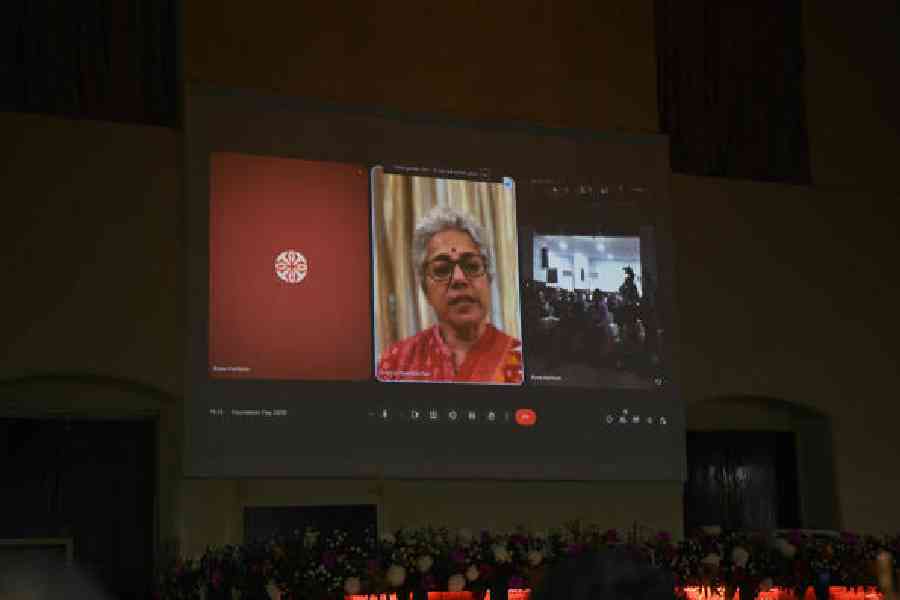
The combination of air pollution and heat is “deadlier” than the impact of either alone and increases the risks of death, the former chief scientist of the World Health Organisation (WHO), Soumya Swaminathan, said at a lecture at the Bose Institute on Sunday.
Pregnant women, those with heart conditions, and people with mental illness are at greater risks from extreme heat, while air pollution increases the risks of stillbirth and pre-term birth, she said.
Swaminathan, who gave her talk online, presented slides to show how day and night temperatures have increased over the years. She said the increase in night-time temperature was more worrying as it denied human bodies the opportunity to reset after a day’s stress.
“A combination of heat and air pollution is even deadlier. Scientists at the University of Southern California found excess risks of death on the hottest days when you have both high heat and extreme levels of PM 2.5. Many places in India will have this combination of extreme heat and air pollution,” said Swaminathan as she delivered the 86th Acharya JC Bose Memorial Lecture titled “Fragile Futures: The Climate Crisis and Its Toll on Women and Children”.
At 7pm on Sunday, at three of the seven air quality monitoring stations in Calcutta — Fort William, Victoria Memorial and Jadavpur — the air quality was “poor”. It was “moderate” at the rest of the stations in Bidhannagar, Ballygunge, Rabindra Sarobar and Rabindra Bharati University (BT Road campus).
“Not everyone is equally vulnerable to high heat. Vulnerability is dependent on multiple factors like where the person lives, the kind of work a person does and age,” she said.
“There are three different aspects of health risk. One is the vulnerability factor. It depends on where you live, the demography, whether you are young or old, if a woman is pregnant, if someone has a medical condition, people’s socioeconomic status, the gender and equity aspects and health system capacity. These are all contributing to one’s vulnerability,” she said.
The second factor is hazards such as “heat, pollution, water scarcity and reduced food”.
“The third factor is how much a person gets exposed to these hazards. It depends on what type of work one does, the available infrastructure, and the state of food and health systems. If these are strong, the exposure is going to be less,” she added.
She flagged impacts on a person’s cardiovascular system and mental health among the health risks of extreme heat.
“The cardiovascular system is the first to be impacted by heat. The heart has to work harder to keep the body cool. If you have a heart condition, it can be harmful to your heart. One can go into heat exhaustion, dehydration and heat stroke, which is the most severe. The body can no longer regulate its temperature,”
she said.
Heat stroke can be fatal, but it is hardly documented in India yet. “This is not well recognised. The burden of heat stroke is not documented in this country,” Swaminathan pointed out.
Debdatta Bhattacharya, consultant cardiologist at RN Tagore International Institute of Cardiac Sciences, said his personal observation was that cardiovascular emergencies increase during summer in Calcutta.
“This is something I have observed as a doctor. High heat can also lead to increased heart rate or fluctuations in blood pressure,” he said.
Bhattacharya was not a part of the talk; Metro spoke with him separately.
Swaminathan also highlighted the impact of heat on mental health. People without any mental health issues have higher risks of anxiety and stress, while those with schizophrenia or depression can experience their conditions getting worse, she said.
Swaminathan added that air pollution had short-term and long-term health impacts.